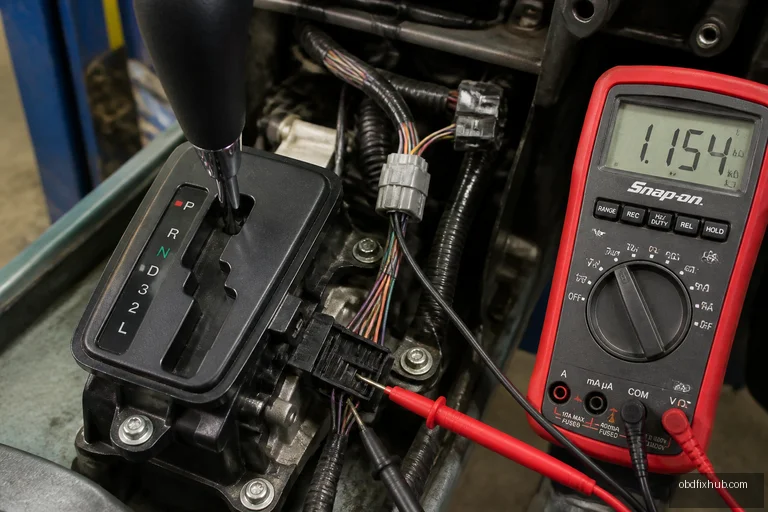
Search intent: informational and diagnostic. The P2775 transmission code means the transmission control module has detected an out-of-range or abnormal performance condition in the upshift switch circuit. In practical terms, the switch, wiring, connector, or control logic is not producing the electrical signal the module expects when an upshift request is made. The vehicle may still drive, but delayed shifting, harsh gear changes, or failsafe operation can follow.
P2775 is not a code you should diagnose by replacing the transmission immediately. A damaged shifter switch, corroded connector, blown fuse, poor ground, or an incorrectly adjusted selector can create the same code. This guide explains how the circuit works, what the symptoms mean, and how a technician can confirm the fault instead of guessing.
What Does the P2775 Transmission Code Mean?
P2775 is a generic OBD-II code commonly described as “Upshift Switch Circuit Range/Performance.” The transmission control module (TCM), powertrain control module (PCM), or an integrated transmission controller monitors the upshift switch signal. When the voltage, resistance, or switching behavior does not match the expected range, it stores P2775.
The exact component varies by vehicle. On some applications, the upshift switch is part of a floor shifter, steering-column selector, console-mounted switch, or manual shift control. On others, it may be an input used to request a gear change rather than a simple physical button. Because manufacturers use different wiring strategies, the factory service information for the specific year, engine, transmission, and market is essential.
Common Symptoms of P2775
The symptoms depend on whether the TCM sees a permanent electrical fault or an intermittent signal. A vehicle with a completely open circuit may behave differently from one with a switch that occasionally sends an incorrect voltage.
- Check Engine Light or transmission warning light
- Manual upshift command does not work
- Delayed, harsh, or unpredictable gear changes
- Transmission remains in one gear or enters limp-home mode
- Engine speed stays unusually high during acceleration
- Reduced fuel economy caused by late upshifts
- Intermittent symptoms when moving the shifter or driving over bumps
- Additional range, selector-position, or communication codes
A useful diagnostic clue is whether the problem changes when the shifter is moved gently or the wiring near the selector is flexed. If the code appears after vibration, moisture exposure, or interior work, inspect the switch and harness before suspecting an internal transmission failure.
Most Likely Causes of P2775
1. Faulty upshift switch or shifter assembly
Internal switch contacts can wear, oxidize, or become contaminated by spilled liquid. A switch may pass a quick continuity test when stationary but fail under vibration or when heated. On some vehicles, the switch cannot be serviced separately and the complete selector assembly must be replaced.
2. Damaged wiring or a poor connector
Look for pulled wires, chafing against the shifter bracket, water intrusion, pushed-out terminals, and green corrosion. A connector can appear plugged in while a terminal has lost tension and no longer grips its mating pin. This is a common cause of intermittent P2775 faults.
3. Incorrect voltage, resistance, or ground
Many switch circuits use a reference voltage and return a specific voltage through a resistor network. A weak ground, short to power, short to ground, or incorrect replacement switch can move the signal outside its calibrated window. Measuring only for continuity is not enough when the circuit is voltage-based.
4. Selector adjustment or mechanical interference
If the shifter cable, range mechanism, or switch position is misadjusted, the electrical signal may not agree with the selected gear. A loose console, damaged detent mechanism, or aftermarket shifter can also prevent the switch from reaching its intended position.
5. TCM software or module fault
A software update may be required on certain models, particularly when technical service bulletins identify false or intermittent code setting. A failed TCM is possible, but it should be considered only after power, ground, wiring, switch operation, and software updates have been verified.
How to Diagnose P2775 Correctly
- Record all codes and freeze-frame data. Note vehicle speed, engine load, transmission temperature, selected range, and battery voltage when P2775 was stored. Related codes can change the diagnostic direction.
- Confirm the code with a second scan. Clear the code only after saving the data, then perform a controlled road test. Determine whether the code returns immediately or only during a shift or shifter movement.
- Use the scan tool’s live data. Watch the upshift switch status, selector position, commanded gear, and actual gear. The switch should change state consistently without flickering as the control is operated.
- Inspect the circuit physically. Check fuses, grounds, connectors, harness routing, and evidence of water or beverage damage. Pay special attention to areas where the harness bends with the shifter.
- Test voltage under load. Follow the wiring diagram and compare the measured reference, signal, and ground values with the manufacturer’s specifications. A circuit can show correct voltage with no load and fail when the switch is connected.
- Check continuity with the circuit isolated. Disconnect the relevant modules before resistance testing. Compare each switch position with the specified resistance or voltage range; do not apply test voltage to a module terminal unless the service procedure allows it.
- Verify mechanical adjustment and software updates. If the switch and harness pass, confirm selector alignment and check for applicable TCM calibration updates before condemning a control module.
One practical mistake is testing the switch at the connector while the shifter remains fixed in one position. The fault may occur only during movement. Back-probe the circuit safely while operating the selector, or use a scope when the signal is intermittent and a multimeter cannot capture the brief dropout.
P2775 Repair Options
The correct repair depends on the failed part. A loose terminal may need to be tightened or replaced, while a corroded connector may require a pigtail rather than contact cleaner alone. If the switch is integrated into the selector, replacing the complete shifter assembly and carrying out any required relearn procedure may be necessary.
- Repair chafed or broken wiring using sealed, correctly crimped automotive terminals.
- Replace damaged connectors and terminals rather than merely spraying them with cleaner.
- Replace the upshift switch or selector assembly when its measured values are outside specification.
- Correct selector cable or range-sensor adjustment where applicable.
- Install an approved TCM software update if a manufacturer bulletin applies.
- Replace or program the TCM only after proving that the external circuit is good.
After the repair, clear the code, perform the specified relearn or adaptive reset if required, and road-test the vehicle through the affected shift ranges. A repair is not confirmed simply because the warning light turns off; the switch signal must remain stable and the transmission must complete normal upshifts under different loads.
Is P2775 Related to P2729 on an Allison Transmission?
Usually, no. P2729 is generally associated with a pressure control solenoid “E” control circuit high condition, while P2775 concerns an upshift switch circuit range or performance problem. They involve different inputs or outputs, so one code should not automatically be used to explain the other.
On Allison-equipped vehicles, code descriptions can vary according to the transmission family, TCM calibration, vehicle manufacturer, and scan tool database. If an Allison scan tool displays P2729, confirm the definition in Allison DOC or the vehicle manufacturer’s service information. Check solenoid power, TCM driver control, harness resistance, connector condition, and transmission fluid contamination before replacing a solenoid or valve body.
Aftermarket scanners sometimes show a generic SAE description that does not match the manufacturer’s detailed diagnostic code. The code number alone is therefore not enough on an Allison transmission; the TCM data, transmission model, and specific failure response must be identified first.
Can You Drive With P2775?
A short drive to a repair facility may be reasonable if the transmission shifts normally, the warning light is steady, and no severe symptoms are present. Avoid towing, hard acceleration, and extended driving if the transmission is stuck in one gear, slipping, overheating, or shifting violently. Continuing to drive with abnormal shift control can increase clutch wear and heat, turning an electrical problem into an expensive mechanical repair.
Frequently Asked Questions
What does P2775 mean on a Dodge or Chrysler?
On many Dodge and Chrysler applications, P2775 refers to an upshift switch circuit range or performance problem. The switch may be integrated into the shifter or manual gear-control system, but the exact test values depend on the transmission and model year.
Can a weak battery cause P2775?
Low system voltage can create misleading transmission codes, especially during starting or module communication events. Test battery voltage, charging voltage, and grounds, but do not assume the battery is the root cause if the code returns with stable voltage.
Will clearing P2775 fix the transmission?
No. Clearing the code removes the stored fault but does not repair the switch, wiring, or selector. If the underlying signal remains incorrect, the code and symptoms will return.
Does P2775 mean the transmission needs to be replaced?
Not normally. P2775 points first toward an electrical input circuit or selector-related fault. Transmission replacement should not be recommended until the switch, wiring, connectors, adjustment, software, and TCM inputs have been tested.
Bottom line: Diagnose P2775 as a signal-quality problem before treating it as an internal transmission failure. Start with live data, connector inspection, voltage testing, and selector operation. If your vehicle also shows P2729—especially an Allison-equipped vehicle—verify that code separately using the correct manufacturer-specific information.




