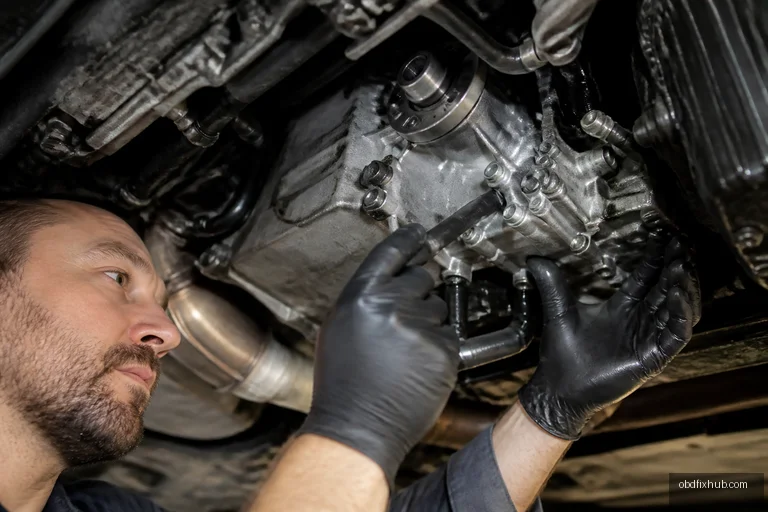
P277A Auxiliary Transmission Fluid Pump Hydraulic Leakage: Meaning, Causes, Symptoms & Fix
P277A Auxiliary Transmission Fluid Pump Hydraulic Leakage means the transmission control system has detected that the auxiliary fluid pump cannot build or maintain the hydraulic pressure expected by the vehicle computer. The problem may be caused by an external leak, an internal pump leak, a damaged seal, restricted fluid flow, or an electrical fault that prevents the pump from operating correctly. Because low hydraulic pressure can quickly damage clutches and bearings, this code should not be treated as a harmless check-engine light.
What Does Code P277A Mean?
Modern transmissions may use an auxiliary electric or mechanically driven pump to maintain fluid pressure during stop-start operation, hybrid driving, engine-off periods, gear changes, or specific clutch-control events. When the transmission control module commands the pump on, it compares the expected pressure or hydraulic response with the actual result.
P277A is set when that response suggests hydraulic leakage. “Leakage” does not always mean you will find red or brown fluid on the driveway. Hydraulic pressure can escape internally through worn pump clearances, a leaking valve, a damaged clutch circuit, or a failed internal seal without producing an obvious external puddle.
The exact pump design and testing procedure vary by vehicle. Always verify the code definition, fluid specification, wiring diagram, and repair procedure for the specific year, make, model, engine, and transmission.
Common Causes of P277A
- Low transmission fluid caused by an external leak or incorrect service level.
- A cracked fluid line, loose fitting, damaged O-ring, or leaking pump housing.
- Worn auxiliary pump gears, vanes, bushings, or internal sealing surfaces.
- A restricted filter, clogged pickup screen, collapsed hose, or blocked fluid passage.
- Incorrect, contaminated, aerated, or incompatible transmission fluid.
- A sticking pressure-control valve or internal valve-body leakage.
- Damaged wiring, poor ground, corroded connectors, a blown fuse, or a failing pump motor.
- Low battery voltage or a charging problem that causes an electric pump to run below speed.
- Internal transmission wear that allows pressure to escape through clutch or drum circuits.
One diagnostic mistake is replacing the pump as soon as the code appears. If the fluid level is low because of a leaking cooler line, a new pump may operate briefly and then fail to prime again. The leak source and the pressure problem must be diagnosed together.
P277A Symptoms to Watch For
Some vehicles store P277A without noticeable drivability symptoms, particularly when the auxiliary pump is used only under certain operating conditions. Others will show clear signs of low transmission pressure.
- Check Engine Light or transmission warning message.
- Delayed engagement when selecting Drive or Reverse.
- Harsh, slipping, or flare-up shifts.
- Transmission stuck in one gear or entering limp mode.
- Whining, buzzing, or intermittent grinding from the pump area.
- Low-fluid warnings, a burning-fluid smell, or visible fluid underneath the vehicle.
- Reduced hybrid or start-stop functionality on vehicles that use the pump for engine-off transmission operation.
- Overheating transmission fluid or repeated related pressure-control codes.
A delayed engagement followed by a firm bang into gear is especially important. It often indicates that pressure is bleeding off while the vehicle is parked and then returning abruptly when the pump or main circuit finally builds pressure.
How to Diagnose P277A Correctly
- Scan all modules. Record freeze-frame data, transmission temperature, battery voltage, and related codes before clearing anything. Hybrid and electronically controlled vehicles may store useful information outside the engine module.
- Inspect the fluid level and condition. Check it using the manufacturer’s temperature and procedure. A generic dipstick check can produce a misleading result on many modern transmissions.
- Locate external leakage. Clean the transmission case, run the vehicle, and inspect the pump, cooler lines, axle seals, pan, and electrical connector. UV dye may help, but only use dye approved for that transmission.
- Test the pump circuit. Verify the fuse, power supply, ground, command signal, connector tension, and current draw. A pump that receives power but draws excessive current may be mechanically binding.
- Measure hydraulic pressure. Compare actual pressure with the manufacturer’s specifications during commanded pump operation. Pressure testing is often the fastest way to separate a pump problem from a control-module or wiring problem.
- Check for internal leakage. If the pump passes its electrical tests but pressure falls rapidly, the fault may be inside the pump, valve body, clutch circuit, or transmission case.
Do not rely on fluid color alone when identifying a leak. Transmission fluid can collect dust and appear dark, while fluid from an engine oil leak can run along the case and look like a transmission leak. Trace the highest wet point rather than replacing the lowest component that happens to be covered in oil.
How Is P277A Repaired?
The repair depends on what the pressure test and inspection reveal. A loose fitting or damaged O-ring may require only a seal or line replacement. A failed electric auxiliary pump usually requires pump replacement, followed by fluid filling, bleeding or priming, and a control-system relearn if the manufacturer specifies one.
If the pump is contaminated by metal debris, installing a pump alone may not solve the problem. The filter, pickup, valve body, cooler circuit, and internal transmission condition should also be checked. After repair, the technician should confirm stable pressure, road-test the vehicle through several shift events, and rescan for returning codes.
How Much Does It Cost to Fix a Transaxle Leak?
The cost varies widely because “transaxle leak” can describe anything from a simple seal to an internal transmission repair. Typical U.S. repair ranges are:
- Diagnosis: $100–$200, although advanced pressure testing may cost more.
- Fluid service or minor seal repair: $150–$450.
- Cooler line, hose, or external fitting: $200–$700.
- Axle seal or pump seal repair: approximately $300–$900, depending on access.
- Auxiliary electric pump replacement: commonly $600–$1,500.
- Valve-body or internal transmission repair: $1,000–$4,000 or more.
- Transmission replacement or rebuild: often $3,000–$7,000 or more.
Labor rates, vehicle design, fluid type, dealer pricing, and regional costs can change these figures substantially. Ask for a written diagnosis that identifies the leak source and includes the required fluid and programming procedures.
Can You Still Drive With a Transmission Leak?
Only a very short drive to a repair facility may be reasonable when the fluid loss is minor, the transmission shifts normally, and the fluid level is confirmed correct. Do not continue driving if the transmission slips, delays engagement, makes new noises, overheats, drops fluid rapidly, or enters limp mode.
Driving with low fluid can turn a relatively inexpensive line or seal repair into a pump, clutch, or complete transmission failure. If fluid is dripping steadily, the vehicle will not move correctly, or the warning light is flashing, have it towed rather than attempting to reach a workshop.
How Do You Know If a Transmission Pump Is Bad?
A bad transmission pump often produces low or unstable hydraulic pressure, but symptoms alone cannot prove the pump has failed. The strongest evidence is a pressure reading below specification while the pump has correct power, ground, fluid supply, and a clear pickup path.
Noise can provide a clue: a whining pump that changes with command or temperature may be worn or starved for fluid. However, the same noise can be caused by air entering through a low-fluid condition. Confirm the fluid level and inspect for leaks before condemning the pump.
What Are the Symptoms of a Bad Transmission Oil Pump?
- Delayed Drive or Reverse engagement.
- Slipping, harsh shifts, or clutch flare during acceleration.
- Transmission overheating and a burnt-fluid odor.
- Whining, buzzing, or growling from the transmission area.
- Loss of drive, limp mode, or repeated low-pressure fault codes.
- Pressure that drops quickly after the pump stops operating.
These symptoms overlap with low fluid, a blocked filter, a failed solenoid, worn clutches, and electrical problems. A scan tool and hydraulic pressure gauge are more reliable than symptom-based parts replacement.
Frequently Asked Questions
Is P277A always caused by a visible transmission fluid leak?
No. P277A can result from internal hydraulic leakage, pump wear, valve-body leakage, restricted fluid flow, or an electrical problem. An external leak is only one possible cause.
Can low battery voltage trigger P277A?
Yes. If the auxiliary pump is electric, low system voltage or a poor ground can reduce pump speed and pressure. Battery and charging-system tests should be part of the diagnosis.
Will changing the transmission fluid fix P277A?
It may help if the fluid is contaminated, incorrect, or severely low, but fluid replacement will not repair a worn pump, damaged seal, broken line, or internal transmission leak. Use only the specified fluid and service procedure.
Should I clear P277A after adding fluid?
Do not simply clear the code and continue driving. Correct the leak, verify the fluid level, test pump operation and pressure, then clear the code and confirm that it does not return during a controlled road test.
Bottom Line
P277A indicates that the auxiliary transmission fluid pump is not producing or retaining the hydraulic pressure the control system expects. Check the fluid level, find the leak source, test the pump circuit, and confirm pressure before buying parts. If the transmission is slipping or losing fluid quickly, stop driving and arrange professional diagnosis immediately.




