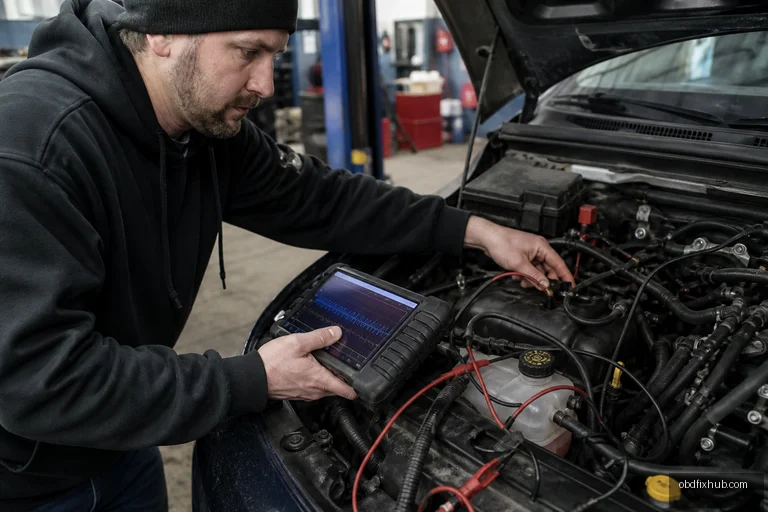
P2B75 Engine Coolant Heater Control Performance means the vehicle’s powertrain control system has detected that the engine coolant heater is not responding as expected. The fault may involve the heater itself, a relay or power circuit, coolant circulation, temperature sensors, or control-module communication. In many cases, the vehicle will still start and drive, but cold starts, cabin heat, emissions performance, and fuel economy can suffer.
What Does the P2B75 Code Mean?
P2B75 is a generic powertrain diagnostic trouble code related to the performance of the engine coolant heater control system. The exact design varies by manufacturer. Some vehicles use an electric coolant heater to warm the engine during cold weather, while others use a coolant heating system integrated into a hybrid or plug-in hybrid thermal-management circuit.
The word performance is important. This code does not automatically mean the heater element is open or completely dead. The control module may have commanded the heater on but observed an unexpected current draw, an inadequate coolant temperature increase, an implausible temperature-sensor reading, or a control signal that did not reach the expected state.
Common Symptoms of P2B75
Some drivers notice only a check engine light, particularly when the code is stored as a pending fault. Others experience noticeable problems during cold starts or when the vehicle has been parked outside overnight.
- Illuminated check engine or service powertrain warning light
- Slow engine warm-up in cold weather
- Weak or delayed cabin heat
- Rougher-than-normal cold starts
- Reduced fuel economy during short trips
- Longer engine warm-up time before emissions systems operate normally
- Reduced electric-only range or altered hybrid operation on electrified vehicles
- Cooling-fan operation or additional warning messages in some models
A useful real-world clue is whether the fault appears only below a certain ambient temperature. If P2B75 returns after a freezing overnight soak but disappears during warm-weather driving, the heater’s current draw, relay contacts, wiring resistance, or coolant circulation deserves close attention.
Most Likely Causes of P2B75
1. Failed coolant heater
The heater element can fail open, short internally, or develop high resistance. A heater that draws some current but not enough to produce the expected heat can set a performance code even when a basic continuity test appears normal.
2. Blown fuse, weak relay, or damaged power wiring
High-current coolant heaters place substantial demand on the electrical system. A partially burned relay contact, loose fuse connection, corroded ground, or voltage drop in the positive cable can allow the heater to switch on without delivering full power. This is a common reason a visual inspection alone misses the fault.
3. Low coolant or trapped air
Low coolant may prevent the heater from transferring heat correctly. Air trapped around the heater can create abnormal temperature readings, poor circulation, or overheating protection shutdowns. Always check the coolant level only when the engine is completely cold, and inspect for leaks before replacing electrical parts.
4. Faulty coolant temperature sensor
The control module decides whether the heater is working partly by comparing temperature data before and after activation. A biased engine coolant temperature sensor, heater outlet sensor, or thermal-management sensor can make a functioning heater appear ineffective.
5. Control-module or communication problem
On newer vehicles, the engine control module may communicate with a heater controller over the CAN network. A software issue, damaged communication wiring, poor ground, or another module fault can interrupt the command or feedback signal. Manufacturer-specific technical service bulletins should be checked before condemning an expensive heater assembly.
How to Diagnose P2B75 Correctly
Do not begin by replacing the coolant heater based only on the stored code. A professional diagnosis compares the commanded state, electrical supply, current draw, coolant temperature, and actual temperature rise.
- Record all diagnostic codes and freeze-frame data. Note ambient temperature, coolant temperature, battery voltage, vehicle speed, and whether the code is pending or confirmed. Related low-voltage, temperature-sensor, or communication codes may identify the real cause.
- Verify the complaint under the right conditions. If the heater operates only during cold conditions or while the vehicle is plugged in, testing it in a warm workshop may not reproduce the failure.
- Inspect the heater circuit. Check the fuse, relay, connectors, ground points, and harness routing. Look for melted plastic, green corrosion, water intrusion, and terminals that have lost tension.
- Measure voltage under load. A voltage reading with the heater disconnected can look perfect. Test the supply and ground while the heater is commanded on. A significant voltage drop indicates resistance in the cable, relay, fuse holder, or ground path.
- Check current draw against manufacturer specifications. An open circuit shows no current, while a partially failed element may draw less than specified. Excessive current can indicate an internal short or incorrect heater resistance.
- Compare temperature data. Use a scan tool to compare the engine coolant temperature with the heater inlet and outlet readings, if available. A temperature value that jumps suddenly, remains fixed, or disagrees with an infrared measurement suggests a sensor or wiring issue.
- Confirm coolant circulation and bleed the system. After repairing a leak or replacing a heater, follow the vehicle’s bleeding procedure. A pocket of air can cause the same performance complaint to return.
Safety note: Some coolant heaters in plug-in hybrids and other electrified vehicles use high-voltage circuits. Do not probe orange cables, disconnect high-voltage components, or perform resistance tests without the manufacturer’s isolation procedure and appropriate training. A conventional 12-volt block-heater circuit and a high-voltage coolant heater are not tested the same way.
Repair Options for P2B75
The correct repair depends on what the test results show. A blown fuse may be simple to replace, but it should never be treated as the complete repair until the reason for the excessive current or short circuit is found.
- Replace a failed coolant heater or heater control module.
- Repair corroded connectors, damaged wiring, or poor ground connections.
- Replace a defective relay or damaged high-current fuse holder.
- Repair coolant leaks and refill or bleed the system using the correct coolant.
- Replace an inaccurate coolant temperature sensor and inspect its connector.
- Perform required software updates or module programming when a service bulletin applies.
After the repair, clear the code and perform a complete drive cycle under conditions similar to those in the freeze-frame data. Confirm that the heater receives its command, current draw is within specification, coolant temperature rises normally, and P2B75 does not return as a pending or confirmed code.
Can You Drive With P2B75?
Usually, a vehicle with P2B75 can be driven for a short period if there is no overheating, coolant leak, severe drivability problem, or high-voltage warning. However, postponing diagnosis is unwise in cold climates. Repeated cold operation can increase fuel consumption, reduce cabin heating, and place additional strain on the battery and emissions system.
Stop driving and arrange immediate inspection if the coolant temperature rises abnormally, the heater circuit smells burned, wiring becomes hot, the battery warning appears, or the vehicle enters a reduced-power mode. Those signs indicate a problem more serious than a simple comfort-related heater failure.
Final Takeaway
P2B75 does not identify one specific replaceable part. It indicates that the coolant heater system’s commanded operation and observed performance do not agree. The most reliable fix comes from testing voltage drop and current draw under load, verifying coolant circulation, comparing temperature sensors, and checking manufacturer-specific service information before installing parts.
If this code is stored in your vehicle, begin with a full scan, freeze-frame review, and cold-system inspection. That approach prevents the two most common mistakes: replacing the heater when the real problem is wiring, or replacing a sensor when the heater has lost power.
Frequently Asked Questions
Is P2B75 the same as a bad engine block heater?
Not necessarily. P2B75 can involve an electric coolant heater, its control circuit, sensors, circulation, or a high-voltage thermal-management system. The vehicle’s wiring diagram and diagnostic procedure are needed to identify the exact component.
Can low coolant cause P2B75?
Yes. Low coolant or trapped air can prevent proper heat transfer and create implausible temperature readings. Check for leaks and follow the correct bleeding procedure before replacing electrical components.
Will P2B75 clear itself?
The warning light may turn off after several successful cold-start or heater-monitoring cycles, but the stored code can remain in memory. If the underlying performance problem continues, the code will return.
How much does it cost to repair P2B75?
Cost varies widely. A fuse, relay, connector, or sensor may be relatively inexpensive, while an integrated coolant heater or high-voltage heater assembly can be costly. Diagnosis is essential because the code alone does not identify the failed part.
Can I test a high-voltage coolant heater at home?
It is not recommended unless you are trained and equipped for high-voltage vehicle service. High-voltage systems can remain dangerous even when the vehicle appears to be switched off. Use a qualified technician for isolation, testing, and repair.




