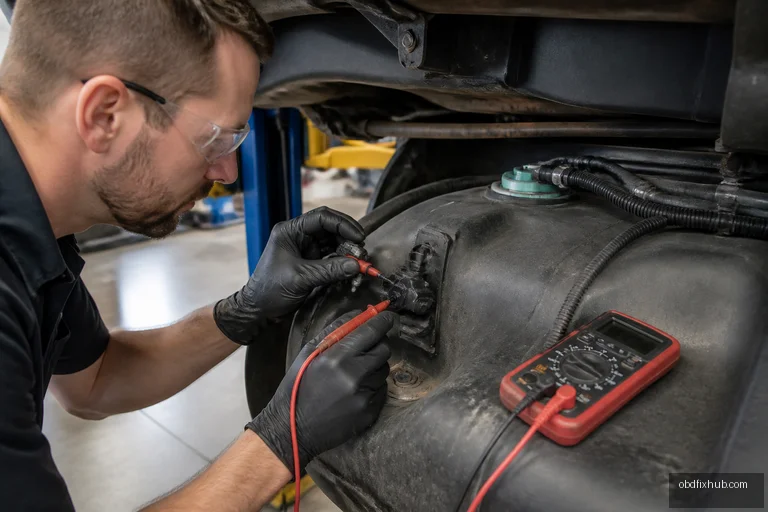
P2B7A indicates a problem with the EVAP system pressure sensor C circuit, but the exact sensor location and circuit description can vary by vehicle manufacturer. In practice, the fault is usually caused by a failed fuel-tank pressure sensor, damaged wiring, a poor connector, an incorrect reference voltage, or a problem in the EVAP plumbing that makes the sensor reading implausible. A scan tool can identify the code, but proper diagnosis requires electrical testing rather than replacing the sensor immediately.
What Does the P2B7A EVAP System Pressure Sensor C Circuit Code Mean?
The evaporative emissions control system prevents gasoline vapors from escaping into the atmosphere. It stores vapors in a charcoal canister and later draws them into the engine to be burned. Pressure sensors allow the powertrain control module, or PCM, to monitor whether the fuel tank and EVAP system are holding, releasing, or developing pressure as expected.
P2B7A means the PCM has detected an electrical or plausibility fault involving EVAP pressure sensor C. The letter C does not necessarily mean the sensor has a terminal labeled C. It usually identifies one of several related sensor circuits in the manufacturer’s control strategy. Always check the vehicle-specific wiring diagram and service information before assuming which physical sensor is involved.
P2B7A Symptoms You May Notice
Some vehicles show no drivability complaint because the EVAP system is not essential for the engine to run. Others may experience symptoms when the fault affects tank pressure management or occurs alongside another EVAP problem.
- Illuminated Check Engine Light
- Failed emissions or inspection test
- EVAP readiness monitor that will not complete
- Hard starting or extended cranking after refueling
- Fuel odor near the vehicle
- Rough idle immediately after filling the tank
- Unusual hissing when the fuel cap is removed
- Reduced fuel economy in some cases
A useful real-world clue is the timing of the symptom. If the engine starts normally except after a fill-up, investigate purge-valve operation and fuel-tank pressure data instead of assuming the pressure sensor itself has failed.
Common Causes of the P2B7A Code
1. Failed EVAP pressure sensor
The sensor may develop an internal open circuit, short circuit, or a signal that is stuck at one voltage. Heat, fuel vapor exposure, corrosion, and repeated pressure cycling can degrade the sensor. On some vehicles, the pressure sensor is integrated into the fuel pump module or mounted directly on the fuel tank, making access more involved than a typical under-hood sensor.
2. Damaged wiring or a poor connector
EVAP wiring commonly runs near the fuel tank, rear suspension, exhaust components, and road debris. Look for insulation rubbed through by a tank strap, wiring stretched during fuel-pump replacement, green corrosion inside the connector, or terminals pushed backward in the housing. A connector can appear connected while one terminal fails to grip the sensor pin.
3. Missing reference voltage or sensor ground
Most EVAP pressure sensors use a three-wire arrangement: a reference supply, a sensor ground, and a signal return. Depending on the design, the reference supply may be approximately 5 volts, but the correct value must come from the service manual. A shared reference or ground fault can set P2B7A along with several unrelated sensor codes.
4. Blocked, cracked, or incorrectly routed EVAP lines
A damaged vapor line can cause a pressure reading that does not agree with the purge or vent commands. Mud, dust, insect nests, and a saturated charcoal canister can restrict airflow. A line pinched during tank installation may create a fault that looks electrical because the sensor reports an abnormal pressure response.
5. Vent or purge valve malfunction
A purge valve stuck open can create excessive vacuum in the tank and cause hard starting after refueling. A vent valve that will not open can prevent the system from equalizing pressure. These components do not automatically prove that the pressure sensor is bad, so compare sensor data with commanded valve operation.
6. PCM software or control fault
Control-module failure is possible but uncommon. Before condemning the PCM, verify power, grounds, reference voltage, signal continuity, connector tension, and any applicable technical service bulletins or software updates.
How to Diagnose P2B7A Correctly
- Record all codes and freeze-frame data. Note fuel level, engine temperature, vehicle speed, and the conditions present when P2B7A was stored. Related codes such as P0451, P0452, P0453, or other sensor-circuit faults can change the diagnostic direction.
- Check the fuel cap and EVAP hardware. Inspect the cap seal, filler neck, vapor hoses, canister, vent valve, and wiring around the tank. A loose cap alone may not create a sensor circuit code, but it can explain a separate EVAP leak code.
- Compare live data before testing components. With the vehicle parked and the system at rest, the pressure reading should be believable for the vehicle’s design. A value fixed at an extreme, a reading that does not change with commanded purge, or a sensor value that jumps when the harness is moved suggests an electrical or sensor fault.
- Test the connector with a wiring diagram. Identify the reference, ground, and signal circuits. Do not rely on wire color because manufacturers frequently reuse colors across different circuits. Measure supply voltage and ground voltage drop with the circuit loaded whenever possible.
- Check the signal response. A healthy sensor should change smoothly as system pressure changes. If the reference and ground are correct but the signal remains fixed or falls outside the manufacturer’s specified range, the sensor is a strong suspect.
- Inspect circuit continuity and shorts. Disconnect the PCM and sensor before performing resistance checks. Test for opens, short-to-ground, short-to-voltage, and excessive resistance. A harness may pass a static continuity test but fail when flexed, so perform a wiggle test while monitoring the scan-tool data.
- Perform an EVAP functional or smoke test when appropriate. A smoke machine is useful for finding leaks, but it will not repair an electrical circuit fault. Use the correct test port and follow the manufacturer’s pressure limit; excessive shop air can damage EVAP components.
How to Fix P2B7A
The correct repair depends on the failed test, not simply on the code description. Repair chafed wires with automotive-grade wire, sealed splices, and proper protection from heat and abrasion. Clean light connector oxidation only when the terminals remain mechanically sound; badly corroded or loose terminals should be replaced.
If the sensor fails its reference, ground, or signal tests, replace the sensor or the complete fuel-pump module according to the vehicle’s design. On tank-mounted units, relieve fuel-system pressure, work in a ventilated area, keep ignition sources away, and use a suitable support when lowering the tank. Fuel vapor is highly flammable, so this is not a safe job around open flames, heaters, or poorly rated electrical equipment.
After the repair, clear the code and verify the pressure reading during key-on, purge, and vent operation. Then complete the required EVAP drive cycle. Clearing the code without completing the monitor may turn the Check Engine Light off temporarily while leaving the vehicle unable to pass an emissions inspection.
Can You Drive With P2B7A?
Short-distance driving is usually possible if the engine runs normally and there is no strong fuel smell, fuel leak, stalling, or difficulty starting. However, continued driving can allow an emissions fault to remain unresolved and may prevent other diagnostic monitors from completing. Stop driving and inspect the vehicle promptly if you smell raw fuel or notice a leak around the tank.
Key Takeaway
P2B7A is not a command to replace an EVAP pressure sensor blindly. Start with the vehicle-specific definition, inspect the tank-area harness and connector, verify reference voltage and ground, watch live sensor data, and test the EVAP valves and lines only after the electrical basics are confirmed. A short, methodical diagnosis often separates a simple wiring repair from an expensive fuel-tank or pump-module replacement.
Frequently Asked Questions
Is P2B7A the same on every vehicle?
No. The general meaning involves the EVAP system pressure sensor C circuit, but the sensor’s location, wiring layout, normal voltage range, and test procedure are manufacturer-specific. Use the factory service information or a reliable vehicle-specific repair database.
Can a bad gas cap cause P2B7A?
A loose or damaged gas cap more commonly causes an EVAP leak code. It can exist at the same time as P2B7A, but it usually does not explain a genuine sensor-circuit fault. Inspect it, then test the sensor circuit rather than replacing the cap repeatedly.
What voltage should an EVAP pressure sensor have?
Many pressure sensors use a regulated reference near 5 volts, a ground, and a variable signal. The exact signal range and pressure-to-voltage relationship differ by vehicle, so use the manufacturer’s specifications instead of treating a generic voltage as proof of failure.
Will replacing the EVAP pressure sensor fix the code?
Only if the sensor has failed. Damaged wiring, poor terminal tension, missing reference voltage, blocked EVAP lines, or a faulty PCM driver can produce the same code. Testing the circuit before replacement prevents unnecessary parts and labor.
Why did P2B7A return after I cleared it?
The PCM may run the sensor plausibility test only under specific fuel-level, temperature, and driving conditions. If the underlying fault remains, the code will return when those conditions occur. Record when it resets and compare the live data with the commanded EVAP operation.




