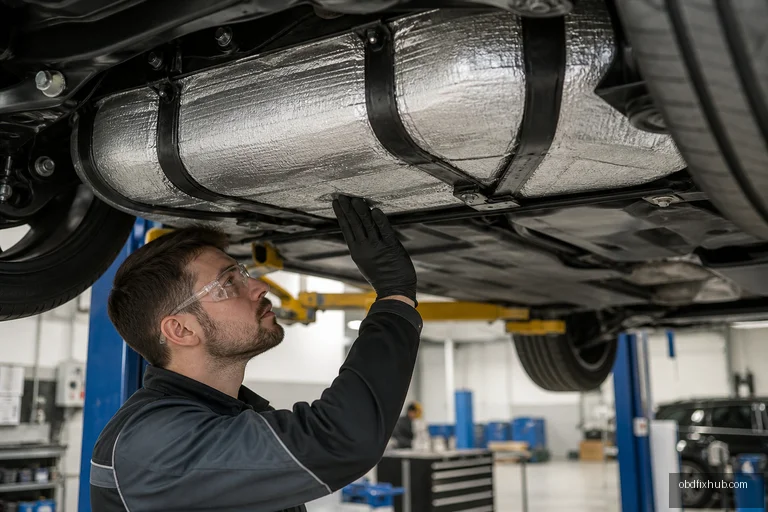
P2CDA Alternative Fuel Tank Vacuum Insulation Deteriorated: Meaning, Causes, Symptoms & Fix
P2CDA means the vehicle’s control system has detected deteriorated vacuum insulation in an alternative-fuel tank or its monitoring circuit. It is not automatically proof that the tank is leaking fuel, but it should never be dismissed—especially on a cryogenic or high-pressure fuel system. The correct repair may involve a sensor, wiring, a vacuum-monitoring valve, or the tank assembly itself, and the exact definition is manufacturer-specific.
What Does P2CDA Mean?
The P2CDA diagnostic trouble code is associated with the condition described as Alternative Fuel Tank Vacuum Insulation Deteriorated. Unlike a conventional gasoline tank, some alternative-fuel vehicles use a double-wall tank or insulated storage vessel. The space between the inner and outer walls may be evacuated to reduce heat transfer and keep the fuel within its intended temperature and pressure range.
When that vacuum weakens, the tank can absorb heat more quickly. The powertrain control module may detect the problem through tank temperature, pressure, vacuum-level, or insulation-monitoring data. On some vehicles, P2CDA is a manufacturer-specific code, so the service information for the exact make, model, fuel type, and tank system is essential.
Common Symptoms of P2CDA
Many drivers notice only a check engine light at first. A deteriorated vacuum does not always create an immediate drivability problem, because the engine may still run normally while the tank-monitoring system records an abnormal thermal condition.
- Illuminated check engine or malfunction indicator lamp
- Reduced fuel range or faster-than-expected fuel consumption
- Longer refueling time or an interrupted filling process
- Fuel-system warning messages on the instrument cluster
- Unusual tank pressure, temperature, or venting behavior
- Difficulty switching between conventional and alternative-fuel modes
- Fuel odor, hissing, frost, or condensation near the tank or fittings
Some of these signs indicate a separate fault rather than insulation deterioration. For example, a bad pressure sensor can imitate a tank problem, while a leaking fitting can create abnormal pressure readings without the tank insulation being defective.
What Causes Alternative Fuel Tank Vacuum Insulation to Deteriorate?
Loss of vacuum inside the tank
The most serious possibility is a gradual loss of vacuum between the tank walls. A damaged seal, failed vacuum port, corrosion, physical impact, or an aging tank assembly can allow air or moisture into the insulated space. Once the vacuum is lost, insulation performance drops even though the outer tank may look intact.
Faulty sensors or monitoring valves
The tank may be healthy while the vacuum sensor, temperature sensor, pressure transducer, or related valve reports an implausible value. A connector with moisture or terminal corrosion is especially common around tanks mounted underneath vehicles. Intermittent wiring can set P2CDA after vibration, then disappear when the vehicle is stationary.
Harness damage and poor electrical connections
Inspect the harness for crushed sections, chafing against a frame rail, stretched wires, and contamination from road salt. Do not rely on a visual inspection alone. A voltage-drop test and a comparison between the scan-tool reading and the actual sensor reference voltage often reveal a high-resistance connection.
Physical damage or improper previous service
A road impact, incorrect lifting-point placement, or an unapproved repair near the tank can damage insulation components. Alternative-fuel tanks are engineered pressure vessels; drilling, welding, heating, or removing fittings without the required procedure can create a severe safety hazard.
How to Diagnose P2CDA Correctly
- Confirm the code and vehicle application. Record all stored, pending, and manufacturer-specific codes. Check whether P2CDA returned after clearing and completing a drive cycle.
- Read live data. Compare tank temperature, pressure, vacuum status, fuel level, and sensor values with the manufacturer’s specifications. A value that is fixed, implausible, or inconsistent with ambient conditions deserves further testing.
- Check technical service information. Some vehicles require a dedicated scan-tool test, a vacuum decay test, or a specific key-off monitoring period before the code can be confirmed.
- Inspect the electrical circuit. Test power, ground, signal voltage, continuity, and voltage drop. Wiggle-test the harness while watching live data to identify an intermittent fault.
- Inspect the tank and fittings safely. Look for impact marks, frost patterns, corrosion, loose brackets, odor, or evidence of leakage. Never loosen a pressurized or cryogenic fuel fitting as a diagnostic shortcut.
- Decide whether the tank or a replaceable component is at fault. If the vacuum-monitoring circuit passes and the tank fails a certified vacuum or insulation test, tank replacement is normally required.
One useful workshop clue is the difference between a sensor failure and real insulation loss. A sensor problem often produces an electrically impossible reading, such as an open circuit, fixed voltage, or sudden value changes. Genuine insulation deterioration is more likely to show a consistent thermal or vacuum trend that fails the manufacturer’s decay limits.
Can P2CDA Be Related to Fuel Tank or EVAP Problems?
Yes, but the systems should not be confused. Conventional gasoline EVAP components—such as the fuel tank pressure sensor, purge valve, vent valve, and charcoal canister—may share wiring routes or diagnostic symptoms, but P2CDA specifically points toward an alternative-fuel tank insulation-monitoring strategy on the applicable vehicle.
Symptoms of general fuel tank problems
- Fuel odor around the vehicle
- Visible wetness or staining near the tank
- Difficulty filling the tank or repeated pump shutoff
- Fuel gauge inaccuracies
- Stalling, hesitation, or loss of power caused by fuel-delivery problems
- Pressure-related warning lights or EVAP codes
Any smell, frost, hissing, or visible leak around an alternative-fuel tank requires caution. Move the vehicle away from ignition sources if it is safe to do so, avoid operating electrical switches unnecessarily, and use a qualified technician familiar with that fuel system.
Symptoms of a bad EVAP or fuel tank pressure sensor
A faulty fuel tank pressure sensor can cause an illuminated check engine light, hard starting after refueling, poor fuel economy, failed emissions testing, repeated EVAP leak codes, or a fuel pressure reading that does not change when the tank is vented or purged. The sensor may also show an implausible pressure with the ignition on and the engine off.
This sensor is not proven faulty merely because an EVAP code is present. A loose fuel cap, blocked vent, cracked vapor hose, purge valve stuck open, or charcoal canister problem can produce similar results. Testing the circuit and observing live pressure data is more reliable than replacing parts based on the code description alone.
Symptoms of a bad charcoal canister
A saturated or damaged charcoal canister may cause fuel odor, difficult refueling, repeated EVAP leak codes, rough running after filling the tank, or fuel vapor entering the intake through a purge valve. Liquid fuel inside the canister often follows overfilling or a venting fault and can permanently damage the activated carbon.
A charcoal canister fault generally relates to gasoline or other vapor-control systems, not the vacuum insulation between the walls of an alternative-fuel tank. Replacing the canister will not repair genuine P2CDA tank insulation deterioration unless diagnosis proves that a shared pressure or vent-monitoring circuit caused the code.
What Is the Correct Fix for P2CDA?
The fix depends on the test result. A damaged connector, corroded terminal, broken wire, or failed sensor may be repaired separately. If the tank has lost its internal vacuum or fails an approved insulation test, the safe solution is usually replacement of the complete tank or a manufacturer-approved tank module.
- Do not drill, weld, puncture, or heat the tank.
- Do not release alternative fuel into the atmosphere as a test.
- Do not substitute a generic pressure sensor without checking calibration and certification.
- Use the manufacturer’s depressurizing, recovery, lifting, and disposal procedures.
- After repair, clear the code and verify the system through the required monitor drive cycle.
If the vehicle uses compressed natural gas, hydrogen, liquefied natural gas, or another specialized fuel, seek a technician trained for that specific system. The tank may be subject to inspection, replacement-life, and certification requirements that do not apply to a standard gasoline tank.
Bottom Line
P2CDA indicates a detected problem with alternative-fuel tank vacuum insulation or the circuit that monitors it. Start with code confirmation, live-data analysis, and wiring checks before condemning an expensive tank. Because a true insulation failure can involve a pressure vessel and hazardous fuel, diagnosis and repair should be performed using factory procedures—not trial-and-error parts replacement.
Action step: Record the vehicle’s make, model, fuel type, mileage, freeze-frame data, and any symptoms, then have an authorized alternative-fuel specialist perform the required tank and sensor tests.
Frequently Asked Questions
Is it safe to drive with P2CDA?
If there is no fuel odor, hissing, frost, visible damage, or pressure warning, the vehicle may still run normally, but prompt diagnosis is recommended. Do not drive it if a leak or abnormal tank behavior is present.
Does P2CDA mean the fuel tank is leaking?
No. It can indicate deteriorated insulation, a failed monitoring sensor, wiring trouble, or a vacuum-monitoring fault. A certified inspection is needed to distinguish these conditions.
Can a bad EVAP sensor cause P2CDA?
Usually not directly. A conventional EVAP fuel tank pressure sensor and an alternative-fuel tank vacuum-monitoring sensor may be different components. Always verify the manufacturer’s circuit description before replacing either part.
Will replacing the charcoal canister fix P2CDA?
Normally, no. A charcoal canister belongs to a vapor-emission system, while P2CDA concerns alternative-fuel tank insulation monitoring on the applicable vehicle. Replace the canister only when testing confirms it is defective.
How much does a P2CDA repair cost?
Cost varies widely. A connector or sensor repair may be relatively limited, while a certified alternative-fuel tank replacement can be substantially more expensive because of recovery, depressurization, labor, testing, and disposal requirements.




