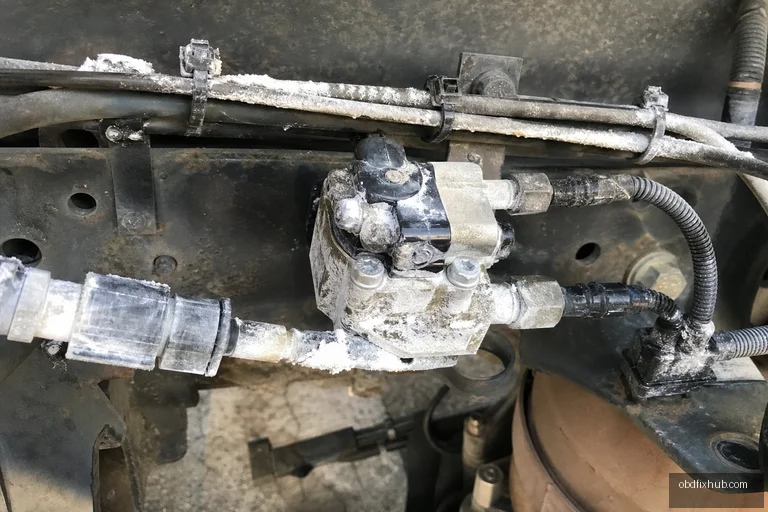
If your vehicle displays P2D1D Reductant System Small Leak Detected, the SCR system has found that DEF pressure or fluid volume is slowly dropping when it should remain stable. In practice, this usually points to a seep at the DEF tank, pump, line, injector, connector, or an internal leak that is not yet large enough to leave an obvious puddle.
This is an informational diagnostic trouble code, not a routine service reminder. The vehicle may still drive normally at first, but ignoring it can lead to reduced engine performance, a no-start countdown, or an expensive SCR system repair.
What Does P2D1D Mean?
P2D1D is commonly used for a small leak detected in the reductant, or diesel exhaust fluid, system. The engine control module or aftertreatment control module runs a pressure, flow, or pressure-decay check. If the measured pressure falls faster than the calibrated limit, the module stores the code and may illuminate the check engine light.
The exact test strategy varies by manufacturer. Some vehicles monitor pump pressure after the system is primed, while others compare expected DEF delivery with pressure sensor readings. Therefore, the code description is a useful direction, but it does not identify the failed part by itself.
Common Causes of a P2D1D Small Leak
- Cracked or damaged DEF supply line: Road debris, freezing fluid, heat, or an improperly secured line can create a slow seep.
- Loose or damaged quick-connect fitting: A connector may look attached while its internal seal is cut, swollen, or not fully locked.
- Leaking DEF injector: The injector at the exhaust can drip after shutdown or fail to close completely.
- Tank or pump module leakage: A seam, pump seal, flange gasket, or internal pressure valve may allow pressure to escape without producing a large external leak.
- Crystallized DEF deposits: Dried white deposits around a fitting often indicate a previous or active leak. Cleaning the crystals alone does not repair the seal.
- Faulty pressure sensor: A sensor that reads low or responds slowly can imitate a leak, especially when no fluid residue is present.
- Incorrect or contaminated DEF: Diluted, contaminated, or badly stored fluid can affect pump operation and injector sealing.
- Cold-weather damage: DEF freezes at approximately 12°F, or -11°C. The system is designed to handle normal freezing, but expansion in a damaged component can expose a weak seam or fitting.
Symptoms You May Notice
A small reductant leak often produces subtle symptoms. You may see the P2D1D code before noticing any change in engine operation. Some vehicles also display messages such as Reductant System Service Required, DEF Quality Poor, or a remaining-distance countdown.
- Check engine light or service emissions warning
- Low DEF level that drops faster than expected
- White, chalky residue around the DEF tank, hoses, or injector
- DEF odor near the rear of the vehicle or exhaust system
- Longer pump-priming time after key-on
- Reduced power or limited engine speed on some diesel models
- A no-start warning after the vehicle reaches its emissions-system countdown
Do not rely on a visible puddle. DEF can evaporate or crystallize into a thin white coating, and an internal pump or injector leak may never reach the ground.
How to Diagnose P2D1D Properly
The most useful diagnosis combines scan data with a controlled leak test. Replacing the DEF pump immediately is a common mistake because a damaged line or injector can create the same pressure-loss code.
- Check all stored codes and freeze-frame data. Look for related codes involving DEF pressure, reductant quality, injector performance, heater circuits, or communication faults. Note the temperature, DEF level, and operating conditions when the code set.
- Inspect the system cold and clean. Use a bright light to examine the tank, pump flange, supply and return lines, quick-connects, injector, and electrical connectors. White deposits are an important clue.
- Verify the fluid. DEF should meet ISO 22241 specifications. Do not test it by tasting or adding water. If contamination is suspected, the tank and lines may require draining and flushing according to the manufacturer procedure.
- Run the manufacturer’s reductant pressure test. A professional scan tool can command the pump, monitor pressure, and perform a leak or pressure-decay test. Compare actual values with the service manual rather than using a universal pressure guess.
- Isolate the circuit. If pressure falls, technicians should cap or disconnect sections one at a time to determine whether the loss is at the injector, line, tank, or pump module.
- Check the pressure sensor separately. If pressure remains stable but the scan data is implausible, test the sensor reference voltage, ground, signal, and wiring before condemning mechanical parts.
P2D1D Reductant System Small Leak Detected: Repair Options
The correct repair depends on where the pressure is escaping. A loose connector may need a new seal or complete connector replacement; forcing it back together can cause another leak. A damaged DEF line is normally replaced rather than patched because ordinary hose repairs may not tolerate the fluid, temperature, or pressure conditions.
If the injector leaks, replacement may require cleaning the mounting surface and installing a new seal. DEF crystallization around the injector should be removed carefully, but do not push crystals into the exhaust or injector opening. A leaking tank or pump module generally requires module, gasket, or tank replacement based on the manufacturer’s parts design.
After the repair, the system may need a reductant pressure test, pump priming routine, injector dosing test, or SCR service reset. Clearing the code without completing these procedures can make the warning return immediately or leave the vehicle’s countdown active.
Can You Still Drive With P2D1D?
For a short trip to a repair facility, driving is often possible if there is no active fluid spray, severe warning, overheating, or major loss of power. Avoid long-distance driving while the code is active because some diesel vehicles progressively limit performance or prevent a restart after the remaining-distance counter reaches zero.
Stop driving and arrange professional assistance if DEF is visibly leaking onto hot exhaust components, the warning says the engine will not restart, the vehicle enters limp mode, or the DEF level falls rapidly. Never pour water into the DEF tank, and never use diesel fuel, fuel additives, or household sealant in the reductant system.
Practical Tips That Prevent Repeat Failures
- Use only sealed, specification-compliant DEF from a reputable supplier.
- Keep the filler cap and surrounding area clean so dirt does not enter the tank.
- Do not scrape deposits aggressively against plastic fittings or electrical connectors.
- Inspect DEF lines after underbody repairs, snowplow installation, or off-road impact.
- Follow the service manual’s instructions for priming and resetting the reductant system.
Summary
P2D1D means the vehicle detected a small loss of pressure or fluid in the reductant system. The most likely causes are a leaking DEF line, fitting, injector, tank seal, or pump module, although a pressure sensor or contaminated fluid can produce similar data. Look for white crystallized residue, use a scan tool to perform a controlled pressure-decay test, and repair the actual leak before clearing the code.
Best next step: avoid guessing at the pump. Have the complete DEF system pressure-tested and inspected, then complete the required priming and reset procedure after the repair.
Frequently Asked Questions
Is P2D1D the same as a low DEF level?
No. A low DEF level concerns the amount of fluid in the tank, while P2D1D generally indicates that the system cannot hold the pressure or flow expected during a leak check. The two conditions can occur together, but they are not the same fault.
Can a DEF cap cause P2D1D?
A filler cap usually does not create a pressure leak in the metered DEF circuit. However, a missing, damaged, or contaminated cap can allow dirt or water into the tank and contribute to system problems. Inspect it, but do not assume the cap is the cause without pressure-test results.
Will clearing P2D1D fix the problem?
No. Clearing the code only removes the stored fault temporarily. If the system still loses pressure, the code and emissions warning will return, and the vehicle may continue its reductant countdown.
How much does a P2D1D repair cost?
Cost varies widely. A damaged seal or accessible line may be relatively inexpensive, while a DEF pump, tank module, or injector can cost substantially more. Diagnosis is important because replacing the pump without proving the leak can add unnecessary expense.




