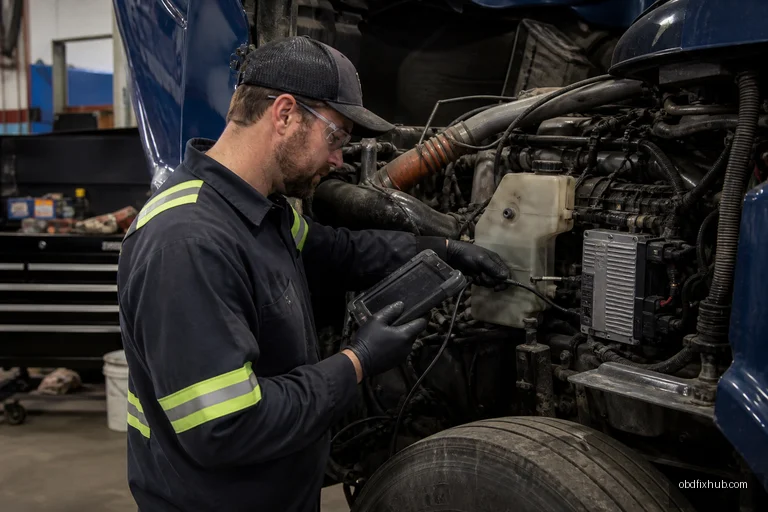
P2D20 Reductant System Flow Blocked means the engine control system has detected insufficient or interrupted DEF/AdBlue flow in the diesel exhaust fluid system. The restriction may be inside the tank pickup, pump, heated line, dosing injector, filter, or electrical circuit. It is not automatically proof that the injector itself has failed, so replacing parts without testing can become an expensive mistake.
This guide explains what the code means, the symptoms it creates, the faults most often found in the workshop, and a practical diagnostic sequence. Because P2D20 behavior and test specifications can vary by manufacturer, always confirm the exact code definition and pressure targets in the vehicle’s factory service information.
What Does P2D20 Reductant System Flow Blocked Mean?
A modern diesel SCR system injects DEF into the exhaust stream, where it helps convert nitrogen oxides into nitrogen and water. The reductant control module monitors pump operation, line pressure, temperature, and dosing performance. When commanded DEF flow cannot be achieved, it may store P2D20 and illuminate the check-engine or emissions warning lamp.
“Flow blocked” does not always mean a solid obstruction. The control module can report the fault when pressure rises too slowly, falls too quickly, or remains outside the expected range. A weak pump, frozen fluid, a crystallized injector, restricted filter, damaged wiring, or a faulty pressure sensor can therefore produce the same diagnostic trouble code.
Common Symptoms of P2D20
- Check-engine light or a dedicated emissions-system warning
- “DEF quality,” “AdBlue system fault,” or “reductant flow blocked” message
- Reduced engine power or an exhaust-system derate
- Remaining-distance countdown before a no-start condition
- Longer crank time or inhibited starting on some vehicles
- DEF pump noise without the expected pressure build-up
- White, chalky crystals around the dosing injector or exhaust fitting
- The code returning shortly after being cleared
A vehicle may drive normally at first because the SCR system is monitored under specific operating conditions. That does not make the fault harmless. If the countdown has started, clearing the code alone will not restore the system; the underlying failure must be repaired and the required reset or verification routine completed.
Most Likely Causes
1. DEF crystallization or contamination
DEF can dry into hard white crystals when it leaks or remains around the injector nozzle. Contaminated or incorrectly mixed fluid can also restrict the pickup screen, pump filter, or dosing valve. Never add water, fuel, coolant, or aftermarket additives to DEF; contamination can damage the pump and SCR catalyst.
2. Frozen reductant
Proper DEF freezes at approximately -11°C (12°F). Factory systems are designed to thaw it with tank and line heaters, so temporary freezing is not necessarily a component failure. P2D20 becomes more suspicious when the fault remains after the vehicle has warmed sufficiently or when a heater circuit cannot operate.
3. Failed pump or restricted filter
The pump must draw fluid from the tank and create the pressure specified by the manufacturer. A worn pump, blocked inlet screen, internal leak, or restricted filter can make pressure rise too slowly. Hearing the pump run is not enough; an electrical motor can operate while its hydraulic output is inadequate.
4. Blocked dosing injector or reductant line
Dried DEF crystals can narrow the heated line or plug the injector tip. A damaged line may also kink, leak, or lose its ability to maintain pressure. Inspect connections carefully because a small leak can allow air into the system and imitate a blocked-flow condition.
5. Wiring, heater, or sensor fault
Corrosion at the tank connector, a blown fuse, poor ground, broken wiring, or a failed line heater can prevent normal dosing. Pressure and temperature sensors may also send implausible readings, causing the module to infer a flow blockage even when the passage is physically open.
How to Diagnose P2D20 Correctly
- Scan all modules, not only the engine ECU. Record freeze-frame data, related reductant codes, temperatures, tank level, and any countdown message before clearing anything.
- Verify the fluid. Check the age, appearance, level, and source of the DEF. Crystals, dirt, oil contamination, or an unusual smell are warning signs. Do not rely only on the dashboard level display.
- Inspect the system visually. Examine the tank, pump module, wiring, heated line, quick-connect fittings, and injector. White deposits often identify the leak or dosing point, but do not assume every crystal is the original cause.
- Run the manufacturer’s actuator test. Use a capable scan tool to command the pump and dosing injector. Compare actual pressure, flow, and pressure decay with the service-manual specification.
- Test heater and power circuits. Check fuses, voltage under load, grounds, connector pins, and continuity. A resistance check alone can miss a circuit that fails when current flows.
- Check the injector separately. If pressure is correct but commanded dosing is absent, test injector activation and inspect the nozzle. Do not force compressed air through sensitive components unless the manufacturer specifically permits it.
- Perform the repair verification routine. After repair, clear codes only after the system has been restored. Complete the reductant priming, pressure test, SCR efficiency test, or service reset required by the vehicle.
Repair Options and Typical Workshop Findings
A minor crystallized deposit may be cleaned using the approved procedure, followed by correction of the leak that caused it. A blocked internal filter, failed pump module, defective heater, or damaged line normally requires component replacement. If contaminated DEF has entered the tank, draining and flushing may be necessary, and simply installing a new injector will not solve the problem.
One useful diagnostic clue is where the pressure test fails. Pressure that never builds points toward the tank, pump, pickup, power supply, or a major leak. Pressure that builds but drops rapidly suggests a leaking line, injector, check valve, or pump internal bypass. Normal pressure with no commanded dose shifts attention toward injector control, nozzle blockage, exhaust temperature conditions, or sensor plausibility.
Can You Keep Driving With P2D20?
Short-distance driving may be possible if the vehicle has no severe derate, overheating, or fluid leak, but continued operation can trigger a stricter emissions limitation or starting countdown. Commercial vehicles should be diagnosed promptly because a no-start event can interrupt operations. If the warning includes “engine will not restart,” arrange repair before the remaining distance reaches zero.
Final Takeaway
P2D20 indicates that the SCR system cannot achieve the expected reductant flow; it does not identify one guaranteed failed part. Begin with fluid condition, visible crystallization, wiring, heaters, pump pressure, line integrity, and injector operation. Use manufacturer-specific test values rather than guessing, and complete the required post-repair reset so the vehicle can confirm that DEF dosing has returned to normal.
Frequently Asked Questions
Can bad DEF cause P2D20?
Yes. Contaminated, incorrectly mixed, or heavily crystallized DEF can restrict the pump, filter, line, or injector. The tank should be tested and flushed when contamination is confirmed.
Will adding fresh DEF clear the code?
Adding the correct fluid may correct a low-level condition, but it will not remove a physical blockage, failed pump, heater fault, or damaged wiring. The code must be diagnosed and the system may require a scan-tool reset.
Is P2D20 caused by cold weather?
Freezing can temporarily interrupt flow because DEF freezes near -11°C (12°F). A healthy system should thaw the fluid using its heaters, so a repeated fault after warm-up requires further testing.
Can I clean a DEF injector myself?
External deposits can sometimes be removed with the manufacturer-approved method, but forcing tools or unapproved solvents into the injector can damage it. Follow the service procedure and replace the injector if its flow pattern or electrical test is incorrect.




