U02A9 Lost Communication With Charge-Air Cooler Pump means the vehicle’s control modules can no longer exchange valid data with the electric pump used to cool intake air. The correct fix is not automatically a new pump: first check the pump fuse, power and ground, CAN wiring, connectors, coolant level, and manufacturer-specific service information. A failed pump is one possibility, but communication faults are often caused by corrosion, a damaged harness, low system voltage, or a control module that has gone offline.
What Does U02A9 Mean?
U02A9 is a network communication diagnostic trouble code. The charge-air cooler pump, sometimes called an auxiliary intercooler pump or low-temperature coolant pump, is usually controlled by an engine, powertrain, or dedicated cooling module. Its job is to circulate coolant through the charge-air cooler so compressed air from a turbocharger or supercharger stays within a safe temperature range.
When the expected message from the pump or its controller disappears, the vehicle stores U02A9. The exact communication architecture differs by make, model, engine, and model year. On some vehicles the pump contains its own electronics; on others, the engine control module commands the pump directly. Always confirm the code definition and wiring diagram for the specific vehicle before testing terminals.
Common Symptoms of U02A9
The symptoms depend on whether the pump has stopped working, the communication circuit is open, or the fault is intermittent. A vehicle may still start and drive normally at light load, which can make this code easy to underestimate.
- Check engine light or powertrain warning light
- Reduced engine power or limited boost pressure
- Higher intake-air temperatures during acceleration or towing
- Cooling fan operation after the engine is switched off
- Auxiliary pump that does not run during an active test
- Additional U-codes, low-voltage codes, or coolant-pump codes
- Intermittent symptoms after rain, washing, or engine-bay work
On a turbocharged engine, the problem may only appear after repeated acceleration. The first pull can feel normal, while later pulls trigger torque reduction because the charge-air cooler cannot remove enough heat.
Most Likely Causes
- Failed auxiliary coolant pump: The electric motor, internal electronics, or impeller can fail. A seized impeller may draw excessive current or blow the pump fuse.
- Blown fuse or faulty relay: A power supply problem can make a healthy pump appear to be offline.
- Open, shorted, or corroded wiring: Harnesses near the radiator, intercooler, battery, or front bumper are exposed to water, vibration, and road debris.
- Damaged CAN communication circuit: A short between CAN-H and CAN-L, a short to power or ground, or excessive network resistance can prevent communication.
- Poor ground or low battery voltage: A weak battery, loose ground strap, or charging-system fault can create several communication codes at once.
- Low coolant or air trapped in the circuit: This may not directly create U02A9, but it can cause pump overheating, noise, poor circulation, and related performance codes.
- Software or module fault: A calibration issue or failed pump-control module is less common, but it should be considered after power, ground, wiring, and network tests pass.
How to Fix U02A9 Code: A Professional Diagnostic Sequence
1. Scan every module, not only the engine computer
Record all stored, pending, and history codes before clearing anything. If several modules report lost communication, begin with battery voltage, main grounds, and the CAN network. If U02A9 is the only communication code, focus more closely on the pump circuit and its local connector.
2. Check battery voltage and grounds
With the ignition off, a fully charged battery should generally measure close to 12.6 volts, although temperature and battery condition affect the reading. During cranking, voltage should not collapse excessively. Inspect the battery terminals, engine-to-body ground strap, and any ground point listed for the pump circuit.
3. Inspect the pump connector and harness
Look for green corrosion, pushed-back terminals, water inside the connector, rubbed insulation, and wires stretched tightly across brackets. Do not rely on a visual inspection alone: gently tug each wire near the connector and compare terminal tension with the manufacturer’s specification. A connector can look clean while its female terminal has lost contact pressure.
4. Verify fuse, power, and ground under load
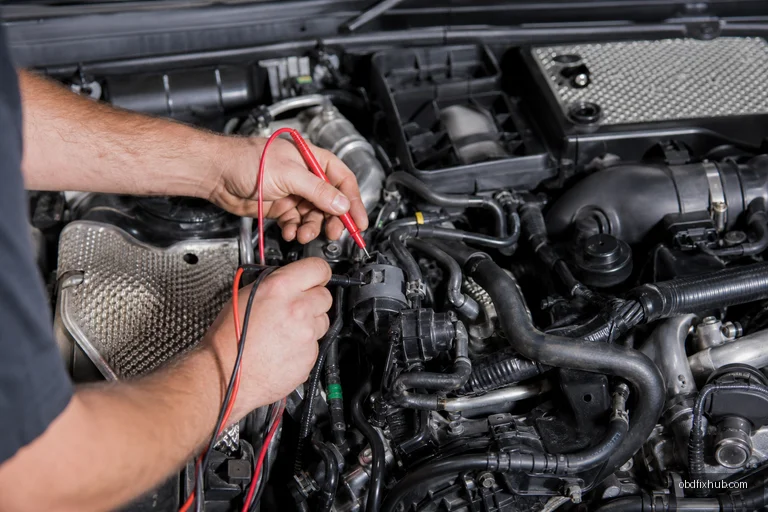
Test both sides of the pump fuse with the circuit energized. Then use a wiring diagram to identify the pump’s power and ground terminals. A multimeter may show battery voltage with no load, yet the voltage can disappear when the pump is commanded on because of a high-resistance connection. A voltage-drop test while the pump operates is more revealing than a simple continuity check.
5. Command the pump with a scan tool
Use the bi-directional actuator test if the vehicle supports it. Listen for a smooth electric-motor sound and confirm coolant movement, but never open a hot pressurized cooling system. A silent pump, a pump that runs only when tapped, or a pump that immediately trips its fuse is strongly suspect. If the pump runs but the scan tool still reports no communication, test the communication wires and module data rather than replacing the pump blindly.
6. Test the CAN network correctly
Follow the vehicle’s service procedure before measuring resistance. On many systems, approximately 60 ohms across the network is expected with the battery disconnected and the network asleep, but this is not universal. An incorrect resistance reading can point to a missing terminator, an open circuit, a shorted CAN pair, or another module pulling the network down. Do not probe airbag circuits or unknown terminals simply because they are nearby.
7. Repair, clear, and verify
Repair damaged wires with the correct automotive-grade splices, seal exposed connectors, refill the cooling circuit with the specified coolant, and bleed it according to the manufacturer’s procedure. Clear the codes only after recording freeze-frame data. Then repeat the actuator test and road-test the vehicle under the conditions that originally produced the fault.
How Do You Know If an Auxiliary Water Pump Is Bad?
A bad auxiliary water pump usually shows a combination of electrical and circulation symptoms. It may fail to respond to a scan-tool command, draw abnormal current, make grinding or squealing noises, leak coolant, or fail to create visible flow in a safe observation point designed by the manufacturer. Do not remove a hose to “see if coolant sprays”; that can cause burns, introduce air, and damage the cooling system.
The strongest diagnosis comes from testing the pump at its connector. If correct power and ground are present, the command signal is valid, and the pump does not operate, replacement is reasonable. If power or communication is missing, the pump itself has not yet been proven defective.
Can You Drive With a Faulty Auxiliary Coolant Pump?
Sometimes you can drive a short distance gently, but it is not automatically safe. If the vehicle shows rising coolant temperature, reduced power, an overheating warning, steam, coolant loss, or unusual engine noises, stop driving and shut the engine down safely. A charge-air cooler pump failure may not overheat the engine immediately, yet high intake temperatures can cause knock protection, poor performance, and turbocharger or engine stress under heavy load.
Until the fault is diagnosed, avoid towing, hard acceleration, high-speed driving, steep climbs, and repeated boost events. A short trip to a repair facility is lower risk when coolant temperature and warning lights remain normal, but a tow is the better choice when multiple modules are offline or the pump fuse keeps blowing.
How Serious Is a P261B Error?
P261B generally refers to a coolant pump “B” control or performance problem, but the precise definition varies by manufacturer. It is separate from U02A9, although both codes can appear when an electric coolant pump is not operating or its control circuit is unstable. P261B is potentially serious because inadequate coolant circulation can lead to overheating, reduced engine protection, or charge-air temperature problems.
Treat P261B as a fault requiring prompt diagnosis rather than a code that should simply be erased. Check coolant level, pump operation, fuse and relay condition, wiring, and any overheating data. The warning becomes urgent if the temperature gauge rises, the cooling fan runs continuously, or the vehicle enters a protection mode.
Common Diagnostic Mistakes
- Replacing the pump before checking its fuse and ground
- Clearing U02A9 without recording companion codes and freeze-frame data
- Using a generic pinout from a different engine or model year
- Testing CAN resistance with the battery connected or modules awake
- Ignoring low battery voltage after a jump-start or battery replacement
- Driving aggressively to “see whether the code returns”
Final Takeaway
U02A9 identifies a communication failure involving the charge-air cooler pump, not a guaranteed pump replacement. Start with a full-module scan, stable battery voltage, fuses, grounds, connector condition, and live power and communication tests. Once the underlying fault is repaired, verify coolant circulation and perform a controlled road test instead of assuming that clearing the code has solved the problem.
Frequently Asked Questions
What is the fastest way to fix U02A9?
The fastest reliable approach is to check all-module codes, battery voltage, the pump fuse, connector corrosion, and the pump’s power and ground. Replace the pump only after those tests confirm that the pump itself is not responding.
Can low battery voltage cause U02A9?
Yes. Low voltage or a poor ground can make an electronic pump controller drop offline and can create several communication codes. Correct the charging or battery problem first, then clear and retest U02A9.
Will U02A9 reduce engine power?
It can. If charge-air temperature rises beyond the permitted range, the engine controller may reduce boost, ignition advance, or torque to protect the engine. The amount of power loss depends on the vehicle’s control strategy.
Should I replace the auxiliary water pump immediately?
No. Confirm that the pump receives the correct voltage, ground, and command. A blown fuse, damaged CAN wiring, loose connector, or low system voltage can produce the same code and will not be fixed by installing a new pump.




