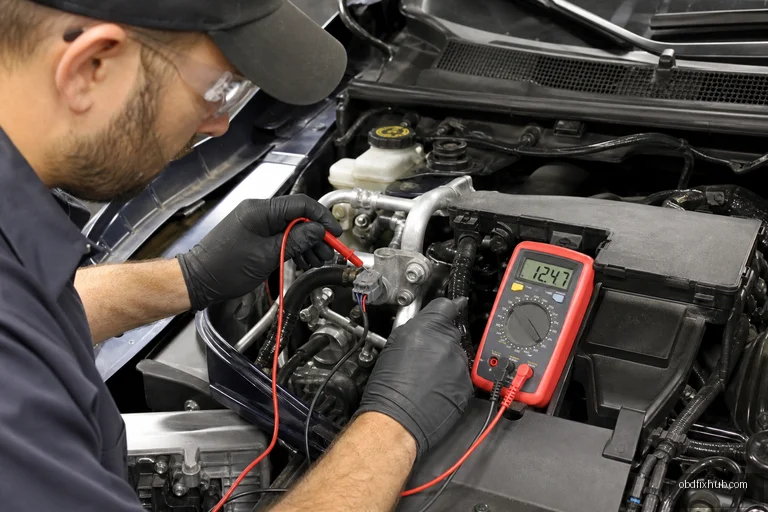
B3A04 A/C Refrigerant Distribution Valve C Control Circuit Driver Current/Temperature Too High: Meaning, Causes, Symptoms & Fix
B3A04 means the climate-control module has detected excessive current or excessive driver temperature in the control circuit for A/C Refrigerant Distribution Valve C. In practical terms, the module is seeing an electrical load that is too high, a valve that is binding, a shorted harness, or an internal driver that is overheating. The code does not automatically mean the refrigerant charge is low, and replacing the compressor is usually not the correct first step.
What Does B3A04 Mean?
B3A04 is a manufacturer-specific body or HVAC diagnostic trouble code. The exact location and function of “Valve C” vary by vehicle, but the code generally relates to an electronically controlled refrigerant distribution valve inside the air-conditioning system. Depending on the system design, the valve may regulate refrigerant flow between evaporator circuits, cooling zones, heat-pump paths, or other A/C operating modes.
The phrase driver current/temperature too high is important. A control module uses an internal electronic driver—similar to a protected transistor circuit—to operate the valve. If that driver must supply more current than expected, or if its temperature rises beyond a calibrated limit, the module stores B3A04 and may shut the circuit down to prevent permanent damage.
- Electrical overload: the valve coil or actuator draws excessive current.
- Short circuit: power, ground, or control wires are contacting each other or the vehicle body.
- Mechanical resistance: the valve is stuck or partially seized and the actuator cannot move normally.
- Module overheating: the HVAC control module or its internal driver is failing.
Common Symptoms of B3A04
Some vehicles will still produce cool air when this code is first recorded. Others will disable compressor operation or place the A/C system in a protective fail-safe mode. A useful clue is whether the symptom changes after the vehicle has been running for several minutes: an internal driver that overheats may work when cold and fail once the dashboard module warms up.
- A/C blows warm or only slightly cool air.
- Cooling works intermittently, especially after a long drive.
- One climate zone is warmer than another on dual-zone systems.
- Air temperature changes unexpectedly when operating mode or fan speed changes.
- The A/C compressor does not engage, or engagement is deliberately inhibited.
- HVAC, climate-control, or check-engine warning messages appear.
- B3A04 returns immediately after clearing, or returns only under load.
Most Likely Causes of the B3A04 A/C Valve C Code
1. Failed refrigerant distribution valve actuator
The actuator may contain a solenoid coil, stepper motor, or integrated electronic position mechanism. A partially shorted coil can still show some resistance on a meter while drawing too much current during operation. A valve that has been exposed to moisture, contamination, or abnormal system pressure may also stick mechanically.
2. Damaged wiring or connector terminals
Inspect the harness near the compressor, refrigerant lines, bulkhead, and front of the engine bay. Heat, vibration, and previous A/C repairs can chafe insulation or pull terminals backward inside a connector. Green corrosion, moisture, loose pins, or a connector that does not lock firmly can create high resistance and unstable current readings.
3. Shorted power or control circuit
A wire shorted to ground can overload the driver as soon as the HVAC module commands the valve. A short to battery voltage can be equally damaging, particularly if the circuit is designed for low-side electronic control. Do not apply battery power directly to an unknown valve; some actuators are not designed for that test and can be destroyed instantly.
4. Refrigerant or mechanical system problem
Incorrect refrigerant quantity, liquid contamination, excessive system pressure, or debris from a failed compressor can increase resistance to valve movement. These conditions may contribute to the fault, but pressure readings alone cannot prove that the valve driver is healthy. A mechanical A/C problem and an electrical B3A04 fault can exist at the same time.
5. HVAC control module failure
If the valve, wiring, power supply, and ground all test correctly, the internal driver may be damaged. Repeatedly installing replacement valves without checking the module can waste money because a shorted driver may damage a new actuator. Module failure is more credible when several unrelated HVAC actuator codes appear together or when the code returns with the actuator disconnected.
How to Diagnose B3A04 Correctly
A basic generic OBD scanner may display the code but often cannot command Valve C or show the HVAC module’s live data. Use a scan tool that communicates with the body or climate-control module and supports active tests whenever possible. Record all codes and freeze-frame information before disconnecting the battery.
- Confirm the code and module. Identify whether B3A04 is stored in the HVAC, body, hybrid, or another controller. Check the vehicle-specific service information because “Valve C” is not universal across manufacturers.
- Check related codes first. Low-voltage, over-voltage, pressure-sensor, compressor, or communication faults may be the primary problem. Diagnose power and ground codes before condemning the valve.
- Perform a visual inspection. Look for melted insulation, oil-soaked connectors, rubbed-through harnesses, bent terminals, and evidence of refrigerant-line or compressor replacement.
- Measure power and ground under load. A circuit can show normal voltage with no load but collapse when the actuator is commanded. A voltage-drop test is more useful than a static continuity check.
- Compare the actuator electrically. Follow the manufacturer’s resistance and current specifications. Do not rely on a universal resistance value because solenoid, stepper, and smart actuators differ significantly.
- Use the scan tool’s active test. Command Valve C while observing commanded position, actual position, driver current, and module temperature if available. A current spike followed by driver shutdown strongly supports an overload or seized actuator.
- Test the circuit with the actuator disconnected. If the code still returns immediately with the valve unplugged, suspect a harness short or HVAC module driver. If the fault disappears, the actuator or its mechanical load becomes more likely.
- Verify the repair. Clear the code, run the HVAC actuator initialization or calibration procedure, operate the A/C through several modes, and confirm that B3A04 does not return.
Repair Options for B3A04
The correct repair depends on the test result, not simply on the code description. Replace the refrigerant distribution valve or actuator when its current draw is out of specification, it fails an active test, or it is mechanically seized. Replace damaged connectors and repair wiring with the correct terminal and sealed splice rather than twisting wires together and covering them with ordinary tape.
If the valve is located inside a sealed refrigerant circuit, recovery and recharge must be performed with approved A/C equipment. The system may require new seals, evacuation, a specified oil quantity, and a precise refrigerant charge by weight. Never loosen a refrigerant line to “see if pressure is present”; liquid refrigerant can cause severe frostbite and eye injury.
When the control module is the confirmed failure, check for the original overload before installing a replacement. A new module may fail again if the old actuator or harness short remains. Some vehicles require module coding, software configuration, actuator calibration, or a vehicle-specific initialization after replacement.
Can Low Refrigerant Cause B3A04?
Low refrigerant can prevent normal cooling and may set pressure-related or compressor-protection codes, but it does not normally explain a valve driver reporting excessive current or temperature by itself. Adding refrigerant without testing the electrical circuit can hide the real fault and create an overcharged system. Treat B3A04 primarily as an electrical actuator-control problem until testing proves a pressure or mechanical issue is contributing to it.
Practical Diagnostic Tips From the Workshop
- Check whether the code is present with the engine and HVAC system cold, then repeat the test after the module has warmed up.
- Wiggle-test the harness while watching actuator current or the code status; intermittent changes often reveal a broken conductor inside the insulation.
- Do not confuse a normal coil resistance reading with a healthy actuator. Mechanical binding can cause excessive current only during movement.
- Inspect shared HVAC grounds and fuses. A poor ground can make several actuators operate abnormally and create misleading individual codes.
- Keep the old part until the repair is verified. If the replacement does not change the fault, the original actuator may not have been the cause.
Frequently Asked Questions
Is B3A04 safe to drive with?
Driving is usually possible if the vehicle runs normally, but the A/C may be disabled and the fault can worsen. If there is smoke, a burning electrical smell, melted wiring, or repeated fuse failure, stop using the system and have it inspected promptly.
Does B3A04 always mean the refrigerant valve must be replaced?
No. The valve, wiring, connector, power supply, ground, and HVAC control module can all produce this code. Testing the circuit with the actuator connected and disconnected is essential before replacing parts.
Can I diagnose B3A04 with a cheap OBD2 scanner?
A basic scanner may read or erase the code, but it often cannot access the HVAC module or perform an actuator test. A manufacturer-capable scan tool is strongly preferred for accurate diagnosis.
Why does B3A04 return after I clear it?
The code returns when the module repeats its self-test and detects the same overload or over-temperature condition. An immediate return points toward a hard short, failed actuator, or module fault; a delayed return may indicate heat-related or intermittent failure.
Bottom Line
B3A04 identifies an excessive-current or excessive-temperature condition in the A/C Refrigerant Distribution Valve C control circuit. Start with module-level scanning, wiring inspection, voltage-drop testing, and an actuator command test. Repair the confirmed electrical or mechanical cause, complete any required refrigerant service safely, then perform HVAC calibration and a full verification drive. This approach is faster and more reliable than guessing with refrigerant, a compressor, or a replacement valve.




