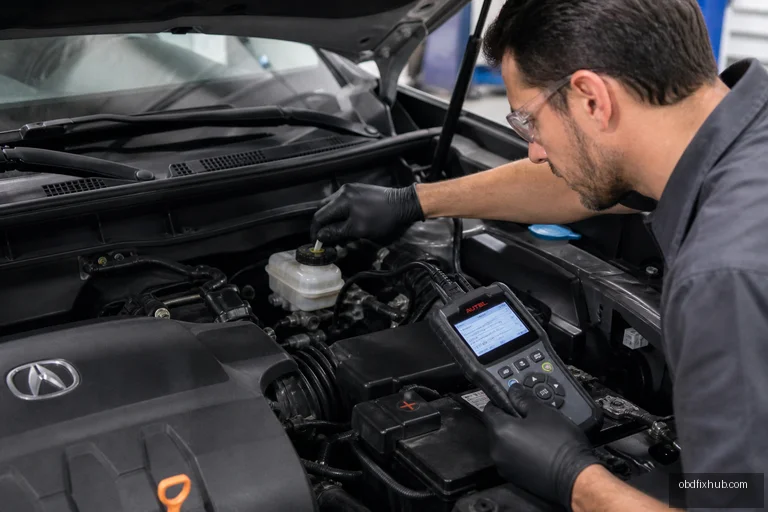
C004B means the vehicle has detected an open circuit in the brake fluid level sensor or switch. The fault may be caused by a genuinely low fluid level, a failed float sensor, damaged wiring, corrosion, or a poor connector connection. Because this sensor can warn you about a hydraulic brake problem, do not treat the code as a harmless electrical glitch until the brake fluid level and the entire braking system have been checked.
What Does C004B Mean?
The diagnostic trouble code C004B is generally defined as Brake Fluid Level Sensor/Switch Circuit/Open. It is usually stored by the ABS, electronic brake control, or body control module, depending on the vehicle manufacturer. The word open means the module sees an interrupted electrical circuit instead of the expected signal from the brake fluid level switch.
Most brake fluid reservoirs use a small float and switch. When the fluid drops below a calibrated point, the float moves and changes the electrical state of the circuit. On some vehicles the sensor is built into the reservoir; on others it is part of the reservoir cap or a removable level-switch assembly. That design difference matters when estimating repair cost.
Common Symptoms of a Bad Brake Fluid Level Sensor
A C004B fault does not always produce the same symptoms. A vehicle with a failed sensor may brake normally at first, while another vehicle may have a real low-fluid or hydraulic fault at the same time. Typical signs include:
- A red brake warning light that remains illuminated after the parking brake is released.
- An ABS, ESC, or brake system warning message on the instrument cluster.
- A warning light that appears intermittently when cornering, braking hard, or driving over bumps.
- A brake fluid level warning even though the reservoir appears full.
- No warning when the fluid is genuinely low, which is a more dangerous failure.
- C004B returning immediately after the code is cleared.
- Visible corrosion, moisture, or loose terminals at the reservoir sensor connector.
A sensor fault by itself should not normally cause a soft brake pedal. If the pedal feels spongy, sinks while held, or requires more travel than usual, investigate the hydraulic braking system immediately rather than assuming the sensor is the only problem.
What Causes C004B?
Low brake fluid caused by pad wear
As disc brake pads wear, the caliper pistons move farther outward and the reservoir level can gradually fall. This can trigger the level switch even when there is no external leak. Topping up the reservoir without checking pad thickness can hide the reason the level dropped and may cause an overfilled reservoir after new pads are installed.
A brake fluid leak
Leaking calipers, wheel cylinders, flexible hoses, steel brake lines, the master cylinder, or ABS hydraulic components can lower the reservoir level. Look for wetness around the wheels, under the master cylinder, along brake pipes, or on the inside of a tire. Any active leak is a safety-critical repair and the vehicle should not be driven until the system is inspected.
Failed float or level switch
The float can stick because of contamination, swelling, or internal damage. The electrical contacts inside the switch can also fail. A common real-world pattern is a brake warning light that stays on with a clean, correctly filled reservoir and a circuit that does not change state when the float is moved.
Open, damaged, or corroded wiring
The connector near the reservoir is exposed to heat, vibration, spilled fluid, and water. A broken wire close to the connector can look intact until the harness is gently flexed. Rodent damage, previous engine-bay repairs, and wires trapped under a battery tray are also frequent causes of an open circuit.
Connector, fuse, or module problems
A pushed-out terminal, loose connector lock, blown fuse, or poor ground can interrupt the sensor signal. In rare cases, the input circuit inside the ABS or body control module is damaged. Module replacement should be considered only after power, ground, wiring continuity, and the sensor itself have been tested.
How to Diagnose a C004B Brake Fluid Level Sensor Circuit
Start with the mechanical checks before reaching for an electrical tester. A scan tool can identify which module recorded C004B and show freeze-frame data, but the code alone cannot prove that the sensor is defective.
- Check the brake fluid level. Park on level ground and inspect the reservoir against the MIN and MAX marks. Use only the fluid specification listed on the cap or in the owner’s manual.
- Inspect for leaks. Check the master cylinder, ABS unit, brake lines, hoses, calipers, and wheel cylinders. Do not simply add fluid if the level is falling.
- Inspect pads and shoes. Excessively worn friction material can explain a low reservoir level without an obvious leak.
- Examine the sensor connector. Look for green corrosion, bent pins, fluid contamination, broken locking tabs, and wires pulled tight against the connector.
- Check live data or switch status. On supported vehicles, the scan tool may display the brake fluid level switch as active, inactive, open, or closed. Move the vehicle or float only as the service information permits.
- Test the circuit with a wiring diagram. With the ignition off, measure continuity and resistance at the sensor and compare the result with the manufacturer’s specification. Do not short terminals together unless the service procedure explicitly instructs you to do so.
- Repair, clear, and retest. After correcting the fault, clear the code and perform a road test while confirming that the brake and ABS warning lamps remain off.
One useful diagnostic detail is whether C004B returns as soon as the ignition is switched on or only after the car moves. An immediate return often points to an open circuit or failed switch. A fault that appears during driving may indicate harness movement, vibration, fluid sloshing near the threshold, or a separate ABS system issue.
Is It Safe to Drive With a Bad Brake Fluid Level Sensor?
Driving with a bad sensor is risky because you may lose an important warning about low brake fluid. If the brake pedal is firm, the fluid is at the correct level, there are no leaks, and the problem has been professionally confirmed as sensor or wiring related, a short trip to a repair shop may be reasonable. It is not wise to continue normal driving for weeks with the warning system disabled.
Stop driving and arrange a tow if the brake pedal is soft or sinking, the fluid level is below MIN, the red brake warning light is on with other braking symptoms, fluid is leaking, or the ABS and brake warnings appear together. A sensor code can coexist with a serious hydraulic problem.
How Much Does a Brake Fluid Level Sensor Replacement Cost?
In the United States, a standalone brake fluid level sensor commonly costs about $30 to $150, while labor may add approximately $80 to $200. If the sensor is integrated into the brake fluid reservoir, replacing the reservoir can bring the total to roughly $150 to $450. Luxury vehicles, difficult access, dealer labor rates, and required ABS bleeding procedures can push the bill higher.
Wiring repairs may cost less than a component replacement when the break is easy to reach, but extensive harness damage can take several hours to locate. Ask the shop whether the estimate includes diagnosis, brake fluid, bleeding, code clearing, and a post-repair scan. Replacing the reservoir without proving the sensor is faulty is an avoidable expense.
Common Repair Options
- Correct the brake fluid level after identifying why it dropped.
- Repair or replace damaged wiring and terminals.
- Clean or replace a corroded connector where permitted by the manufacturer.
- Replace the brake fluid level sensor, reservoir cap, or complete reservoir assembly.
- Repair a leaking brake component and bleed the hydraulic system.
- Diagnose the ABS or body control module only after the sensor circuit has passed all tests.
Use the correct brake fluid and keep the reservoir cap clean. Even a small amount of dirt introduced during testing can contaminate the hydraulic system and affect expensive ABS components.
C004B: The Practical Bottom Line
C004B identifies an open brake fluid level sensor or switch circuit, but it does not automatically mean the sensor needs replacement. Check fluid level, brake wear, leaks, connector condition, and circuit continuity in that order. Because the fault can disable an important low-fluid warning, repair it promptly and never ignore changes in pedal feel or braking performance.
Frequently Asked Questions
What are the common signs of a brake fluid level switch fault?
The most common signs are a persistent red brake warning light, an intermittent warning over bumps or during turns, a brake fluid message with a full reservoir, and code C004B returning after it is cleared. A faulty switch may also fail to warn when the fluid level is genuinely low.
What are the symptoms of a bad brake fluid level sensor?
Typical symptoms include a false low-fluid warning, an illuminated brake or ABS warning lamp, intermittent warnings, and no change in scan-tool switch status when the reservoir level changes. A bad sensor normally does not create a soft pedal; that symptom requires a hydraulic inspection.
Is it bad to drive a car with a bad brake switch sensor?
It is unsafe to rely on a vehicle that cannot warn you about low brake fluid. If braking feels normal and a technician has confirmed an isolated sensor fault, drive only as needed to reach a repair facility. Do not drive if the fluid is low, leaking, or the pedal feels abnormal.
How much does it cost to replace a brake fluid level sensor?
A typical repair is around $110 to $350 when the sensor is accessible, although integrated reservoir designs can cost $150 to $450 or more. The final price depends on the vehicle, labor rate, parts availability, wiring damage, and whether the brakes require bleeding.




