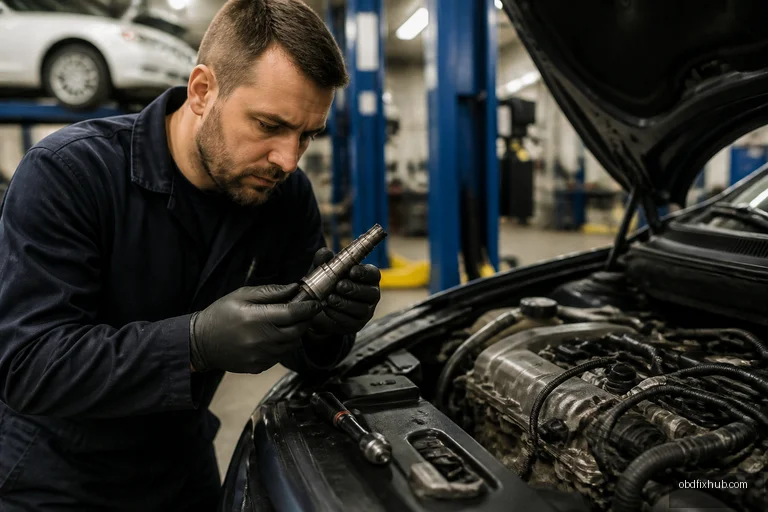
P0026 Intake Valve Control Solenoid Circuit Range/Performance Bank 1: Meaning, Causes, Symptoms & Fix
The P0026 code means the engine computer has detected an intake valve control solenoid signal that is outside the expected range or is not producing the expected camshaft response on Bank 1. You may be able to drive a short distance if the engine runs normally, but ignoring the fault can lead to poor performance, reduced fuel economy, or more expensive variable valve timing damage.
What Does P0026 Mean?
P0026 is a generic OBD-II diagnostic trouble code: “Intake Valve Control Solenoid Circuit Range/Performance, Bank 1.” The intake valve control solenoid, also called an oil control valve or VVT solenoid, meters engine oil to the variable valve timing actuator. By changing oil flow, the engine control module can advance or retard the intake camshaft to improve torque, emissions, and fuel economy.
“Range/performance” is important. The computer is not necessarily reporting a completely dead electrical circuit. It may be seeing correct voltage but an actuator that responds too slowly, moves farther than expected, or fails to produce the camshaft angle requested by the ECU.
Bank 1 is the side of the engine containing cylinder number one. On an inline-four engine there is only one cylinder bank, while on a V6 or V8 the exact solenoid location depends on the manufacturer. Always use the vehicle-specific wiring diagram rather than assuming that “Bank 1” means the driver or passenger side.
Common P0026 Symptoms
Some vehicles set P0026 with almost no noticeable change in drivability. Others enter a reduced-power strategy and feel noticeably weak, especially when accelerating from low engine speed.
- Illuminated check engine light
- Sluggish acceleration or reduced engine power
- Rough idle, hesitation, or occasional stalling
- Hard starting, particularly after the engine is warm
- Lower fuel economy
- Uneven or unstable engine speed
- Valve-train ticking or a brief rattling noise at startup
- Additional camshaft or crankshaft timing codes
A warning light alone does not prove the solenoid is defective. Low oil level, restricted oil passages, incorrect oil viscosity, or a mechanical timing problem can create the same code.
What Causes the P0026 Code?
- Low engine oil: Variable valve timing cannot work reliably when the oil level is below the pickup or oil pressure is weak.
- Dirty or incorrect oil: Sludge can restrict the solenoid screen or actuator. Oil that is too thick for the engine can slow VVT response, especially during cold starts.
- Failed intake VVT solenoid: The coil may be electrically open, shorted, or mechanically stuck by varnish.
- Damaged wiring or connector: Oil-soaked terminals, corrosion, broken wires, and poor grounds are frequent causes of intermittent range/performance faults.
- Blocked oil passage or actuator filter: A small screen in the oil control circuit can collect debris and limit flow.
- Defective camshaft position sensor: The ECU may command a camshaft change but receive an implausible position signal.
- Camshaft actuator or timing-chain problem: A worn phaser, stretched chain, incorrect belt timing, or damaged tensioner can prevent the commanded position from being reached.
- Control-module or power-supply fault: This is less common and should be considered only after the solenoid, circuit, oil supply, and mechanical timing have been tested.
Can You Drive With a P0026 Code?
Usually, a short, gentle drive to a repair shop is reasonable when the check engine light is steady and the engine starts, idles, and accelerates normally. Avoid high engine speeds, towing, hard acceleration, and long trips until the cause is identified. The vehicle may consume more fuel and may have reduced power.
Stop driving and arrange a diagnosis if the check engine light flashes, the engine is misfiring, oil pressure warning appears, the engine stalls, or you hear persistent timing-chain or valve-train rattling. Continuing to drive with low oil pressure or a mechanical timing fault can cause severe engine damage. A P0026 code by itself does not tell you whether the problem is minor or urgent; the symptoms and supporting codes matter.
How to Diagnose P0026 Correctly
Replacing the solenoid immediately is a common mistake. A proper diagnosis checks the oil, the electrical circuit, the commanded camshaft movement, and the mechanical timing in that order.
- Check the oil first. Verify the level on a level surface and inspect its condition. If the oil is badly contaminated, overdue, or the wrong grade, correct the oil problem before testing VVT.
- Record all codes and freeze-frame data. Note engine temperature, RPM, load, and whether the fault occurred during startup, cruising, or acceleration. Related codes such as P0011, P0014, P0021, or camshaft sensor codes can change the diagnostic path.
- Inspect the solenoid and connector. Look for oil inside the plug, pushed-back terminals, cracked insulation, and harness sections rubbing against the engine. A connector that looks clean can still have weak terminal tension.
- Test the solenoid according to the service manual. Measure coil resistance and compare it with the manufacturer’s specification. Do not rely on a universal resistance value; solenoids differ substantially between engines.
- Verify power and control. Depending on the design, the ECU may supply power and control the ground with a pulse-width-modulated signal. A multimeter, test light, or preferably an oscilloscope can reveal missing power, an open control wire, or an abnormal command signal.
- Check actual versus commanded camshaft angle. A scan tool with live data can show whether the cam follows the ECU command. If the solenoid is being commanded but the cam angle barely changes, suspect oil flow, the actuator, or mechanical timing.
- Inspect mechanical timing when necessary. If electrical tests pass and the code returns, verify timing-chain or timing-belt alignment, actuator operation, oil pressure, and camshaft sensor signals.
An advanced but useful workshop test is to remove the VVT solenoid and check whether its spool moves freely and whether the oil screen is obstructed. Do not apply battery voltage blindly: some solenoids can be damaged by continuous power, and the correct test procedure varies by vehicle.
How to Fix the P0026 Code
The correct repair depends on the failed part or condition found during testing. Typical fixes include:
- Correcting the oil level and performing an oil and filter change with the specified viscosity
- Cleaning a serviceable VVT screen or oil passage without forcing debris deeper into the engine
- Replacing a sticking or electrically failed intake valve control solenoid
- Repairing damaged wiring, terminals, grounds, or the solenoid connector
- Replacing a faulty camshaft position sensor after confirming its signal is the problem
- Repairing a worn camshaft actuator, timing chain, tensioner, or timing-belt installation
- Clearing the code and completing a drive cycle while monitoring commanded and actual camshaft position
After replacing a solenoid, do not consider the repair complete merely because the light goes out. Check for leaks, confirm stable oil pressure, clear the code, and road-test the vehicle through cold-start, idle, cruise, and acceleration conditions. Some vehicles also require a VVT relearn procedure with a capable scan tool.
What Does P0026 Mean on a Subaru Legacy?
On a Subaru Legacy, P0026 commonly points to a problem in the intake-side AVCS system on Bank 1. AVCS, Subaru’s Active Valve Control System, uses an oil control solenoid to direct engine oil to a camshaft actuator. Depending on the engine and model year, the fault may involve the solenoid, its oil screen, wiring, oil supply, camshaft position feedback, or mechanical timing.
Subaru diagnosis deserves extra care because low oil level, neglected oil changes, sludge, and restricted AVCS passages can mimic a failed solenoid. On some engines, small filters or banjo-bolt screens in the turbo or AVCS oil supply may also become restricted. Do not remove or modify such filters without following the factory repair procedure; removing a filter without addressing the source of debris can spread contamination through the engine.
Confirm the engine code and model year before ordering parts. The solenoid location, connector design, resistance specification, and bank identification vary between Legacy engines. A Subaru-capable scan tool is particularly helpful because it can display AVCS commanded angle and actual camshaft angle rather than relying only on generic OBD data.
Frequently Asked Questions
What are the symptoms of a bad intake valve control solenoid?
Typical symptoms include a check engine light, rough idle, hesitation, poor acceleration, hard starting, reduced fuel economy, and sometimes a brief rattle during startup. A bad solenoid can also cause camshaft timing codes, but the same symptoms may come from low oil pressure or a mechanical timing problem.
How do I fix the P0026 code?
Start by checking oil level and condition, then inspect the solenoid connector and wiring. Test the solenoid against the vehicle’s specifications and confirm that commanded camshaft movement matches actual movement. Replace or repair only the failed component; if the electrical tests pass, investigate blocked oil passages, the actuator, sensors, and engine timing.
Can a low oil level cause P0026?
Yes. Variable valve timing relies on clean oil at adequate pressure. Low, degraded, or incorrect oil can prevent the intake cam actuator from responding quickly enough, triggering a range/performance code even when the solenoid coil itself is electrically sound.
Is P0026 serious on a Subaru Legacy?
It can be. A Legacy that runs normally with a steady check engine light may be driven briefly to a workshop, but severe rattling, stalling, misfires, low oil pressure, or a flashing light requires immediate attention. Subaru AVCS problems should be diagnosed before replacing parts because an oil restriction or timing fault may be the real cause.
Bottom Line
P0026 identifies an intake valve timing control problem on Bank 1, not automatically a bad solenoid. Check oil and wiring first, use live camshaft data when possible, and verify mechanical timing if the electrical circuit passes. If your vehicle is a Subaru Legacy, confirm the exact engine and AVCS layout before buying parts; a careful diagnosis is usually cheaper than replacing multiple sensors and solenoids by guesswork.




