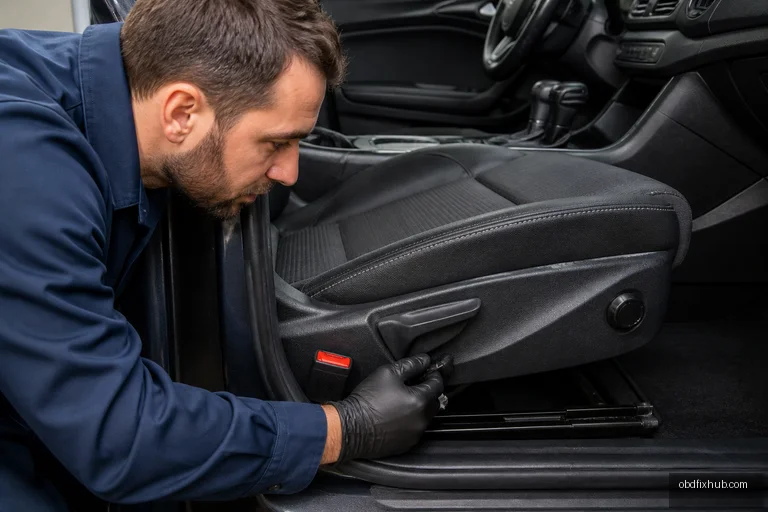
B0050 driver seat belt sensor usually means the restraint control system has detected an electrical fault in the driver-side seat belt sensor or its circuit. On Ford vehicles, the code may involve the buckle switch, wiring, connector, pretensioner circuit, or restraint control module (RCM), so clearing the code without testing the circuit is rarely a real fix.
This is an SRS-related fault, not an ordinary check-engine problem. The airbag warning light may remain illuminated, and the vehicle’s airbags or seat belt pretensioners may not operate as designed in a crash.
What Does the Ford Code B0050 Mean?
Ford B0050 identifies a problem associated with the driver seat belt sensor circuit. The exact description can vary by model year and scan tool. Some Ford-specific versions display an additional suffix, such as B0050:13, which may indicate a short to ground or another defined circuit condition.
The “sensor” is often not a pressure sensor in the seat. In many Ford systems, the restraint module monitors a switch inside the driver seat belt buckle. That switch tells the vehicle whether the belt tongue is latched. Depending on the model, the same fault family can also involve the pretensioner wiring or a related seat belt restraint circuit.
B0050 Driver Seat Belt Sensor Symptoms
The warning signs depend on whether the problem is an open circuit, short circuit, poor connection, or an internal buckle failure. Common symptoms include:
- An illuminated airbag or supplemental restraint system warning light.
- A seat belt warning that stays on even when the belt is fastened.
- A warning chime that continues after the driver buckles up.
- A seat belt warning that appears intermittently when the seat moves.
- A scan tool showing B0050 or a related driver restraint code.
- Additional codes for an open circuit, short to ground, or resistance outside the expected range.
A particularly useful clue is a warning that changes when the driver’s seat is adjusted. If the light appears after sliding the seat backward, the harness under the seat deserves close inspection before replacing the buckle.
Common Causes of the B0050 Code
Damaged wiring under the driver seat
The wiring harness under the seat is exposed to repeated movement, shoes, stored objects, and occasional spills. A wire can become pinched in the seat track or fatigue internally while its insulation still appears intact. This is one of the most common causes of intermittent B0050 faults.
Loose or contaminated connector
A connector may not be fully locked after a seat repair, carpet replacement, or interior cleaning. Moisture, corrosion, or a bent terminal can increase resistance and cause the RCM to reject the signal. Do not assume a connector is good simply because it looks connected; terminal tension matters.
Failed seat belt buckle switch
The buckle switch can wear out mechanically. Dirt, coins, or liquid entering the buckle may prevent the internal contacts from changing state when the belt is inserted. If the wiring tests correctly and the switch does not change state, replacing the buckle assembly is normally the appropriate repair.
Seat belt pretensioner or restraint circuit fault
Some vehicles associate B0050 with a circuit that includes a pretensioner. A damaged pretensioner connector, incorrect resistance, or previous collision damage can therefore trigger the code. Pretensioners contain pyrotechnic devices and must not be tested with improvised electrical tools.
Previous collision or water damage
A vehicle that has been in a crash may have a locked pretensioner, damaged wiring, or an RCM that requires replacement or configuration. Water intrusion from a leaking windshield, door seal, or wet carpet can create less obvious corrosion beneath the seat.
How to Diagnose B0050 Correctly
- Read the complete SRS code. Use a scan tool that can access the restraint control module, not only the engine computer. Record every code and suffix before clearing anything.
- Check the seat belt operation. Confirm that the buckle latches securely and that the warning changes when the belt is inserted and released.
- Inspect the under-seat harness. Look for crushed insulation, stretched wires, loose retainers, corrosion, and signs that the seat track has contacted the harness.
- Follow the manufacturer’s safety procedure. Disconnect the battery and wait for the specified discharge period before disturbing SRS connectors. Many manufacturers use yellow connectors for restraint circuits.
- Test the circuit according to the wiring diagram. A professional technician checks continuity, shorts, connector terminals, and component resistance using the manufacturer’s procedure. Do not apply a test light or meter to an airbag or pretensioner circuit unless the service information specifically permits it.
- Repair the underlying fault. A damaged harness should be repaired using the correct automotive wiring method, and a faulty buckle or pretensioner should be replaced with the correct part for the vehicle.
- Clear the code and run an SRS self-test. The warning light should extinguish only after the module sees a valid circuit and completes its self-check.
One practical diagnostic mistake is replacing the buckle immediately. If the B0050 code returns only when the seat is moved, the buckle may be fine and the real fault may be a wire broken inside the insulation. Monitoring the circuit while carefully moving the seat can reveal this intermittent failure, but it should be done only with the approved SRS test method.
How Do You Reset the Seat Belt Sensor?
You do not normally reset the sensor itself. First repair the circuit, then clear the stored B0050 fault from the RCM with a Ford-capable diagnostic scanner. Disconnecting the battery may erase temporary information on some vehicles, but it will not repair a shorted wire or failed buckle, and the warning will usually return.
After clearing the code, cycle the ignition and check whether the SRS light performs its normal self-test. If the light stays on or B0050 immediately returns, the fault is still present. Because this system controls airbags and pretensioners, repeated code erasing without diagnosis is unsafe and can hide a genuine restraint problem.
How Much Does It Cost to Fix a Seat Belt Sensor?
Repair prices vary by Ford model, location, and the failed component. Typical U.S. estimates are:
- Diagnostic scan: approximately $80–$150 at an independent repair shop.
- Wiring or connector repair: approximately $100–$350, depending on access and damage.
- Driver seat belt buckle replacement: approximately $200–$600 including labor and parts.
- Pretensioner replacement: approximately $300–$900 or more.
- RCM replacement or programming: often $500–$1,200, especially after collision or water damage.
Used restraint parts may reduce the initial price, but compatibility, crash history, and module programming are important. A shop should provide the exact code suffix, failed component, and reason for replacement rather than quoting a buckle solely because B0050 is present.
What Does It Mean If the Seat Belt Sensor Is Malfunctioning?
It means the vehicle cannot reliably confirm the driver’s belt status or communicate correctly with part of the restraint system. The car may still start and drive normally, but the SRS warning indicates that a safety function requires attention. Depending on the failure, the belt warning may be inaccurate and the pretensioner or airbag system may be disabled.
Until the repair is completed, wear the seat belt on every trip and avoid working on the yellow SRS connectors yourself. If the vehicle has been flooded, involved in a collision, or has visible wiring damage, arrange a professional inspection promptly.
Summary: The Safest Way to Fix B0050
B0050 is a driver-side seat belt restraint circuit fault, but the code alone does not identify the failed part. Start with the complete RCM code and suffix, inspect the moving harness beneath the seat, and test the buckle and related circuit using Ford service information. Once the fault is repaired, clear the code with an SRS-capable scanner and confirm that the warning light stays off.
Frequently Asked Questions
Can I drive with the B0050 code?
You may be able to drive the vehicle, but the SRS system may not provide full protection in a crash. Have the fault diagnosed as soon as possible and always use the seat belt.
Will disconnecting the battery clear B0050?
Usually not permanently. Battery disconnection does not repair the underlying circuit fault, and many restraint modules retain the code or restore it during the next self-test.
Is B0050 always caused by a bad seat belt buckle?
No. The buckle switch is one possibility, but damaged under-seat wiring, connector corrosion, a pretensioner fault, collision damage, or an RCM problem can produce the same code family.
Can I test the seat belt sensor with a multimeter?
Do not probe an airbag or pretensioner circuit casually. Follow the exact manufacturer procedure and use approved SRS test equipment; incorrect testing can deploy a pyrotechnic device or damage the restraint module.




