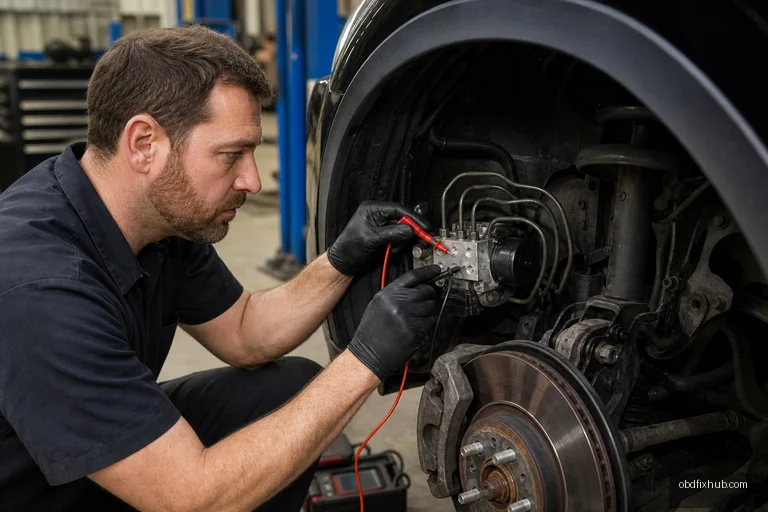
C0010 Left Front Inlet Control usually indicates a problem with the left-front ABS hydraulic inlet solenoid or its electrical circuit. In practical terms, the ABS module cannot control hydraulic pressure correctly at the left-front wheel. The fault may be caused by a damaged wire, poor connector, low system voltage, a failed solenoid, or—less often—the ABS control module itself.
This is an informational diagnostic code, not a routine engine fault. Because it involves the braking system, the correct repair depends on testing the circuit and the hydraulic modulator rather than simply replacing the wheel-speed sensor or clearing the code.
What Does C0010 Left Front Inlet Control Mean?
The C0010 code is a chassis or ABS diagnostic trouble code. The exact wording varies by manufacturer and by the code suffix, but it generally identifies the left-front inlet valve control circuit inside the ABS hydraulic control unit.
The inlet valve is an electronically operated solenoid. During ABS operation, the module uses it to control the flow of brake fluid toward the left-front caliper. If the module detects an open circuit, an electrical short, abnormal resistance, or an inability to operate the valve, it stores C0010.
Some vehicles display a more specific suffix such as C0010-00, C0010-01, or C0010-02. The suffix can distinguish a general malfunction from a short to ground, short to voltage, or another electrical condition. Always check the manufacturer-specific service information before interpreting the final two digits.
Common Symptoms of the C0010 Code
The most obvious symptom is an illuminated ABS warning light. Depending on the vehicle, the traction control, stability control, brake warning, or service stability system message may appear at the same time.
- ABS warning light remains on after startup
- Traction control or electronic stability control becomes unavailable
- ABS does not activate during hard braking on a slippery surface
- Brake pedal feel may change during a fault or self-test
- Clicking or buzzing from the ABS module during a failed valve test
- Stored or intermittent C0010 code that returns after driving
Normal hydraulic braking may still work, but that does not mean the vehicle is operating safely. In many cases, the conventional brake system remains available while anti-lock and stability functions are disabled. A soft pedal, fluid leak, or red brake warning light requires immediate attention rather than continued diagnostic driving.
What Causes C0010?
1. Damaged wiring near the left-front wheel
The harness routing to the ABS hydraulic unit or wheel-end area is exposed to water, road salt, stones, and suspension movement. A wire can break internally while its insulation still looks intact. This is especially common after collision repairs, strut replacement, or work near the left-front wheel.
2. Corroded or loose ABS connector
Moisture inside the ABS module connector can increase resistance or interrupt the solenoid circuit. Look for green corrosion, pushed-back terminals, bent pins, water tracks, or a connector that does not lock firmly. Do not apply ordinary grease directly to electrical terminals unless the manufacturer specifies the correct product and procedure.
3. Failed inlet solenoid inside the ABS modulator
The inlet valve coil can develop an open winding, an internal short, or mechanical sticking. An electrical resistance test that is far outside the service-manual specification is strong evidence of a defective valve, although resistance alone cannot prove that the hydraulic valve is moving correctly.
4. Low voltage or poor power and ground
A weak battery, poor ground strap, or charging problem can create misleading ABS codes. Check battery voltage and charging output before condemning an expensive hydraulic control unit. A voltage drop test under load is more useful than simply looking at a ground connection.
5. ABS control module fault
The module driver that energizes the left-front inlet solenoid can fail. This should be considered only after confirming power, ground, connector integrity, wiring continuity, and solenoid specifications. Replacing the module first is a common and costly mistake.
How to Diagnose C0010 Correctly
- Confirm the code with an ABS-capable scan tool. A basic engine OBD scanner may not access the brake control module or may show only incomplete information. Record all ABS codes and freeze-frame data before clearing anything.
- Check the code suffix and technical service information. Pin numbers, expected resistance, test voltage, and valve activation procedures differ between manufacturers. Do not assume that the left-front valve connector is located at the left-front wheel; on many vehicles, all inlet and outlet valves are inside the central ABS modulator.
- Inspect the harness and connector carefully. Follow the circuit from the ABS module. Look for rubbing against the tire, stretched wires, aftermarket alarm or remote-start splices, water intrusion, and terminals pushed backward in the connector.
- Test power and ground under load. A circuit can show battery voltage with no load but collapse when the solenoid is commanded. Use the wiring diagram and perform voltage-drop tests while operating the relevant circuit.
- Measure the solenoid according to the service manual. Disconnect the module before using an ohmmeter unless the manufacturer specifically permits another method. Compare the left-front inlet valve reading with the other valve circuits when appropriate.
- Use an actuator test if supported. A professional scan tool can command the inlet valve. Listen for a consistent click and observe pressure behavior with the approved test equipment. Never improvise by applying battery power to an ABS valve; some modules can be damaged by an incorrect test voltage.
- Repair, clear, and road-test safely. After the repair, clear the code, cycle the ignition, confirm that the ABS warning lamp performs its normal self-test, and carry out a controlled road test. Some vehicles also require a steering-angle, pressure, or yaw-rate calibration.
C0010 Fix: What Usually Repairs It?
The proper fix depends on the failed part. A damaged wire may require a sealed automotive splice and correct harness support. A corroded connector may need terminal repair or connector replacement, not merely contact cleaner. If the inlet solenoid is integrated into the hydraulic modulator, the repair may involve replacing or professionally rebuilding the ABS unit.
- Repair or replace damaged ABS wiring
- Replace loose, corroded, or water-damaged terminals
- Correct battery, charging, or ground faults
- Replace the ABS hydraulic modulator when the inlet valve has failed
- Replace or reprogram the ABS module when its internal driver is defective
- Bleed the brake system and perform required calibrations after hydraulic work
When an ABS modulator is replaced, ordinary brake bleeding may not be enough. Air trapped inside the valve body may require a scan-tool-controlled automated bleed procedure. Follow the vehicle-specific sequence and use the specified brake fluid; contaminated or incorrect fluid can damage seals and solenoids.
Can You Drive With C0010?
If the brake pedal is firm and there is no fluid leak or red brake warning, the vehicle may retain basic braking, but ABS and stability assistance may be disabled. Drive only as far as necessary for diagnosis, reduce speed, and leave extra stopping distance. Do not test the ABS by deliberately locking the wheels on public roads.
Stop driving and arrange professional inspection if the pedal is soft, sinks, the vehicle pulls during braking, brake fluid is leaking, or multiple brake warnings appear. These symptoms indicate a potential hydraulic or mechanical brake problem beyond the stored code.
Frequently Asked Questions
Is C0010 caused by the left-front wheel-speed sensor?
Usually not. C0010 generally points to the left-front inlet solenoid control circuit in the ABS hydraulic unit. A wheel-speed sensor can cause a different ABS code, although multiple faults can exist at the same time.
Can clearing C0010 fix the problem?
No. Clearing the code may turn the warning lamp off temporarily, but the code will return when the ABS module repeats its self-test or detects the fault during driving.
How much does a C0010 repair cost?
The cost ranges widely. A broken wire or terminal may be inexpensive, while an ABS modulator, brake bleeding, programming, and calibration can cost substantially more. Testing first prevents unnecessary module replacement.
Does C0010 mean the ABS module must be replaced?
No. Wiring, connectors, low voltage, and the inlet solenoid itself are often responsible. The module should be condemned only after the complete circuit has been verified against the vehicle’s wiring diagram and specifications.
Final Takeaway
C0010 Left Front Inlet Control is a brake-system fault involving control of the left-front ABS inlet valve. Start with an ABS-capable scan tool, the correct wiring diagram, power and ground tests, and a careful connector inspection. Repair the confirmed fault, bleed and calibrate the system when required, and treat any ABS warning as a safety issue rather than a code that can simply be erased.




