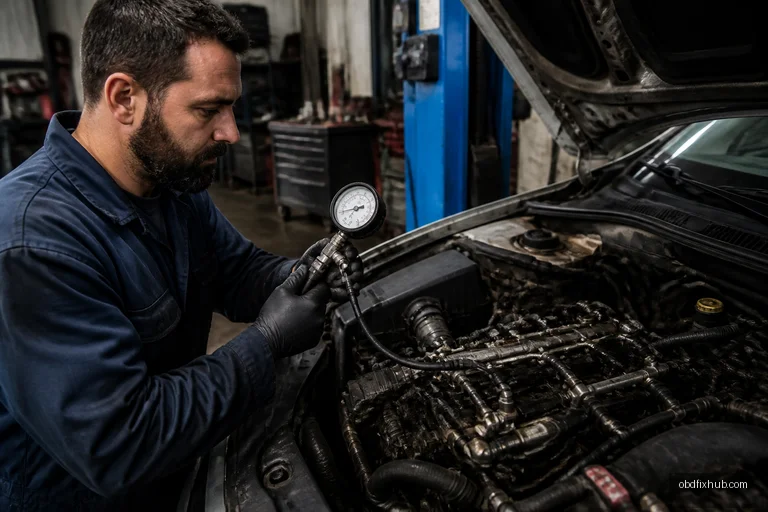
P0148 Fuel Delivery Error means the engine computer has detected a problem with fuel delivery or fuel pressure control. On most diesel applications, the actual fuel rail pressure does not match the pressure the PCM or ECM expects, often because of a weak supply pump, a sticking pressure regulator, a restricted filter, a leaking injector, or faulty wiring. The correct fix is not simply clearing the code; fuel pressure must be tested under the conditions that triggered it.
What Does the P0148 Code Mean?
P0148 is a generic OBD-II powertrain code commonly associated with diesel fuel systems, especially high-pressure common-rail systems. The control module compares commanded fuel pressure with measured pressure and monitors how quickly the system responds when engine load, temperature, or throttle position changes.
If pressure is too low, too high, or slow to follow the command, the module stores P0148. Some manufacturers use slightly different diagnostic names or add manufacturer-specific codes, so the vehicle’s service information should always be checked before replacing parts.
P0148 Fuel Delivery Error Symptoms
The symptoms depend on whether the system is losing pressure, building excessive pressure, or receiving an unreliable sensor signal. A vehicle may drive normally at light load and then fail under acceleration because fuel demand rises sharply.
- Hard starting or extended cranking, especially when the engine is warm
- Engine stalling at idle, during acceleration, or after refueling
- Reduced power or limp-home mode
- Hesitation, surging, or uneven acceleration
- Rough idle and excessive diesel combustion noise
- Illuminated Check Engine light
- Low fuel pressure, high fuel pressure, or rail-pressure-related codes
- Excessive smoke caused by incorrect fuel quantity or poor atomization
A useful diagnostic clue is when the fault appears. A code that occurs only during heavy towing or a long uphill pull often points toward restricted fuel supply or a weak pump. A code that appears immediately after startup may be more consistent with a sensor, wiring, air entering the fuel system, or a pressure-control valve.
Common Causes of P0148
1. Restricted fuel filter or contaminated fuel
A partially blocked filter can pass enough fuel for idling but not enough for high-load operation. Water, gasoline accidentally added to a diesel tank, algae contamination, or metal particles from a failing high-pressure pump can create the same problem. If the filter contains shiny metallic debris, do not install a new filter and continue driving; the entire high-pressure system may require inspection.
2. Weak low-pressure fuel supply
The tank-mounted lift pump, fuel lines, pickup strainer, and electrical supply must deliver a steady volume of fuel to the high-pressure pump. A failing pump may sound unusually loud, lose output when hot, or show normal pressure at idle but collapse during acceleration.
3. Faulty fuel pressure regulator or metering valve
Many common-rail diesel systems use a fuel volume control valve on the high-pressure pump and a pressure-control valve on the rail or return circuit. A valve that sticks, is contaminated, or has a damaged connector can cause pressure to overshoot or fall below the commanded value.
4. Fuel rail pressure sensor or wiring fault
The rail pressure sensor reports actual pressure to the ECM. A shorted wire, poor ground, corroded connector, or sensor with an implausible signal can trigger P0148 even when mechanical pressure is acceptable. Comparing scan-tool data with a mechanical gauge or a known-good pressure transducer is more reliable than replacing the sensor based on the code alone.
5. Excessive injector return flow
Worn injectors can leak too much fuel through their return circuits. The high-pressure pump may be working correctly, but the system cannot maintain rail pressure because fuel is escaping internally. A return-flow or injector leak-off test is one of the most valuable tests when a diesel cranks for a long time and rail pressure fails to rise.
6. Air entering the fuel system
Loose filter seals, cracked quick-connect fittings, damaged hoses, or a poor replacement filter can allow air into the supply side. Air may not produce a visible fuel leak because the system can draw air inward under suction. Clear supply tubing, where permitted by the manufacturer, can reveal bubbles during cranking or acceleration.
How to Diagnose P0148 Correctly
- Record all codes and freeze-frame data. Note engine speed, coolant temperature, commanded rail pressure, actual rail pressure, and vehicle load when the code was stored.
- Check the fuel level and fuel quality. Verify that the vehicle has the correct fuel and inspect a fuel-filter sample for water or contamination.
- Inspect the filter, lines, connectors, and grounds. Pay special attention to wiring near the high-pressure pump, rail sensor, and engine harness.
- Test supply-side pressure and volume. Do not assume a new lift pump works; measure its output under load and while the fault is occurring.
- Compare commanded and actual rail pressure. A scan tool graph is more informative than a single pressure reading. Look for delayed response, sudden spikes, or pressure collapse.
- Perform a regulator and injector return-flow test. These tests separate a control-valve problem from internal leakage through injectors or the high-pressure pump.
- Verify repairs with a road test. Recheck pressure during cold starting, hot restarting, acceleration, and the load condition that originally set P0148.
Safety warning: Common-rail diesel fuel can exceed 20,000 psi. Never loosen a high-pressure line while the engine is running or crank the engine with an exposed fitting. Use the manufacturer’s pressure-release procedure and proper protective equipment.
How to Fix P0148 Code
The repair depends on the test result. Replace a restricted fuel filter and flush contaminated fuel only after confirming the contamination source. Repairing a chafed wire or poor ground may solve the problem without replacing an expensive sensor or pump.
- Replace the fuel filter with the correct application-specific part.
- Drain and clean the fuel system if water or incorrect fuel is present.
- Repair air leaks on the suction side and prime the system correctly.
- Replace a failed lift pump after confirming pressure and volume loss.
- Replace or service the fuel metering valve or rail pressure regulator when testing proves it is sticking or electrically faulty.
- Replace the rail pressure sensor only after checking its reference voltage, ground, signal, and live data.
- Test injectors and the high-pressure pump for excessive internal leakage or metal contamination.
After repairs, clear the code with a scan tool and complete the manufacturer’s fuel-system priming or relearn procedure. Some vehicles require injector coding, rail-pressure adaptation, or a specific drive cycle. If P0148 returns immediately, clearing it again will not solve the underlying fault.
How to Fix a Fuel Delivery Problem Without Guesswork
Start with the lowest-cost, highest-probability checks: fuel quality, filter condition, supply pressure, electrical connections, and air leaks. Replacing the high-pressure pump first is a common and expensive mistake. A pump can be blamed for a pressure fault when the real cause is a blocked pickup, failing lift pump, leaking injector, or inaccurate pressure sensor.
When the vehicle will not start, monitor rail pressure while cranking. If actual pressure never approaches the manufacturer’s minimum starting threshold, investigate fuel supply, pressure regulation, injector return flow, and pump output in that order. If the scan-tool reading is implausible but mechanical pressure is correct, concentrate on the sensor circuit rather than the fuel hardware.
How Do You Reset the Fuel Rail Pressure Sensor?
In most vehicles, the fuel rail pressure sensor itself is not manually reset. After correcting the fault, use a compatible scan tool to clear the stored DTC and perform any required fuel-pressure or injector relearn procedure. Disconnecting the battery may erase some memory, but it does not repair a bad sensor and may reset useful vehicle settings without completing the required adaptation.
Before clearing the code, save the freeze-frame data and confirm the sensor signal is plausible with the ignition on, engine off, during cranking, and at operating temperature. A sensor that reads maximum pressure with the engine stopped, or fails to change smoothly, needs circuit and sensor testing.
How to Tell If a Fuel Pressure Relief Valve Is Bad
A faulty relief valve may cause rail pressure to remain too high, fall too low, or fluctuate rapidly. Typical clues include hard starting, rough running, power loss, fuel returning excessively, or a pressure reading that does not respond when the valve is commanded by a scan tool.
- Compare commanded pressure with actual pressure at idle and under load.
- Check whether the valve receives the correct power, ground, or control signal.
- Inspect the valve for contamination, damaged seals, or metal particles.
- Use the manufacturer’s actuator test rather than applying battery voltage unless specifically authorized.
- Confirm the pressure problem is not caused by injector leak-off or inadequate supply pressure.
Do not remove or test a high-pressure relief valve casually. Some systems use a pressure-limiting valve as a last-resort safety device, and incorrect installation can create a dangerous fuel leak or uncontrolled pressure condition.
Repair Cost and When to Stop Driving
A filter, wiring repair, or sensor may be relatively inexpensive, while a contaminated high-pressure system, pump, and injectors can become a major repair. Cost varies widely by engine design and whether metal debris has spread through the system. Obtain a written diagnosis that identifies measured pressure and test results before approving expensive parts.
Stop driving if the engine stalls in traffic, has severe power loss, leaks fuel, shows metal contamination, or produces abnormal high-pressure pump noise. Continuing to operate a vehicle with unstable fuel pressure can damage injectors, the pump, and in some cases the engine.
Frequently Asked Questions
Can a bad fuel filter cause P0148?
Yes. A restricted filter can reduce supply volume enough to make rail pressure fall below the commanded value, especially during acceleration or towing. Replace it only after checking for water, gasoline, or metal debris that may indicate a larger problem.
Is P0148 safe to drive with?
Short, gentle driving may be possible if the engine runs normally, but it is not risk-free. Avoid towing and hard acceleration, and stop immediately if the engine stalls, loses power, or develops a fuel leak.
Will clearing the code fix P0148?
No. Clearing the code only removes the stored fault until the monitoring test runs again. The fuel-pressure or electrical cause must be repaired first, followed by any required relearn procedure.
Does P0148 always mean the high-pressure fuel pump is bad?
No. A clogged filter, weak lift pump, leaking injector, faulty regulator, rail sensor problem, air leak, or damaged wiring can all produce the same code. Pressure and return-flow testing should come before pump replacement.
Key Takeaway
P0148 Fuel Delivery Error is a fuel-pressure control problem, not a diagnosis of one specific part. Begin with fuel quality and filter checks, then measure supply pressure, rail pressure, regulator operation, injector return flow, and sensor wiring. A measured diagnosis prevents unnecessary pump replacement and is the safest route to a reliable repair.




