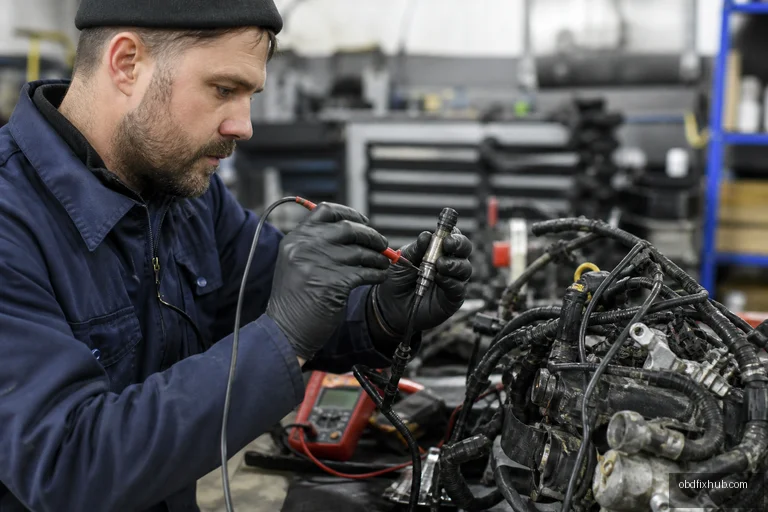
P0213 Cold Start Injector 1 means the engine control module has detected a fault in the cold-start fuel-injection circuit. The problem may be a failed injector, damaged wiring, a poor electrical connection, incorrect coolant-temperature data, or—on some vehicles—a control-module issue. Do not assume the injector itself is defective before testing the circuit, because P0213 is often caused by wiring or temperature-sensor information that makes the injector operate at the wrong time.
What Does P0213 Cold Start Injector 1 Mean?
The cold start injector is an auxiliary fuel injector used on certain gasoline engines to add fuel during cold cranking and the first moments after startup. It is different from the normal port fuel injectors and is not the same component as “fuel injector number one.” The word 1 generally identifies the first cold-start injector in a system that may use more than one.
On older Toyota, Lexus, Volkswagen, Mercedes-Benz, Nissan, and other fuel-injected vehicles, the cold start injector may be mounted on or near the intake manifold. Many newer vehicles no longer use a separate cold-start injector; the PCM simply increases the pulse width of the regular injectors. For that reason, the exact factory service information for the vehicle is essential before any parts are ordered.
P0213 Symptoms You May Notice
A vehicle with this code may start normally when warm but struggle after sitting overnight. In other cases, the engine starts with excessive fuel, runs roughly, or produces dark exhaust because the cold-start enrichment is too rich.
- Hard starting or extended cranking when the engine is cold
- Repeated stalling immediately after a cold start
- Rough idle or hesitation during the first few minutes
- Black smoke or a strong gasoline smell from the exhaust
- Reduced cold-weather drivability
- Illuminated Check Engine Light
- Low fuel economy if the injector leaks or remains energized
A useful real-world clue is temperature dependence. If the engine starts easily at 70°F but needs several attempts at 30°F, the cold-start circuit, coolant-temperature input, fuel pressure, and intake air leaks deserve priority during diagnosis.
Common Causes of P0213
Failed or leaking cold start injector
The injector can develop an open electrical coil, an internal short, a clogged nozzle, or a leaking pintle. A clogged injector usually creates a lean cold-start condition, while a leaking injector can flood the engine after it is parked. A fuel-pressure test followed by a leak-down test helps separate these faults.
Open, shorted, or corroded wiring
Heat, vibration, and fuel-system work can damage the wiring near the intake manifold. Look for insulation rubbed through against a bracket, green corrosion inside a connector, loose terminals, and previous repairs made with poorly crimped connectors. A visual inspection alone is not enough; gently flex the harness while monitoring continuity or scan-tool data.
Incorrect engine coolant temperature data
The PCM decides how much cold enrichment is needed using coolant temperature and other inputs. If the engine is actually cold but the scan tool shows 176°F before startup, the coolant-temperature sensor or its circuit may be the real problem. Compare the reported coolant temperature with ambient temperature after the vehicle has been parked for several hours.
Blown fuse, failed relay, or poor ground
Some systems supply the injector with ignition voltage and switch the ground through a relay, timer, or PCM. A blown fuse may indicate a shorted injector, not merely an old fuse. Replace the fuse only after checking for excessive current draw, or the new fuse may fail immediately.
PCM or cold-start control fault
A control-module failure is possible but uncommon. It should be considered only after power, ground, wiring, injector resistance, temperature inputs, and command signals have been verified. Replacing a PCM before these checks is one of the most expensive mistakes associated with P0213.
How to Diagnose P0213 Correctly
- Confirm the code and conditions. Record all stored and pending codes, freeze-frame data, engine coolant temperature, battery voltage, and outside temperature. Codes for the coolant-temperature sensor, fuel pressure, or system voltage can change the diagnostic direction.
- Check whether the vehicle actually uses a cold-start injector. Consult a wiring diagram and parts catalog by VIN. If no separate injector exists, diagnose the regular injector control strategy instead of searching for a component that is not fitted.
- Inspect the connector and harness. Check for bent pins, moisture, oil contamination, broken locking tabs, and tension loss at the terminals. Repair damaged wires using sealed, correctly crimped automotive terminals rather than twisting wires together.
- Test resistance and power. Compare injector resistance with the manufacturer’s specification. An open circuit or a reading far outside specification is significant, but a resistance test cannot prove that the injector is mechanically clean or leak-free. With the ignition on, verify the correct supply voltage at the connector.
- Verify the command signal. Depending on the system, a test light, oscilloscope, or suitable noid light can confirm whether the control circuit is being switched during a cold start. Never connect an incandescent test lamp to a circuit that the service manual specifies must be tested with a high-impedance tool.
- Check fuel pressure and injector leakage. Low pressure can mimic a clogged cold-start injector, while residual pressure loss after shutdown can point to a leaking injector or another fuel-system fault.
- Check temperature data and clear the code. After repairs, clear the code and perform a genuinely cold-start test. A short warm restart may not reproduce the fault.
P0213 Repair Options
The correct repair depends on the failed test. Replace the cold-start injector if its coil is open, it leaks, or its spray pattern is poor after proper cleaning. Repair or replace damaged wiring and terminals, and address the source of water or oil contamination rather than simply installing a new connector.
If the coolant-temperature sensor reports an implausible value, replace the sensor or repair its reference, signal, or ground circuit according to the wiring diagram. If a fuse repeatedly blows, locate the short before installing another fuse. After any fuel-system repair, inspect for leaks and verify that fuel pressure remains within specification.
Can You Drive With P0213?
Short trips may be possible if the engine runs normally once warm, but continued driving is not ideal. A leaking injector can flood the cylinders, dilute the engine oil with gasoline, damage the catalytic converter, and create a fire risk. Stop driving if you smell raw fuel, see black smoke, experience severe stalling, or notice the oil level rising.
How to Prevent the Code From Returning
- Keep electrical connectors clean, dry, and properly locked.
- Repair harness damage near hot intake and exhaust components.
- Do not ignore hard cold starts; repeated cranking can overheat the starter and drain the battery.
- Use the vehicle-specific wiring diagram and temperature specifications.
- After replacing an injector, verify both electrical operation and fuel leakage.
Summary
P0213 identifies a cold-start injector circuit or control problem, not automatically a bad injector. The most reliable diagnosis compares cold-engine temperature data with ambient conditions, checks injector power and resistance, tests the wiring under load, and verifies fuel pressure and leakage. Begin with the wiring diagram and measured values, then replace only the component that fails a documented test.
Frequently Asked Questions
Is P0213 the same as a bad fuel injector?
No. P0213 specifically concerns the cold-start injector circuit or its control strategy. The injector may be defective, but wiring, temperature data, a fuse, relay, or fuel pressure can produce the same code.
Can a bad coolant-temperature sensor cause P0213?
Yes. If the sensor falsely reports a warm engine during a cold start, the PCM may not command the expected enrichment. Compare scan-tool temperature data with the actual ambient temperature before starting the engine.
How much does it cost to fix P0213?
Cost varies widely. A corroded connector or broken wire may be inexpensive, while an injector, fuel-pressure problem, or PCM-related repair can cost considerably more. Diagnosis is usually more valuable than replacing parts based only on the code.
Does clearing P0213 fix the problem?
No. Clearing the code only removes the stored warning temporarily. If the fault remains, the code will return, often during the next cold start.
Can P0213 prevent the engine from starting?
It can contribute to a no-start or extended-crank condition in cold weather, especially when the engine depends heavily on additional cold-start fuel. A no-start diagnosis should also include battery voltage, ignition spark, fuel pressure, and the regular injectors.




