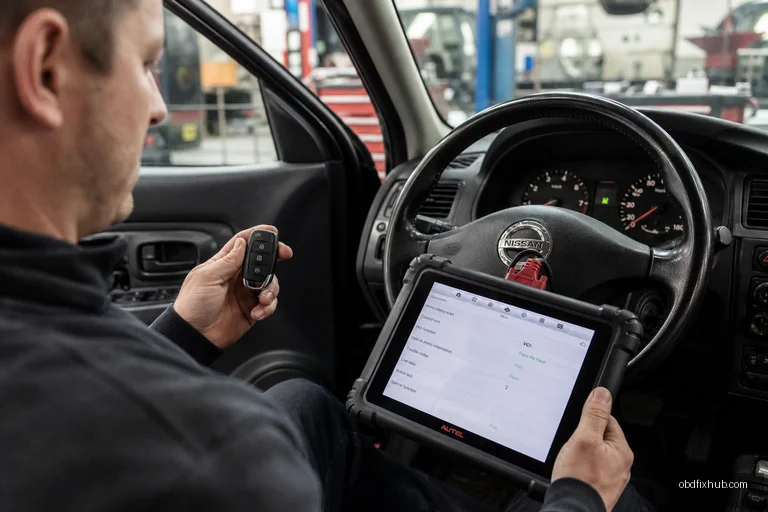
The P0513 incorrect immobilizer key code means the vehicle’s immobilizer system cannot validate the key or transponder identity it received. In many cases, the result is a security warning, extended cranking, or a complete no-start condition. The code does not automatically mean the engine computer is defective: a damaged key, low battery voltage, wiring fault, or lost key programming can produce the same fault.
What Does the P0513 Fault Code Mean?
P0513 is a generic OBD-II diagnostic trouble code for Incorrect Immobilizer Key. When you turn the ignition on or press the start button, the immobilizer system reads an electronic transponder inside the key or key fob. The body control module, immobilizer module, or vehicle security system then checks whether that identification matches an authorized key stored in the vehicle.
If the code is stored, the vehicle has received a key signal that is missing, unreadable, incorrectly programmed, or not accepted by the security system. Depending on the manufacturer, the powertrain control module may allow the engine to crank but prevent fuel injection, disable the starter, or shut down the engine immediately after it starts.
How Serious Is the P0513 Code?
P0513 is usually not an indication of internal engine damage, but it can be highly disruptive. A vehicle with this code may be impossible to start, leaving you stranded without warning. If the engine still starts and runs normally, the problem may be intermittent, but it should not be ignored because a marginal key or antenna fault can become a complete no-start later.
- Severity: Moderate to high because the vehicle may not start.
- Immediate driving risk: Usually low if the engine runs reliably, but the vehicle could fail to restart after being switched off.
- Mechanical damage: The code itself normally does not damage the engine or transmission.
- Best response: Diagnose the key and immobilizer system before replacing expensive control modules.
Common Symptoms of P0513
The symptoms depend on the vehicle’s security strategy and whether the fault is permanent or intermittent. A flashing security indicator is an important clue, especially when it appears at the same time as a no-start condition.
- Engine cranks but does not start
- Starter does not operate when the key or start button is used
- Security, immobilizer, or padlock warning light remains illuminated or flashes
- Engine starts and stalls after one or two seconds
- “Key Not Detected,” “Invalid Key,” or similar message on the instrument cluster
- Remote keyless entry works, but the engine will not start
- Intermittent starting that improves when a spare key is used
Do not assume that a working remote-lock button proves the key is healthy. The remote-control battery and the immobilizer transponder are separate systems. A fob can lock and unlock the doors while its transponder is damaged, unprogrammed, or not being detected by the antenna.
What Causes an Incorrect Immobilizer Key?
1. Unprogrammed or incorrect key
A replacement key may physically fit the ignition and may even operate the door locks, yet still lack the correct transponder programming. This commonly happens after purchasing a low-cost aftermarket key, using a key from another vehicle, or replacing a complete key shell without transferring the original transponder chip.
2. Damaged transponder or key fob
Impact, water intrusion, heat, or a cracked circuit board can prevent the immobilizer chip from responding. If the code appears after the key has been dropped or washed, test a known-good spare key before disassembling the vehicle.
3. Weak vehicle battery or unstable voltage
Low system voltage can interrupt communication between the body control module, immobilizer module, and engine computer. This is particularly common after a battery replacement, jump-start, or vehicle storage period. A battery that measures 12 volts at rest may still suffer a severe voltage drop during cranking.
4. Faulty immobilizer antenna or wiring
Many vehicles use an antenna coil around the ignition cylinder or a receiver near the start button. A loose connector, damaged wiring, corrosion, or a failed antenna can prevent the correct key from being read. In this situation, changing the key will not solve the problem.
5. Module mismatch or lost security synchronization
Replacing the PCM, BCM, ignition switch, instrument cluster, or immobilizer module may require a security relearn. If a replacement module is installed without the correct programming procedure, the vehicle can report an incorrect key even though the physical key is genuine.
6. Aftermarket electronics
Remote starters, alarm systems, poorly installed immobilizer bypass modules, and certain GPS or fleet devices can interfere with the factory security circuit. If P0513 appeared after an aftermarket installation, inspect that system before condemning the original immobilizer hardware.
How to Diagnose P0513 Correctly
- Record all codes. Scan the PCM, BCM, instrument cluster, and immobilizer module if your diagnostic tool supports manufacturer-specific modules. A related communication or low-voltage code may explain P0513.
- Check the security indicator. Note whether it is steady, flashing, or absent during key-on. The pattern can distinguish an unrecognized key from a communication or module fault.
- Try the spare key. If the spare starts the vehicle consistently, the original key or its transponder is the strongest suspect. Do not keep repeatedly cranking with a failing key.
- Test battery voltage. Inspect the vehicle battery, battery terminals, engine grounds, and main power connections. Measure voltage during cranking; a major drop points to a battery or connection problem.
- Inspect the antenna and connectors. Look for loose plugs, crushed wiring around the steering column, water entry, and evidence of previous repairs.
- Check live immobilizer data. Professional scan tools may show whether the key is detected, whether it is authorized, and whether the immobilizer has granted start permission.
- Perform the correct key or module relearn. Use the manufacturer’s procedure and required security access. Some vehicles need a scan tool, while others use a timed manual sequence. The wrong procedure can waste time or trigger a security lockout.
A useful real-world distinction is whether the scan tool reports “key not detected” or “key detected but not authorized.” The first points toward the transponder, antenna, wiring, or power supply. The second more often indicates incorrect programming, a module mismatch, or lost security synchronization.
How to Fix P0513 Incorrect Immobilizer Key
The correct repair depends on the failed part, so there is no universal reset that fixes every P0513 case. Start with the least expensive and most informative checks:
- Use a properly cut and programmed spare key.
- Replace or repair a damaged key fob and program it to the vehicle.
- Replace the remote battery if the manufacturer specifies one, while remembering that this may not repair a separate transponder fault.
- Charge or replace a weak vehicle battery and clean the battery and ground connections.
- Repair damaged immobilizer antenna wiring or replace the antenna ring/receiver when testing confirms failure.
- Remove or correctly repair an interfering aftermarket remote-start or alarm system.
- Complete a security relearn after replacing a PCM, BCM, cluster, ignition component, or immobilizer module.
Dealer-level or specialist equipment may be required to add keys, obtain security access, or synchronize modules. Avoid repeatedly guessing PIN codes or disconnecting the battery as a substitute for programming. On some vehicles, failed attempts create a timed lockout and make diagnosis more difficult.
Can You Clear P0513 Without Repairing It?
You can erase the stored code with a compatible scan tool, but clearing it does not authorize an incorrect key. If the fault remains, P0513 will return as soon as the immobilizer performs another validation check. Disconnecting the battery may clear temporary memory on some vehicles, but it will not program a key, repair an antenna, or restore module synchronization.
Final Takeaway
P0513 means the vehicle’s immobilizer system does not accept the key signal it received. Test the spare key, verify battery voltage, scan all relevant modules, and check the antenna circuit before replacing a control module. If the vehicle will not start or the security light is flashing, have an automotive locksmith or technician perform key authorization and immobilizer diagnostics rather than relying on repeated code clearing.
Frequently Asked Questions
How do I fix the P0513 incorrect immobilizer key code?
Begin by trying a known-good programmed key and checking vehicle battery voltage. If both keys fail, the immobilizer antenna, wiring, security module communication, or key programming may require professional testing and a security relearn.
What does an incorrect immobilizer key mean?
It means the vehicle detected a key signal that it could not validate as an authorized key. The key may be wrong, damaged, unprogrammed, or unable to communicate because of an antenna, wiring, voltage, or module problem.
Will P0513 prevent my car from starting?
Yes. Depending on the vehicle, the immobilizer may disable the starter, fuel injection, or engine operation. Some vehicles continue to start normally when the fault is intermittent, but a no-start condition can develop later.
Can a new key solve P0513?
A new key can solve the problem only if the original key is defective and the replacement is correctly cut and programmed for that vehicle. An unprogrammed aftermarket key will usually reproduce the same fault.
Should I replace the immobilizer module?
Not before testing the key, battery, antenna, wiring, and module communication. Immobilizer modules are expensive and often require security programming, so replacing one based only on the P0513 code is poor diagnostic practice.




