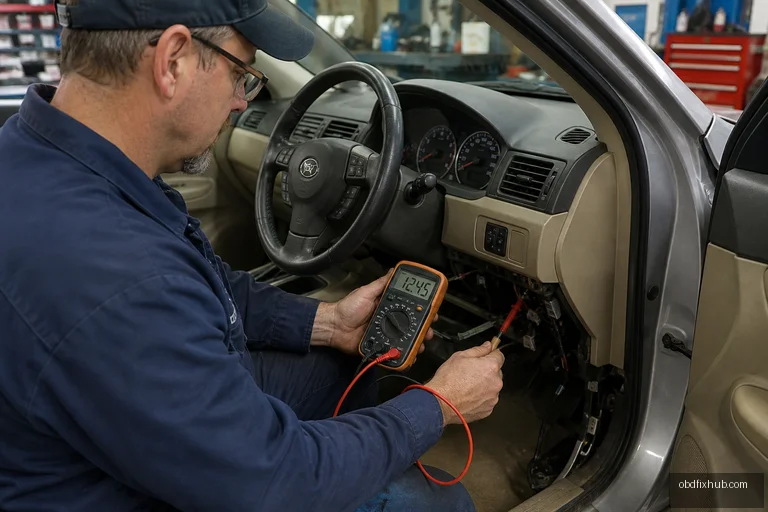
P0525 Cruise Control Servo Circuit Range/Performance means the powertrain control module (PCM) has detected an abnormal electrical signal or operating range in the cruise control servo circuit. The fault may come from the servo, wiring, connectors, fuse, cruise control switch, or—on some vehicles—the control module itself. Cruise control may stop working, cancel unexpectedly, or become unavailable until the underlying problem is repaired.
This is usually a drivability and convenience issue rather than an immediate engine-damage warning, but it should not be ignored. A cruise control system that disengages unpredictably can create a safety concern, especially on long highway trips.
What Does the P0525 Engine Code Mean?
P0525 is a generic OBD-II diagnostic trouble code associated with the cruise control servo control circuit. The PCM monitors commands and feedback from the servo, which is responsible for maintaining the vehicle’s selected speed. If the feedback voltage, resistance, or actuator response falls outside the expected range, the PCM stores P0525.
The exact circuit design varies by manufacturer. Some vehicles use a vacuum-operated servo with an electrical position sensor, while others use an electronic actuator integrated with the throttle or cruise control assembly. For that reason, the factory service information for the specific year, make, engine, and transmission is more reliable than a generic wiring diagram.
Common Symptoms of P0525
The most obvious symptom is that cruise control will not set. In other cases, it may set normally and then disengage when the PCM sees an implausible servo signal. The check engine light may be illuminated, although some vehicles display a separate cruise control warning instead.
- Cruise control will not activate or maintain speed.
- Cruise control cancels without pressing the brake pedal.
- The cruise control indicator flashes or remains unavailable.
- The check engine light is on.
- Speed surges, drops, or oscillates while cruise control is active.
- Other control functions, such as steering-wheel buttons, may work intermittently.
What Are the Symptoms of a Bad Cruise Control Module?
A failing cruise control module can cause intermittent operation, unexplained cancellations, incorrect speed commands, or a complete loss of cruise control. However, these symptoms do not prove that the module is bad. A corroded connector, weak power supply, failed brake switch, damaged servo cable, or a faulty steering-wheel switch can produce nearly identical behavior.
One useful diagnostic clue is whether the system works after the vehicle warms up or after the steering wheel is moved. Temperature-related operation often points toward a cracked solder joint, failing electronic component, or poor connector contact rather than a mechanical servo problem.
Most Likely Causes of P0525
- Defective cruise control servo or actuator.
- Open, shorted, or high-resistance wiring in the servo circuit.
- Loose, wet, or corroded servo connector.
- Blown cruise control, ECM, or stop-lamp fuse.
- Incorrect or unstable battery voltage.
- Faulty brake pedal switch or clutch pedal switch.
- Damaged vacuum hose or vacuum servo linkage, where equipped.
- Failed cruise control switch or steering-wheel control circuit.
- Faulty PCM or cruise control module, which is less common than wiring faults.
Do not replace the servo immediately after seeing the code. In real-world diagnosis, wiring damage and connector problems are common, particularly near the front of the vehicle, battery tray, throttle body, or areas exposed to water and engine movement.
How to Diagnose P0525 Properly
- Record the freeze-frame data. Note vehicle speed, engine speed, battery voltage, and whether the code is pending or confirmed. This can show whether the fault appeared during a cruise command or during startup.
- Scan for related codes. Brake switch, throttle actuator, vehicle speed sensor, communication, and low-voltage codes may identify the real starting point.
- Check the fuses and power supply. Test both sides of each relevant fuse with a test light or multimeter. Looking at a fuse is not enough because a poor fuse connection can also create voltage loss.
- Inspect the circuit physically. Look for stretched wires, insulation rubbed through on a bracket, green corrosion inside terminals, and water in the connector.
- Test the brake and clutch switches. Cruise control is designed to cancel when these pedals are applied. A switch that reports the wrong position can prevent cruise operation and may set additional codes.
- Test servo command and feedback. Use the wiring diagram to check reference voltage, ground, command voltage, and feedback signal. A scope or bidirectional scan tool is often more useful than a resistance test alone.
- Verify mechanical operation. On vacuum systems, inspect the hose, diaphragm, linkage, and throttle connection. A servo may pass an electrical test but fail to hold vacuum or move the throttle correctly.
When measuring an actuator circuit, avoid applying battery voltage to a terminal unless the service manual specifically authorizes it. A direct power test can damage a control module or an electronic servo. Back-probing the connector while monitoring the signal is usually safer.
Can a Blown Fuse Disable Cruise Control?
Yes. A blown fuse can disable cruise control completely, and it may also affect the brake lights, engine control module, instrument cluster, or steering-wheel controls depending on the vehicle’s fuse layout. Always identify why the fuse failed before installing another one. If the replacement fuse blows immediately, there is likely a short circuit or failed component that needs testing.
A fuse that looks intact can still have a poor connection or receive power only on one side. Check the fuse with the ignition in the correct position and compare the voltage on both test points. Never install a higher-rated fuse to keep cruise control operating; that can overheat the wiring.
How Do You Reset Your Cruise Control?
There is no single reset procedure for every vehicle. As a basic reset, switch the ignition off, wait several minutes, and restart the vehicle. Some vehicles also have a cruise control main switch that can be turned off and back on, while others require the code to be cleared with an OBD-II scan tool.
Clearing P0525 is not the same as repairing it. If the electrical fault remains, the code and cruise control warning will usually return during the next self-test or when the system is commanded on. After a repair, clear the code, perform a road test in safe conditions, and confirm that the system sets, holds, and cancels speed correctly.
Repair Options for P0525
The correct repair depends on the failed part. A damaged wire may require a soldered or crimped repair with sealed heat-shrink tubing, while a corroded connector may need terminal replacement rather than simple cleaning. Replace a blown fuse only after the circuit has been checked for a short or excessive current draw.
If the servo fails its power, ground, command, or feedback tests, replacement may be appropriate. Module replacement should be the final step, not the first one. Some vehicles require module programming, initialization, or a steering-wheel calibration after replacement.
Is It Safe to Drive with P0525?
Usually, the vehicle can be driven if the engine runs normally and the brake lights, throttle, and other safety systems operate correctly. Drive without using cruise control until the fault is diagnosed. Stop driving and seek immediate assistance if the vehicle accelerates unexpectedly, the throttle does not respond normally, or multiple warning lights appear.
Summary: The Best Next Step
P0525 identifies a range or performance problem in the cruise control servo circuit, but it does not automatically condemn the servo or control module. Start with a complete scan, freeze-frame data, fuse testing, brake-switch inspection, and a careful connector and wiring check. Once the failed circuit or component is confirmed, repair it, clear the code, and verify cruise control operation with a controlled road test.
Frequently Asked Questions
Can P0525 cause the engine to run poorly?
Usually not. P0525 primarily affects cruise control operation. Poor engine performance may indicate an additional code or a separate problem, especially if throttle, speed sensor, or low-voltage codes are also present.
Will disconnecting the battery fix P0525?
Disconnecting the battery may erase temporary memory on some vehicles, but it does not repair the fault. The code will return if the servo circuit, wiring, switch, or power supply remains defective.
Can a bad brake light switch set P0525?
It can contribute to cruise control malfunction because the system uses the brake switch to cancel cruise operation. Depending on the vehicle, it may set P0525 or a separate brake-switch or cruise-control code.
Should I replace the cruise control module first?
No. Test the fuses, power supply, grounds, wiring, connectors, brake switch, and servo feedback first. A module is often replaced unnecessarily when the actual problem is corrosion or a damaged wire.




