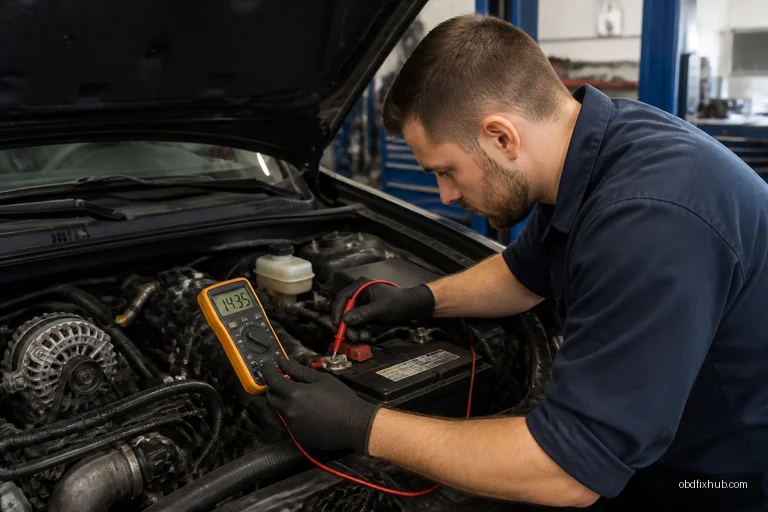
P0560 System Voltage means the engine control module has detected an abnormal electrical supply from the vehicle’s charging or battery system. The fault may be caused by a weak battery, failing alternator, loose ground, damaged wiring, or a charging voltage that is too low, too high, or unstable. Do not replace the alternator based on the code alone; accurate voltage and voltage-drop tests are essential.
What Does the P0560 System Voltage Code Indicate?
P0560 is a generic OBD-II powertrain code used by many manufacturers. It indicates that the vehicle computer is seeing system voltage outside the expected range or is losing a reliable electrical supply. The exact threshold and monitoring strategy vary by make, model, and engine control system.
In a healthy vehicle, voltage is usually around 12.4–12.7 volts with the engine off and approximately 13.5–14.8 volts while the engine is running. These are useful reference figures, not universal specifications. Smart charging systems may deliberately raise or reduce alternator output depending on battery temperature, load, and operating conditions.
P0560 Symptoms You May Notice
The symptoms depend on whether the problem is low voltage, excessive voltage, or an intermittent connection. A vehicle can sometimes drive normally while the code is stored, particularly when the fault occurs only during cold starts or high electrical loads.
- Battery or charging-system warning light
- Slow cranking or a no-start condition
- Flickering headlights or interior lights
- Dim displays, malfunctioning gauges, or radio resets
- Transmission shifting problems caused by unstable module voltage
- Stalling at idle or while turning on multiple electrical accessories
- Multiple unrelated warning lights appearing at once
- Additional codes such as P0561, P0562, or P0563
Multiple communication and sensor codes do not always mean several components failed simultaneously. A low battery can cause modules to reset and generate a long list of misleading trouble codes. Fixing the power supply first often eliminates the secondary codes.
Common Causes of P0560
- Weak or damaged battery: A battery with an internal short or poor reserve capacity may pull system voltage down even when it starts the engine.
- Failing alternator: Worn brushes, a defective voltage regulator, or damaged diodes can produce insufficient or unstable charging output.
- Loose or corroded battery terminals: Corrosion between the terminal and battery post can create resistance that is easy to miss during a visual inspection.
- Bad engine or chassis ground: A corroded ground strap can cause low voltage at the control module while the alternator itself tests normally.
- Damaged charging-system wiring: Broken wires, overheated fusible links, and loose alternator connectors can interrupt the charging circuit.
- Blown fuse or fusible link: Some vehicles use a high-amperage fuse between the alternator and battery.
- Excessive electrical load: Aftermarket audio equipment, auxiliary lighting, heated accessories, or a failing electric motor can overload the system.
- Control-module or software issue: This is less common and should only be considered after the battery, grounds, wiring, and alternator have passed testing.
How to Diagnose P0560 Correctly
A scan tool identifies the code, but it does not measure the actual charging system. A professional diagnosis combines scan data with a digital multimeter, battery tester, and, when necessary, a current clamp or oscilloscope.
1. Check the stored data and related codes
Record freeze-frame information before clearing anything. Note battery voltage, engine speed, coolant temperature, and vehicle speed when the code was set. If P0560 appeared during cranking and the recorded voltage is unusually low, concentrate first on the battery, terminals, and starter circuit.
2. Inspect the battery and connections
Look for swollen battery cases, cracked terminals, white or green corrosion, loose clamps, and damaged cables. The terminals should be clean and tight, but do not assume a clean connection is electrically sound. A terminal can look acceptable and still fail under load.
3. Measure resting and cranking voltage
After the vehicle has been off for several hours, a fully charged battery commonly measures close to 12.6 volts. During cranking, voltage should not drop excessively; the exact limit depends on temperature and vehicle specifications, but a dramatic drop suggests a weak battery, poor cable connection, or excessive starter draw.
4. Test alternator output under load
With the engine running, measure voltage at the battery while switching on headlights, the blower motor, rear defroster, and other substantial loads. Compare the result with the manufacturer’s specification. A charging voltage that starts normally and then collapses under load points toward an alternator, belt, cable, or connection problem.
5. Perform voltage-drop tests
Voltage-drop testing is one of the most useful and overlooked steps. With the engine running and electrical load applied, measure between the alternator housing and battery negative terminal, then between the alternator output terminal and battery positive terminal. Excessive voltage drop indicates resistance in the ground or positive charging cable, even if alternator bench testing appears acceptable.
Also inspect the serpentine belt. A loose, contaminated, or slipping belt can reduce alternator speed and create an intermittent P0560, especially when the air conditioning or electrical load increases.
How to Fix P0560 System Voltage
The correct repair depends on the failed test, not simply on the code description. Clean or replace corroded terminals, repair damaged grounds, and replace a weak battery when it fails a proper load or conductance test. If the alternator cannot maintain the specified output under load, replace or rebuild it and inspect the charging cable and fusible link at the same time.
After the repair, fully charge the battery, clear the code, and repeat the voltage tests. Then perform a road test under similar conditions to those shown in the freeze-frame data. If the code returns, monitor live battery voltage and module voltage while moving the wiring harness gently; an intermittent connection may only fail with vibration or engine movement.
How Do I Fix Code P0562?
P0562 specifically indicates system voltage low. Begin with the battery state of charge, because a discharged battery can make every later test misleading. Charge it with an approved battery charger, allow the surface charge to dissipate, and then perform a battery health test.
If the battery is healthy, test alternator output and voltage drop under load. Repair poor grounds, damaged positive cables, loose alternator plugs, blown fusible links, or a slipping belt. On vehicles with variable-voltage charging, check the battery current sensor and charging-control wiring before installing a conventional alternator; the computer may be intentionally controlling output, or the sensor may be reporting inaccurate information.
How Much Does It Cost to Fix P0560?
Repair cost varies widely by vehicle and failed component. Typical U.S. price ranges are:
- Battery terminal cleaning or cable repair: $30–$200
- Battery replacement: $120–$350, depending on battery type and vehicle access
- Ground strap or wiring repair: $100–$400
- Alternator replacement: approximately $350–$1,000 or more on difficult-to-access vehicles
- Diagnostic labor: commonly $80–$180 before repairs
These figures are estimates, not a guaranteed quote. A P0560 caused by a loose ground may be inexpensive, while a vehicle requiring a high-output alternator, battery registration, or extensive wiring repair can cost considerably more. Ask the repair shop for measured battery voltage, charging voltage, and voltage-drop results before approving major parts.
Can You Drive With P0560?
Short-distance driving may be possible if the vehicle starts normally and the charging warning light is off, but the risk is unpredictable. If the alternator is not charging, the engine may stop once the battery is depleted. Avoid driving if the battery light is illuminated, lights are rapidly dimming, the engine is stalling, or the voltage is above specification, because excessive voltage can damage electronic modules.
Final Takeaway
P0560 is a power-supply warning, not an automatic alternator-replacement instruction. Start with battery condition, terminal integrity, grounds, charging output, and voltage-drop testing. If the code is P0562, focus particularly on low output and high-resistance connections. A few accurate measurements can prevent an unnecessary alternator or control-module replacement.
Frequently Asked Questions
What does the system voltage code P0560 indicate?
It indicates that the vehicle computer detected system voltage outside its expected range or detected an unstable electrical supply. The cause may be the battery, alternator, wiring, grounds, or charging-control system.
Can a bad battery cause P0560?
Yes. A weak battery can create low cranking voltage and unstable module power, especially in cold weather. Battery health should be tested before condemning the alternator.
Does P0560 mean I need a new alternator?
No. A loose terminal, corroded ground, slipping belt, damaged cable, or failed battery can produce the same code. Alternator replacement should follow a failed charging and load test.
How do I fix code P0562?
Charge and test the battery, then measure alternator output under electrical load and perform positive-side and ground-side voltage-drop tests. Repair the failed battery, cable, ground, belt, alternator, or charging-control circuit identified by those tests.
Is P0560 serious?
It can be serious because a charging failure may leave you stranded or damage electronics if voltage is excessive. Diagnose it promptly, especially when the battery warning light or multiple electrical symptoms are present.




