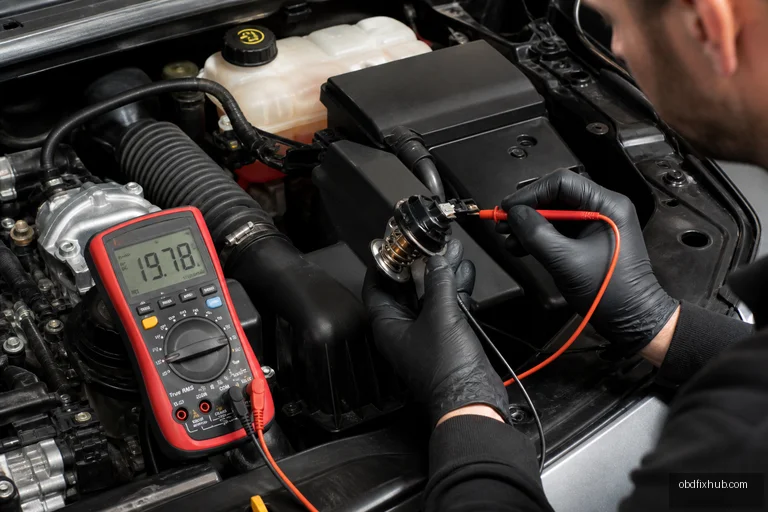
The P0597 code means the engine computer has detected an open or incomplete electrical circuit in the thermostat heater control system. In most vehicles, the thermostat contains an electrically heated element that helps the engine reach and maintain the correct temperature under changing loads. A failed thermostat, damaged wiring, a blown fuse, or a poor connector can trigger this code. You can often drive a short distance if the temperature gauge remains normal, but an overheating engine should never be ignored.
What Does the P0597 Code Mean?
P0597 is a generic OBD-II diagnostic trouble code defined as Thermostat Heater Control Circuit/Open. It applies to many vehicles, including models from Chevrolet, Ford, Volkswagen, BMW, Audi, Mercedes-Benz, Toyota, and others, although the exact thermostat design and testing procedure vary by manufacturer.
The thermostat heater is not the same as the coolant temperature sensor. The sensor reports coolant temperature to the engine control module (ECM), while the heater allows the ECM to influence when the thermostat opens. This helps the engine warm up quickly during light operation while preventing excessive temperatures during heavy acceleration, towing, or high ambient temperatures.
Common Symptoms of P0597
Some vehicles show only a check engine light, while others develop noticeable cooling-system problems. The most common symptoms include:
- Check engine light or malfunction indicator lamp
- Engine temperature that stays unusually low or rises too slowly
- Temperature gauge fluctuations or a reading higher than normal
- Reduced fuel economy because the engine is not reaching its intended operating temperature
- Weak cabin heat, especially in cold weather
- Cooling fans running longer than expected
- Reduced engine performance or a failsafe operating strategy
- Additional thermostat, coolant temperature, or fuel-trim codes
A useful real-world clue is the difference between a stuck-open thermostat and an electrical open circuit. With a mechanically stuck-open thermostat, the engine may run cold but the heater circuit can still test correctly. With P0597, the ECM is specifically seeing a problem in the electrical control path, even if the thermostat appears mechanically normal.
What Causes a P0597 Code?
The thermostat itself is a frequent cause, but replacing it without testing the circuit can waste money. Common causes include:
- An internally failed thermostat heater element
- An unplugged, corroded, or oil-contaminated thermostat connector
- Broken wires near the thermostat housing
- Chafed wiring touching the engine or exhaust components
- A blown fuse or faulty power supply
- A failed thermostat control relay, where fitted
- Low system voltage or poor battery connections
- Coolant contamination or leakage into the electrical connector
- A damaged ECM driver, which is less common
Wiring damage deserves special attention on engines where the thermostat sits low in the front of the engine. Coolant leaks can travel along the harness and enter the connector, creating corrosion that looks acceptable from the outside but produces an open circuit under load.
How to Diagnose P0597 Correctly
A professional diagnosis starts with more than clearing the code. The technician should record freeze-frame data, check coolant level, inspect related codes, and confirm whether the engine is actually reaching normal operating temperature.
1. Check the cooling system first
Never open a hot coolant reservoir or radiator. Once the engine is cold, inspect the coolant level, look for leaks around the thermostat housing, and check whether the coolant is contaminated. A low coolant level can create additional temperature problems, although it does not normally create an electrical open by itself.
2. Inspect the connector and harness
Disconnect the thermostat connector with the ignition off and look for bent terminals, green corrosion, pushed-out pins, cracked insulation, or signs of coolant intrusion. Gently move the harness while monitoring the circuit; an intermittent open can disappear when the wiring is still and return when the engine vibrates.
3. Verify power, ground, and control
Using the vehicle’s wiring diagram, test the thermostat heater supply and ground with a multimeter or suitable test equipment. Do not apply battery power blindly, because some systems are pulse-width controlled and a direct connection can damage the component or the ECM. A circuit may show voltage with no load yet fail when current is demanded, so voltage-drop testing is more reliable than a quick visual check.
4. Test the thermostat heater element
Measure resistance only according to the manufacturer’s specification. A reading of infinite resistance generally indicates an open heater element, but the correct resistance range differs between vehicles. Compare the reading with service information rather than relying on a universal ohms value.
5. Clear the code and verify the repair
After repairing the circuit or replacing the thermostat, clear the code and perform a complete warm-up drive. Confirm that coolant temperature rises steadily, the heater operates normally, and the code does not return. Some vehicles require a specific drive cycle or scan-tool output test before the repair can be fully confirmed.
How to Fix Thermostat Heater Control Circuit Open
The correct repair depends on the failed part. A reliable repair may involve:
- Replacing the electronically controlled thermostat or thermostat housing
- Repairing broken wires with sealed, heat-resistant splices
- Replacing a damaged connector or terminal
- Replacing the correct fuse after finding the reason it failed
- Repairing a power, ground, or relay fault
- Cleaning corrosion only when the terminals are not permanently damaged
- Repairing a coolant leak before installing a new connector or thermostat
Do not simply bypass the thermostat heater or install a standard non-heated thermostat unless the vehicle manufacturer specifically permits it. The ECM may continue to detect a fault, and the engine may not control temperature correctly during demanding driving.
Can a Bad Thermostat Cause a P0597 Code?
Yes, a bad thermostat can cause P0597 when its integrated heater element or internal electrical connection has failed. However, a thermostat that is only stuck open or stuck closed may produce different symptoms and codes without causing an electrical open. The best approach is to test the heater circuit and thermostat resistance before replacing the assembly.
How Much Does It Cost to Repair P0597?
Repair prices vary widely by vehicle, thermostat location, and labor rates. In the United States, a realistic estimate is often:
- Diagnostic testing: approximately $80–$180
- Wiring or connector repair: approximately $100–$400
- Thermostat replacement: approximately $250–$900
- Thermostat housing or complex European vehicle repair: $700–$1,500 or more
These are planning figures, not a guaranteed quote. A thermostat hidden beneath the intake manifold can require several hours of labor, while an accessible connector repair may be relatively inexpensive. Ask the shop whether the price includes coolant, bleeding the cooling system, diagnostic time, and verification of the repair.
Can You Drive With a P0597 Code?
You may be able to drive a short distance if the temperature gauge is stable, the coolant level is correct, and there are no overheating warnings. Avoid towing, hard acceleration, long trips, and heavy traffic until the fault is diagnosed. Stop immediately if the temperature rises, the coolant warning appears, steam is visible, or the heater suddenly blows cold air while the engine is hot.
Continuing to drive an overheating vehicle can damage the head gasket, cylinder head, catalytic converter, or engine. A car that runs too cool is less immediately dangerous, but it can increase fuel consumption, emissions, and engine wear over time.
Final Takeaway
P0597 identifies an open thermostat heater control circuit, not automatically a bad thermostat. Start with the connector, fuse, wiring, power supply, and heater resistance before authorizing parts replacement. If the engine temperature is abnormal or the warning light is accompanied by overheating, arrange a prompt diagnosis and avoid driving the vehicle.
Frequently Asked Questions
Is P0597 always caused by the thermostat?
No. The fault can be caused by wiring, a connector, fuse, relay, low voltage, or an ECM control problem. The thermostat is common, but testing should confirm it.
Will clearing P0597 fix the problem?
No. Clearing the code only turns off the warning temporarily. If the electrical fault remains, the ECM will usually detect it again after a drive cycle.
Can low coolant cause P0597?
Low coolant can cause overheating and temperature-related symptoms, but it does not normally create an open heater circuit. Check the coolant level because a leak may exist alongside the electrical fault.
Is P0597 the same as a bad coolant temperature sensor?
No. P0597 concerns the thermostat heater control circuit. A coolant temperature sensor failure usually sets different codes, although both problems can affect engine temperature and fuel economy.




