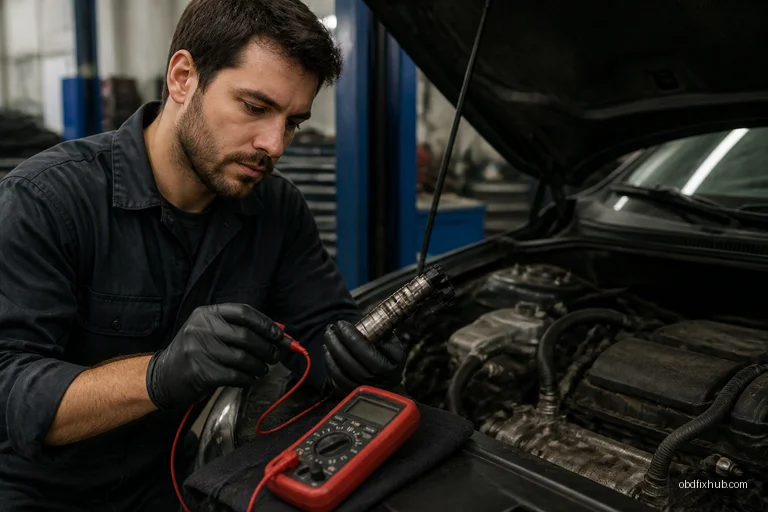
P05E8 means the engine computer has detected an open or electrically incomplete control circuit for the engine oil bypass valve. The fault may be caused by a failed solenoid, damaged wiring, corrosion, a loose connector, or a problem inside the oil pump or pressure-management assembly. Because oil pressure protects bearings, camshafts, turbochargers, and timing components, you should not treat this code as a harmless check-engine-light issue until actual oil pressure has been verified.
What Does P05E8 Mean?
The P05E8 engine oil bypass valve control circuit/open code is an OBD-II diagnostic fault related to electronically managed engine-oil flow. In many modern engines, the powertrain control module uses a solenoid or actuator to regulate oil pressure, oil-pump output, oil-cooler flow, or a bypass passage under different loads and engine speeds.
This is not always the same component as the small spring-loaded bypass valve built into a conventional oil filter. A traditional filter bypass valve is usually mechanical and has no electrical circuit. P05E8 generally points to an electronically controlled oil bypass or pressure-management device, but the exact design and test procedure depend on the vehicle manufacturer, engine, and calibration.
Always confirm the code with the vehicle-specific service information. Some manufacturers use different names for the same type of valve, while others place the actuator in the oil pump, oil filter housing, oil cooler module, or lower engine assembly.
P05E8 Symptoms to Watch For
The symptoms depend on whether the valve is stuck open, stuck closed, or simply unable to communicate electrically with the engine computer. A stored code may be the only symptom at first, especially when the vehicle is driven gently.
- Check Engine Light or service-engine warning
- Oil-pressure warning message or fluctuating oil-pressure readings
- Rattling from the timing chain, variable valve timing system, or upper engine
- Unusual valve-train or bearing noise during cold starts
- Reduced engine performance or a protective limp-home mode
- Turbocharger noise, low boost, or oil-related turbo concerns on turbocharged engines
- Higher engine temperature if oil-cooler flow is affected
- Additional oil-pressure, variable valve timing, or turbocharger-related trouble codes
Do not assume the engine has an oil-pressure problem solely because P05E8 is present. The fault may be electrical with normal mechanical pressure, or it may be an electrical failure that has caused an actual pressure problem. A mechanical gauge test separates those two possibilities.
Common Causes of the P05E8 Code
- Open or broken wiring: A wire may be pulled tight near the oil pan, damaged by heat, or broken inside its insulation.
- Corroded or oil-contaminated connector: Oil wicking through a connector can create high resistance or interrupt the control signal.
- Failed oil bypass control solenoid: The coil can become electrically open, shorted, or mechanically stuck by varnish and sludge.
- Low, incorrect, or heavily contaminated engine oil: Wrong viscosity and sludge can prevent an oil-control valve from moving correctly.
- Restricted oil passages or a blocked screen: Debris from a neglected oil change or internal engine wear may obstruct the valve or its feed.
- Defective oil pump or pressure-control assembly: Some engines integrate the bypass valve into an assembly that must be replaced as a unit.
- Blown fuse or power-supply fault: The valve may not receive the voltage required for operation.
- Faulty engine-control module: This is possible but uncommon and should be considered only after circuit and actuator tests pass.
How to Diagnose P05E8 Correctly
Replacing the valve immediately is a common mistake. In real workshop diagnosis, the wiring and oil condition often explain the code more quickly than the valve itself.
- Record all codes and freeze-frame data. Note engine speed, oil temperature, battery voltage, and whether the fault appeared during startup, cruising, or heavy acceleration.
- Check the oil level and specification. Confirm that the oil is at the correct level and matches the manufacturer’s viscosity and approval. Inspect for fuel dilution, sludge, or metallic debris.
- Inspect the connector and harness. Look for oil intrusion, bent terminals, broken locking tabs, chafing, exhaust heat damage, and wiring stretched against the engine or subframe.
- Test power, ground, and continuity. Use the wiring diagram for that exact vehicle. Do not rely on a generic resistance value because solenoid specifications vary widely.
- Command the valve with a capable scan tool. Listen for operation and compare commanded versus actual oil pressure or valve position when those data are available.
- Measure oil pressure with a mechanical gauge. Test at cold start and at operating temperature, then compare the readings with factory specifications. This is essential if an oil-pressure warning or engine noise is present.
- Inspect the valve, screen, and passages. If the electrical circuit is sound, remove and examine the actuator for sludge, metal particles, a damaged seal, or restricted oil flow.
A useful practical clue is the timing of the fault. If P05E8 appears immediately after an oil-pump, oil-filter-housing, or engine repair, inspect connector routing and pin fit before condemning a new component. A terminal that looks connected can still fail a gentle wiggle test or voltage-drop test.
What Happens When the Bypass Valve Is Stuck Open?
A bypass valve stuck open continuously allows oil to take a bypass route instead of following the intended regulated path. Depending on the engine design, that can reduce effective oil pressure, send oil around a filter or cooler, or prevent the oil-control system from responding correctly.
Possible results include low pressure at hot idle, delayed oil delivery after startup, increased engine noise, reduced protection for turbocharger bearings, and oil that is not filtered or cooled as intended. The exact result cannot be predicted from the code alone, so verify pressure and oil routing before driving any significant distance.
Can You Drive With a Bad Turbo Bypass Valve?
A turbo bypass, blow-off, or diverter valve is different from the engine oil bypass valve named in P05E8. If the turbo valve is faulty, the vehicle may suffer from boost leaks, poor acceleration, surging, or compressor flutter. Short-distance driving may be possible when there is no oil-pressure warning, severe noise, smoke, or overheating, but continued boost operation can worsen the fault.
If the P05E8 code is accompanied by an oil-pressure warning, stop the engine as soon as it is safe. Do not continue driving simply because the engine still runs; bearing and turbocharger damage can occur before a driver notices a major change in performance.
What Is the Repair for P05E8?
The repair depends on the confirmed cause. A technician may repair a damaged wire, replace a corroded connector, restore the correct oil and filter, clean a restricted screen, replace the oil-control solenoid, or install an oil pump or filter-housing assembly. After the repair, the code should be cleared and the vehicle retested through cold start, warm idle, acceleration, and steady cruising.
Do not approve an expensive oil-pump replacement without documented oil-pressure measurements and circuit testing. Conversely, do not accept a simple code clear when the oil-pressure warning is active or the engine is making mechanical noise.
Answers to Common P05E8 Questions
What are the symptoms of an oil filter bypass valve failure?
A mechanical oil-filter bypass valve failure can cause unfiltered oil to circulate, restricted oil flow, pressure fluctuations, or filter deformation in severe cases. It may not set P05E8 unless the vehicle uses an electronically monitored bypass system.
What are the common symptoms of an oil pressure control valve problem?
Common signs include an oil-pressure warning, fluctuating pressure, timing-chain noise, variable valve timing faults, rough running, reduced power, and P05E8 or related oil-control codes. Confirm the problem with a mechanical pressure test.
Can I clear P05E8 and keep driving?
You can clear the code for testing, but clearing it is not a repair. If it returns immediately, or if the oil-pressure light, knocking, rattling, smoke, or overheating is present, stop driving and arrange professional diagnosis.
Is P05E8 always caused by a bad valve?
No. Open wiring, poor terminal contact, low system voltage, contaminated oil, blocked passages, and a faulty oil pump can all produce the same code. Circuit testing and verified oil-pressure readings are more reliable than guessing from the code description.
Final Takeaway
P05E8 identifies an open or failed control circuit for an electronically managed engine-oil bypass valve, but the code alone does not prove that the valve itself is defective. Check oil condition, inspect the harness and connector, test the actuator circuit, and verify real oil pressure before replacing parts. If the oil-pressure warning is on or the engine is noisy, shut it down and have it diagnosed promptly to prevent expensive internal damage.




