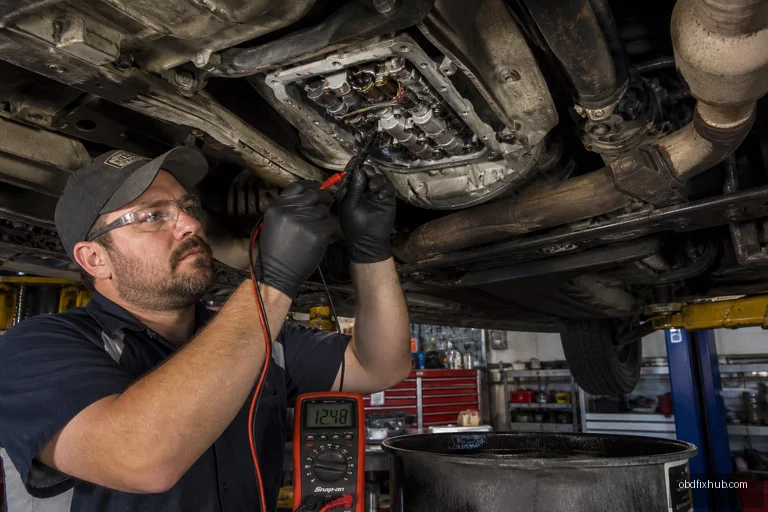
P0705 means the vehicle computer is receiving an invalid, missing, or conflicting signal from the transmission range sensor circuit. This sensor tells the PCM or TCM whether the selector is in Park, Reverse, Neutral, Drive, or another gear. A failed sensor, damaged wiring, poor adjustment, or corrosion can trigger the P0705 transmission range sensor circuit code and cause starting, shifting, or gear-indicator problems.
Do not replace the sensor automatically. In real workshop diagnostics, the fault is often found in a connector, an incorrectly adjusted external switch, or wiring near the transmission—not inside the transmission itself.
What Does P0705 Mean?
P0705 is a generic OBD-II diagnostic trouble code describing a problem with the transmission range sensor, also called the TRS, neutral safety switch, inhibitor switch, or PRNDL input sensor. PRNDL refers to the Park, Reverse, Neutral, Drive, and Low gear positions shown on the dashboard or gear selector.
The range sensor communicates the selected gear to several vehicle systems. The engine computer uses the signal to control starting authorization, idle strategy, reverse lights, shift timing, torque converter operation, and sometimes cruise control. If the computer sees two gear signals at once or cannot identify the selected position, it stores P0705.
P0705 Transmission Range Sensor Circuit Symptoms
Symptoms vary according to the sensor design and the position in which the signal fails. Some vehicles continue to drive almost normally, while others enter a protective limp mode.
- The engine will not start, or it starts only in Neutral instead of Park.
- The PRNDL display is blank, flickers, or shows the wrong gear.
- Reverse lights remain on or do not illuminate.
- The transmission engages harshly, delays shifting, or stays in one gear.
- The vehicle starts while the selector appears to be in a gear other than Park or Neutral.
- Automatic transmission warning lights, the check engine light, or a gear warning message appear.
- Cruise control may stop working because the control module cannot verify the selected range.
A particularly useful clue is a gear display that changes when you move the shifter slightly. That pattern often points to a misadjusted external range switch or excessive play in the shift linkage rather than a failed transmission control module.
Common Causes of Code P0705
- Faulty transmission range sensor: Internal contacts or position tracks can wear, especially on high-mileage vehicles.
- Incorrect sensor adjustment: An external switch may be installed one or two degrees out of alignment after transmission or cable work.
- Damaged wiring: Wires routed near the transmission can rub against brackets, exhaust components, or the case.
- Corroded or loose connectors: Water intrusion and road salt can increase resistance or interrupt individual signal circuits.
- Shift cable or linkage problems: A stretched cable, loose bushing, or bent lever may prevent the sensor from reaching the correct position.
- Low system voltage: A weak battery or charging fault can create misleading transmission control codes.
- Control module or communication fault: PCM or TCM failure is possible, but it should be considered only after the sensor circuit and power supplies test correctly.
How Technicians Diagnose the P0705 Fault
The most reliable diagnosis compares the commanded gear, the physical selector position, and the live data reported by the range sensor. Simply clearing the code or measuring one wire with a test light can miss an intermittent open circuit.
- Confirm all stored codes. Transmission communication, low-voltage, or speed-sensor codes may explain why P0705 appeared. Record freeze-frame data before clearing anything.
- Check the battery and charging voltage. Unstable voltage can distort sensor readings and create multiple unrelated codes.
- Inspect the sensor and connector. Look for oil contamination, bent terminals, broken locks, green corrosion, and wiring pulled tight against the transmission.
- Monitor live PRNDL data. Move the selector slowly through every position. The scan tool should show each gear clearly and in the correct order, without jumping between values.
- Compare the shifter with the transmission lever. If the cabin shifter says Neutral but the transmission lever is between positions, inspect the cable, bushings, and adjustment.
- Test the circuit using the factory wiring diagram. Verify reference voltage, ground, individual signal circuits, continuity, and short-to-ground or short-to-voltage conditions.
- Check sensor alignment. Many external sensors require a specific Neutral alignment procedure using marks, a pin, or a manufacturer-specific tool.
A professional technician may back-probe the connector while gently moving the harness. If the signal drops out only when the wiring is flexed, the sensor may be good and the harness is the real fault. This test is especially valuable when the problem appears only in wet weather or after hitting bumps.
How to Fix Fault Code P0705
The correct repair depends on the failed part, not on the code description alone. Common repairs include:
- Repairing or replacing damaged wiring and terminals.
- Cleaning corrosion from the connector and replacing terminals that no longer grip securely.
- Adjusting the transmission range sensor or shift cable to the manufacturer’s specification.
- Replacing a worn external inhibitor switch or neutral safety switch.
- Replacing an internal transmission range sensor when it is integrated into the valve body or transmission assembly.
- Repairing damaged shift-linkage bushings or a loose selector mechanism.
- Updating or reprogramming the TCM when a manufacturer service bulletin identifies a software-related issue.
After the repair, the code should be cleared and the vehicle tested through Park, Reverse, Neutral, Drive, and lower ranges. Confirm that the engine starts only in the permitted positions, reverse lamps operate correctly, and the live-data gear indication matches the shifter. Some vehicles also require a range-sensor relearn or adaptive transmission reset.
Can You Drive With a Bad Transmission Range Sensor?
Sometimes, but it is not a fault to ignore. If the vehicle selects gears normally, the indicator is accurate, and it starts only in Park or Neutral, a short drive to a repair shop may be reasonable. Drive cautiously and avoid treating the car as safe for normal long-distance use.
Do not drive it if the vehicle can start in Drive or Reverse, the selected gear is unclear, the transmission is stuck in one gear, or shifting is severe. A faulty PRNDL signal can cause unexpected movement, prevent the correct gear from being selected, or leave the vehicle unable to move safely. Use a tow service when the gear position cannot be verified.
How Much Does It Cost to Fix P0705?
Repair cost depends heavily on the vehicle and whether the sensor is externally mounted or built into the transmission. Typical repair ranges in the United States are:
- Diagnosis: about $80–$180, although some shops apply this fee to the repair.
- Wiring or connector repair: roughly $100–$400.
- External range sensor replacement or adjustment: approximately $200–$600.
- Shift cable or linkage repair: about $150–$500.
- Internal sensor or valve-body-related repair: commonly $600–$1,500 or more.
Dealer labor rates, vehicle accessibility, regional pricing, and required programming can change the final bill. Ask for a written estimate that separates diagnosis, parts, labor, adjustment, and any relearn procedure. A quote for a complete transmission replacement should not be accepted until the range circuit, connector, linkage, and live data have been tested.
A Practical Example From the Workshop
One common case involves a vehicle that would not start in Park but started immediately in Neutral. The owner suspected a starter problem, but the scan tool showed an inconsistent Park signal. Inspection found a stretched shift-cable bushing that left the transmission lever slightly out of position. Replacing the inexpensive bushing and adjusting the cable restored the correct PRNDL signal; the range sensor itself was never defective.
Another pattern is an intermittent P0705 after heavy rain. In that situation, moisture inside the connector can create temporary resistance between adjacent signal circuits. Drying the connector may make the symptoms disappear, but replacing the seal or corroded terminals is the lasting repair.
Key Takeaway
P0705 identifies a problem with the transmission range sensor circuit, but it does not prove that the sensor must be replaced. Start with live data, wiring, connector condition, shift-linkage adjustment, and system voltage. If the gear position is unreliable or the vehicle can start in gear, stop driving and have the car diagnosed safely by a qualified technician.
Frequently Asked Questions
Can a bad battery cause P0705?
Low voltage can contribute to misleading P0705 readings, especially during starting. Test battery voltage, charging output, and ground connections before condemning the range sensor.
Is P0705 a serious transmission problem?
It can be serious from a safety and drivability perspective, but it does not automatically indicate internal transmission damage. Many repairs involve adjustment, wiring, or an external switch.
Will disconnecting the battery fix P0705?
Disconnecting the battery may erase the stored code temporarily, but it cannot repair a damaged circuit or misaligned sensor. The code will normally return once the control module detects the fault again.
Can I replace the transmission range sensor myself?
External sensors can be replaceable by an experienced DIY mechanic, but correct alignment is critical. Internal sensors may require significant disassembly, special tools, and a relearn procedure, so professional service is usually safer.




