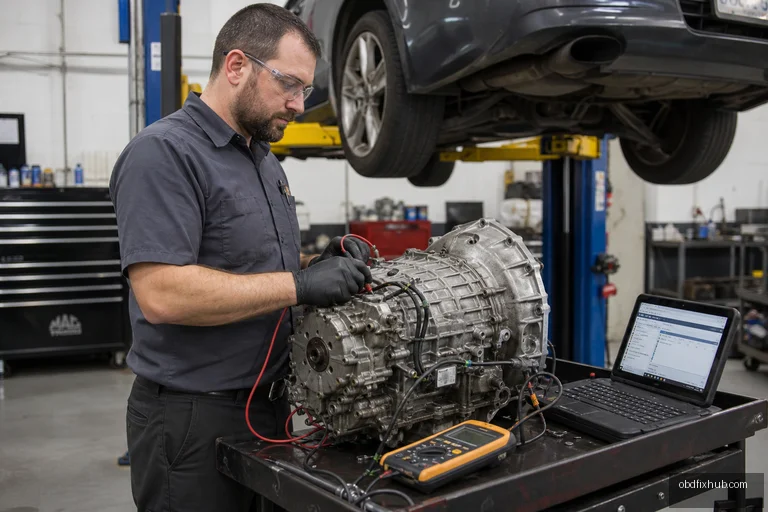
P0730 Incorrect Gear Ratio means the transmission control module has detected that the actual gear ratio does not match the ratio expected for the commanded gear. The fault may be caused by low or contaminated transmission fluid, a failing speed sensor, a stuck shift solenoid, wiring trouble, or internal transmission wear. Because the code describes a detected result rather than one specific failed part, accurate diagnosis matters before replacing expensive components.
What Does P0730 Incorrect Gear Ratio Mean?
Automatic transmissions use input and output speed sensors to calculate the ratio between the engine-side transmission shaft and the driveshaft. When the control module commands, for example, third gear, it expects a particular relationship between those two speeds. If the measured ratio falls outside the allowed range, it stores P0730.
In practical terms, the transmission may be slipping, selecting the wrong gear, or reporting incorrect speed information. A single incorrect reading can trigger the code, but repeated faults under load usually point toward a genuine hydraulic or mechanical problem. P0730 is a generic OBD-II powertrain code, so the exact diagnostic thresholds vary between manufacturers.
P0730 Symptoms You May Notice
The vehicle may still move normally when the code first appears, particularly if the fault occurs only during a specific shift or driving condition. More persistent failures often cause the transmission to enter a protective fail-safe mode.
- Check Engine Light or transmission warning light
- Delayed, harsh, or slipping gear changes
- Engine RPM rising without a matching increase in road speed
- Transmission stuck in one gear, often second or third
- Reduced acceleration, especially uphill or while towing
- Difficulty engaging Drive or Reverse
- Abnormally high transmission temperature
- Reduced fuel economy and unusual transmission noise
A useful real-world clue is the difference between a harsh shift and a slipping shift. A harsh engagement often suggests pressure control, solenoid, or adaptation problems. A flare in engine speed between gears, followed by a delayed engagement, is more concerning for clutch-pack wear or inadequate hydraulic pressure.
Common Causes of P0730
1. Low, incorrect, or contaminated transmission fluid
Low fluid can allow the pump to draw air, reducing hydraulic pressure during acceleration or cornering. Burnt-smelling fluid, dark discoloration, or metallic debris can indicate overheating and internal wear. Using the wrong fluid specification can also alter clutch friction and shift quality, even when the fluid level is correct.
2. Faulty input or output speed sensor
The transmission controller cannot calculate gear ratio correctly if a speed sensor sends an intermittent, implausible, or missing signal. Sensor wiring routed near hot exhaust components is particularly vulnerable to melted insulation and intermittent open circuits. Related codes such as P0715 or P0720 can help identify this direction.
3. Defective shift solenoid or valve body
Shift solenoids regulate fluid flow to the clutch circuits. A sticking solenoid, restricted valve-body passage, or damaged connector may prevent the commanded gear from applying fully. In these cases, the vehicle may shift correctly when cold and begin slipping after the fluid reaches operating temperature.
4. Internal transmission damage
Worn clutch packs, damaged planetary gears, a failed one-way clutch, or a leaking internal seal can create a genuine ratio error. If the fluid contains significant friction material or metal particles, replacing a sensor alone will not solve the underlying problem.
5. Electrical, software, or control-module issues
Corroded grounds, low system voltage, poor connector contact, and damaged harnesses can disrupt solenoid or sensor operation. Some vehicles also require a transmission control module update or clutch-relearn procedure after repairs. A code appearing immediately after a battery replacement or transmission service deserves an electrical and configuration check.
How to Diagnose P0730 Correctly
Do not begin by replacing the transmission. The most efficient diagnosis starts with evidence captured when the fault occurred.
- Scan every module: Record P0730, related transmission codes, freeze-frame data, fluid temperature, vehicle speed, engine load, and commanded gear. A sensor code stored alongside P0730 can change the entire repair strategy.
- Inspect the fluid and level: Follow the manufacturer’s temperature-specific checking procedure. Many modern transmissions have no dipstick, and checking them cold or on an uneven surface can produce a misleading result.
- Check live speed data: Compare input speed, output speed, and calculated gear ratio during a road test. A speed signal that drops to zero or jumps suddenly is different from a stable signal accompanied by actual RPM flare.
- Inspect wiring and connectors: Look for oil intrusion, bent terminals, corrosion, chafing, and poor grounds. A wiggle test while monitoring live data can reveal an intermittent harness fault.
- Test solenoids and hydraulic pressure: Use resistance and actuator tests only according to the service manual. When necessary, a pressure gauge connected to the specified test port can distinguish a control problem from worn internal clutches.
- Verify mechanical operation: If commanded gear, sensor readings, and hydraulic controls are correct but the ratio remains wrong, internal inspection may be required.
One diagnostic mistake is clearing the code and taking a short drive without recording freeze-frame information. That can erase the conditions that caused the failure, especially if P0730 occurs only during a hot, high-load shift. Professional scan data is often more valuable than a basic code reader for this fault.
P0730 Incorrect Gear Ratio Fixes
The repair depends on the confirmed cause, not merely on the code itself. Possible fixes include correcting the fluid level, performing a fluid and filter service with the exact specified fluid, repairing wiring, replacing a speed sensor, replacing a shift solenoid, servicing the valve body, or updating and relearning the transmission controller.
If the transmission is slipping because clutch material is worn, software updates and fluid changes cannot restore the damaged friction surfaces. A transmission rebuild or replacement may be necessary. Before approving that work, ask the repair shop to show the supporting evidence: pressure-test results, speed-data comparison, fluid condition, and any relevant clutch or solenoid test results.
Can You Drive With a P0730 Code?
Driving a short distance to a repair facility may be reasonable if the transmission shifts normally, the fluid is not leaking, and the warning light is steady. Avoid towing, hard acceleration, and long trips. Continued driving while the transmission is slipping can overheat the fluid and turn a manageable control or sensor repair into a complete transmission rebuild.
Stop driving and arrange professional recovery if the vehicle will not engage Drive or Reverse, bangs violently into gear, loses propulsion, shows a red transmission-temperature warning, or produces a strong burnt-fluid smell. These symptoms indicate a higher risk of rapid internal damage or unsafe loss of power.
Key Takeaway
P0730 does not automatically mean the transmission must be replaced. It means the control module found a mismatch between expected and actual gear ratio. Start with complete code scanning, correct fluid inspection, sensor data, wiring checks, and hydraulic testing. Finding the reason for the mismatch before replacing parts is the best way to avoid an expensive misdiagnosis.
Frequently Asked Questions
Is P0730 a serious transmission code?
It can be serious, particularly when accompanied by slipping, overheating, delayed engagement, or metal in the fluid. The vehicle may continue to drive, but continued operation under those conditions can worsen internal damage.
Can low transmission fluid cause P0730?
Yes. Low fluid can reduce hydraulic pressure and prevent a clutch circuit from applying correctly. However, the level must be checked using the manufacturer’s specified temperature and procedure, because overfilling can also create shift problems.
Will changing the transmission fluid fix P0730?
It may help if the problem is caused by low, degraded, or incorrect fluid and no internal damage has occurred. A fluid change will not repair a failed sensor, defective solenoid, damaged valve body, or worn clutch pack.
How much does it cost to fix P0730?
Costs range from a relatively inexpensive wiring or sensor repair to a major transmission rebuild. The final price depends on the vehicle, labor rates, fluid requirements, and whether the fault is electronic, hydraulic, or mechanical.
Can a bad speed sensor trigger P0730?
Yes. If the input or output speed sensor reports an incorrect signal, the control module may calculate an incorrect ratio even when the transmission is mechanically sound. Related speed-sensor codes and abnormal live data can confirm this possibility.




