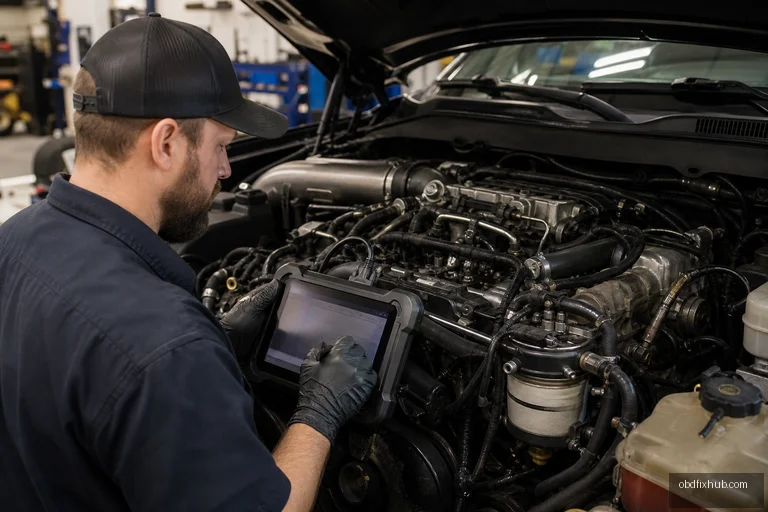
P25BD Unmetered Fuel Forced Engine Shutdown means the engine control module has detected a fuel-delivery condition it cannot safely control and may shut the engine down to prevent damage. The code is most often associated with diesel fuel systems and requires more than simply clearing the fault: an injector, fuel-pressure problem, wiring fault, or contaminated fuel may still be present.
What Does P25BD Mean?
P25BD is a manufacturer-specific powertrain diagnostic trouble code. Its exact wording and test strategy can vary by vehicle, engine, model year, and software calibration, although the central concern is the same: fuel is entering the engine, or is capable of entering it, without being properly metered by the engine control module.
On some GM applications, the ECM responds by commanding a forced engine shutdown. This is a protective strategy, not necessarily proof that the engine itself has failed. The module is trying to prevent uncontrolled combustion, excessive cylinder pressure, fuel dilution of the engine oil, or a diesel runaway condition.
Symptoms of P25BD Unmetered Fuel Forced Engine Shutdown
Some vehicles will shut down immediately, while others may display warning signs before the shutdown occurs. The most useful clues are what the engine was doing immediately before the code appeared and whether the problem returns after a restart.
- Engine stalls while driving or shuts off shortly after starting
- Crank-no-start or extended cranking after the shutdown
- Reduced-power mode or an engine warning message
- Rough idle, misfiring, surging, or unusually high engine speed
- Excessive white, gray, or black exhaust smoke
- Strong raw-fuel odor around the vehicle or engine bay
- Fuel level that appears to drop unusually quickly
- Engine oil level rising or oil smelling strongly of diesel fuel
A rising oil level is especially important. Fuel leaking past an injector or entering through another internal path can dilute the oil, reducing its ability to protect bearings and turbocharger components. Do not continue driving simply because the engine restarts after the code is erased.
Common Causes of P25BD
Leaking or stuck-open fuel injector
An injector that does not close properly can deliver fuel when the ECM has not commanded injection. This may cause smoke, hard starting, rough running, fuel dilution, and a shutdown request. A return-flow test, cylinder contribution test, and injector balance data are more useful than replacing injectors based on the code alone.
Fuel pressure regulator or metering valve fault
High-pressure diesel systems use a fuel metering valve, pressure control valve, or rail-pressure regulator to keep fuel delivery within the commanded range. A valve that sticks, loses electrical control, or receives incorrect pressure feedback can create an apparent unmetered-fuel condition.
Fuel rail pressure sensor or wiring problem
The ECM calculates fuel delivery partly from rail-pressure feedback. A biased pressure sensor, corroded connector, shorted wire, or poor ground can report a pressure value that does not match reality. Inspect the connector for fuel intrusion, damaged terminals, chafed wiring, and evidence of water or corrosion before condemning the sensor.
Fuel contamination or incorrect fuel
Water, gasoline in a diesel tank, excessive biodiesel content, or debris from a failing high-pressure pump can affect injector operation and fuel-pressure control. If the fault appeared soon after refueling, save a fuel sample and inspect the filter for water or metallic particles. Metal contamination can indicate pump damage and may require cleaning or replacement of much more than the filter.
Internal fuel leakage
A damaged injector seal, cracked fuel component, or internal leak can allow fuel to reach areas where it is not expected. On some engines, fuel may enter the crankcase and raise the oil level. On turbocharged diesel engines, oil or fuel-related over-fueling can also contribute to uncontrolled engine speed, which is an emergency condition.
ECM software or circuit fault
Not every P25BD is caused by a mechanical fuel fault. Manufacturer service bulletins may identify calibration updates, revised diagnostic thresholds, or wiring repairs for a particular model. The vehicle identification number, engine code, freeze-frame data, and technical service bulletins should be checked before replacing expensive components.
How to Diagnose P25BD Correctly
- Do not repeatedly restart the engine. If the oil level is high, the engine races, or smoke is heavy, shut it down and arrange a tow.
- Record all codes and freeze-frame data. Note fuel rail pressure, commanded pressure, engine speed, coolant temperature, battery voltage, and injector-related codes.
- Check the engine oil. A level above the full mark or a diesel smell means the oil should be changed after the fuel fault is repaired.
- Inspect fuel quality and the filter. Look for water, gasoline, debris, or metallic glitter. Do not ignore metal contamination.
- Compare commanded and actual rail pressure. A professional scan tool should show whether pressure is too high, too low, or erratic during cranking and operation.
- Test injectors and control valves. Use manufacturer procedures such as injector leak-off testing, electrical resistance checks, actuator tests, and cylinder balance data.
- Inspect wiring under load. A visual check can miss a high-resistance ground or an intermittent signal wire. Voltage-drop testing and a wiring diagram are often necessary.
- Verify repairs with a road test. Clear the code only after the root cause is addressed, then confirm that rail pressure, injector corrections, and engine oil level remain normal.
A common diagnostic mistake is replacing the rail-pressure sensor immediately. If the sensor is accurately reporting a real pressure problem, the new sensor will not fix the underlying metering fault. Testing the signal against a mechanical pressure reference and checking the fuel system for contamination provides a far more reliable diagnosis.
How Is P25BD Repaired?
The repair depends on the failed component. Possible repairs include replacing a leaking injector, installing a fuel metering valve, repairing the rail-pressure sensor circuit, replacing contaminated fuel and filters, updating ECM software, or replacing a damaged high-pressure fuel pump.
If an injector has diluted the engine oil, change the oil and filter after the fuel system repair. If metal is found in the fuel system, a simple filter replacement may lead to a repeat failure; the pump, rail, lines, injectors, and tank may need inspection according to the manufacturer’s contamination procedure.
P25BD Repair Cost
Cost varies substantially by vehicle and by the amount of contamination or internal damage. A wiring repair or software update may cost relatively little, while one injector can cost several hundred dollars and a complete high-pressure fuel-system repair can reach several thousand dollars. The safest way to control cost is to authorize diagnosis first rather than replacing injectors, pumps, and sensors together.
Can You Drive With P25BD?
Driving is not recommended when the vehicle has forced a shutdown, runs abnormally, produces heavy smoke, or shows a rising oil level. The engine may stall in traffic, suffer lubrication damage, or develop uncontrolled speed. If the vehicle starts and appears normal, it should still be driven only to a repair facility when a qualified technician has confirmed that no active over-fueling or oil-dilution risk exists; towing is the safer option in most cases.
Frequently Asked Questions
Is P25BD the same as a bad fuel injector?
No. A leaking injector is a common cause, but P25BD can also result from a fuel metering valve, pressure sensor, wiring, contaminated fuel, high-pressure pump, or software issue.
Will clearing P25BD fix the problem?
No. Clearing the code only removes the stored warning until the ECM runs the test again. If the underlying fuel-control problem remains, the code and forced shutdown may return.
Why should I check the engine oil?
Unmetered fuel can enter the crankcase and dilute the oil. A high oil level or diesel odor indicates a possible lubrication risk, and the oil should be changed after the fuel fault is repaired.
Can bad fuel trigger P25BD?
Yes. Water, gasoline in diesel fuel, debris, or metallic contamination can interfere with injectors and fuel-pressure controls. A fuel sample and filter inspection are worthwhile, especially if the problem began after refueling.
What is the best first step after P25BD appears?
Stop repeated restart attempts, scan for companion codes, inspect the oil level, and have the fuel system tested with a manufacturer-capable scan tool. The code should be diagnosed as a safety-related fuel-control fault, not treated as a simple reset issue.
Bottom line: P25BD indicates that the ECM has detected fuel delivery it cannot safely meter. Treat a forced shutdown, abnormal smoke, rising oil level, or uncontrolled engine speed as urgent. Accurate pressure, injector, fuel-quality, and wiring tests are the quickest path to the correct repair.




