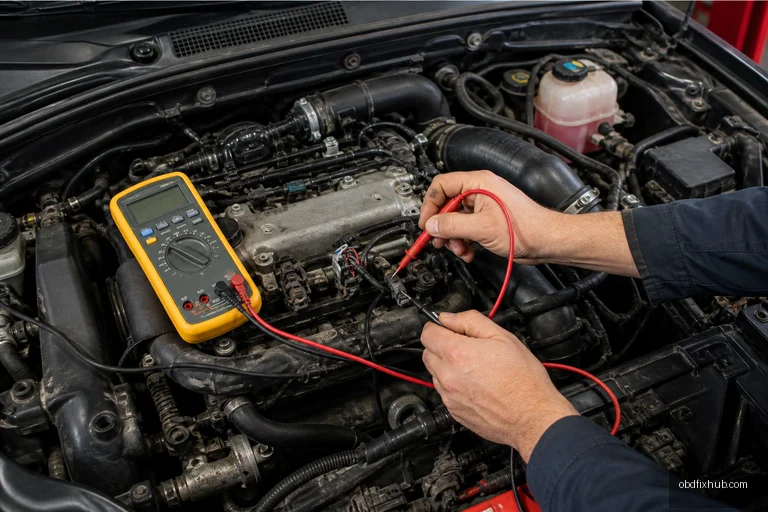
P2604 intake air heater performance means the engine computer has detected that the intake air heater circuit is not operating within its expected range. On a diesel engine, this can cause hard cold starts, white smoke, rough running, or a warning light—although the vehicle may still start normally in warm weather. The fault may come from the heater element, relay, fuse, wiring, ground, temperature sensor, or a control problem rather than the heater itself.
What Does P2604 Mean?
P2604 is a generic OBD-II trouble code defined as Intake Air Heater “A” Circuit Range/Performance. The engine control module (ECM) monitors the heater’s electrical behavior and compares it with the expected current, voltage, operating time, and air-temperature response.
The intake air heater warms air entering the engine during cold starts. Diesel fuel does not ignite as easily as gasoline, so extra heat helps the engine build compression heat and combust fuel cleanly when ambient temperatures are low.
The exact wording can differ between scan tools and manufacturers. Some tools may describe a related fault as “intake air heater A circuit low.” That wording generally means the ECM sees an abnormally low voltage or current signal in the heater circuit. It does not necessarily mean the intake air temperature is low.
What Does “Intake Air Heater A Circuit Low” Mean?
“Circuit low” usually points to an electrical problem that pulls the monitored circuit below its expected level. Common examples include a short to ground, a failed relay, a blown fuse, a heater element with incorrect resistance, or a damaged power or ground cable.
However, P2604 specifically refers to range or performance. A heater can receive power and still set this code if it draws too much or too little current, heats too slowly, or fails to produce the expected change in intake-air conditions. Always verify the exact code and manufacturer description with a capable scan tool before replacing parts.
Where Is the Intake Air Heater Located?
The intake air heater is normally installed in the intake tract, close to the intake manifold or inside an intake-air heater housing. On many diesel engines it is a heavy-duty grid-style heating element, sometimes called an intake grid heater. It is different from a glow plug, which is installed in each cylinder’s combustion chamber.
Typical identifying features include:
- A thick power cable or high-current terminal.
- A metal grid or heating element positioned in the incoming air stream.
- One or more high-current relays controlling battery power.
- A location between the charge-air pipe and intake manifold, depending on engine design.
Before testing the heater, disconnect the batteries when removing high-current wiring. Accidentally shorting the power terminal to the intake manifold can damage wiring, tools, or the fuse system.
Common Causes of P2604
- Open or damaged heater element: The internal grid can break or develop excessive resistance.
- Failed intake heater relay: The relay may stick, fail to close, or develop burned contacts that cause voltage drop.
- Blown high-current fuse or fusible link: This is often the result of an earlier short circuit or an element drawing excessive current.
- Corroded terminals: A loose connection can pass voltage with no load but fail when the heater demands substantial current.
- Poor engine ground: A damaged ground strap can create low voltage at the heater even when the battery tests well.
- Low battery voltage: Cold cranking and heater operation place a heavy load on the electrical system.
- Faulty intake-air or coolant temperature sensor: The ECM may command the heater at the wrong time or misjudge its operation.
- Software or control-module fault: Less commonly, the relay command or monitoring circuit inside the ECM is defective.
P2604 Symptoms to Watch For
Symptoms are often most noticeable below freezing, because the intake heater may not be needed during a warm restart. A driver may see only a check-engine light, while another vehicle may have obvious starting problems.
- Extended cranking during cold starts.
- White or gray exhaust smoke immediately after starting.
- Rough idle or misfire-like behavior for the first few seconds.
- Reduced cold-weather throttle response.
- Battery voltage dropping sharply during preheat or cranking.
- Check Engine light or a stored pending P2604 code.
How to Diagnose P2604 Correctly
A reliable diagnosis requires testing the circuit under load. Measuring voltage at an unplugged connector alone can be misleading because a corroded connection may show battery voltage with almost no current flowing.
- Confirm the code and conditions. Record all stored and pending codes, freeze-frame data, coolant temperature, intake temperature, battery voltage, and whether the engine was cold when the code set.
- Inspect the high-current wiring. Look for melted insulation, loose terminals, corrosion, damaged grounds, and evidence that the heater cable has contacted the intake or engine block.
- Check fuses with a meter or test light. Do not rely on visual inspection alone. A fuse can appear intact while the fuse holder or terminal is overheated.
- Test relay operation. Use a scan tool’s output controls when available. Verify that the relay receives a command and that voltage reaches the heater terminal when commanded.
- Measure voltage drop. Test from battery positive to the heater power terminal, and from the heater ground to battery negative, while the circuit is loaded. Excessive voltage drop identifies resistance that a simple continuity test will miss.
- Test heater resistance according to the service manual. These elements are designed for high current, so do not substitute a random resistance specification. An incorrect meter range or probing method can produce a false diagnosis.
- Compare scan-tool data. Intake-air temperature should be plausible compared with coolant temperature and ambient temperature after the vehicle has sat overnight.
A practical workshop clue is whether the fuse fails immediately when the heater is commanded. If it does, suspect a shorted heater, damaged cable, or relay problem before installing another fuse. Repeatedly replacing the fuse can turn a small electrical fault into a harness fire.
Where Is the Fuse for the Duramax Intake Air Heater?
On a Duramax, the intake air heater fuse is generally located in the underhood fuse or electrical center, but the exact fuse number, label, and rating vary by engine generation, model year, and truck platform. It may be identified as an intake air heater, grid heater, heater relay, or an abbreviated ECM-related circuit.
Do not use a fuse chart from a different Silverado, Sierra, Express, or model year. Open the underhood fuse-box cover and compare the diagram with the vehicle’s owner’s manual and factory service information. Some Duramax applications use more than one high-current fuse or fusible link feeding the heater relays.
When checking the Duramax system, inspect the fuse box for heat discoloration and loose high-current terminals. A fuse that tests good on both sides with the heater off can still lose voltage when the relay closes, so loaded testing is essential.
Repair Options for P2604
The correct repair depends on the failed component. Possible repairs include replacing a blown fuse after correcting the underlying short, installing a new relay, repairing a corroded power or ground connection, replacing the intake air heater element, or repairing damaged wiring.
If the heater is replaced, clean the mounting surfaces and verify that the element is not contacting the intake housing. On some engines, carbon deposits or an incorrectly installed gasket can interfere with airflow or create a short. Clear the code only after the repair, then perform a cold-start verification and confirm that the code does not return.
Can You Drive With P2604?
Short-distance driving is often possible if the engine starts normally, but the vehicle may become difficult or impossible to start in cold weather. Continued operation with a blown fuse or overheated wiring is more serious because the electrical fault can damage the fuse box or harness.
Address the problem promptly if you notice smoke from the engine compartment, a burning-plastic smell, repeated fuse failure, slow cranking, or cables that become hot. Those signs indicate a high-current fault rather than a simple sensor issue.
Summary: The Fastest Route to a P2604 Fix
P2604 indicates an intake air heater circuit performance problem, not automatically a defective heater. Begin with battery condition, fuses, relay output, grounds, and voltage-drop testing before purchasing parts. On Duramax engines, use the exact underhood fuse-box diagram for the vehicle’s year and configuration, then verify the heater under load.
If the code returns after basic wiring checks, a diesel specialist with a bidirectional scan tool can command the heater, monitor current, and identify whether the fault is in the element, relay circuit, temperature input, or ECM control. That approach is faster and safer than repeatedly replacing fuses or guessing at components.
Frequently Asked Questions
What does the intake heater mean?
The intake heater is an electrically powered element that warms incoming air during cold diesel starts. It supports cleaner ignition and smoother initial operation; it is not the same component as a glow plug.
Where is the intake air heater located on a diesel engine?
It is usually mounted in the intake passage near the intake manifold or in a dedicated grid-heater housing. Look for a high-current cable and a heating grid positioned in the incoming airflow.
Where is the Duramax intake air heater fuse?
It is normally in the underhood fuse or electrical center, but the fuse number and label differ by year and model. Use the vehicle-specific fuse-box diagram rather than a generic Duramax chart.
Is P2604 the same as a glow-plug code?
No. P2604 concerns the intake-air heating circuit. Glow-plug faults are monitored through a separate system and usually use different diagnostic trouble codes.
Can a weak battery cause P2604?
Yes. Low battery voltage or excessive voltage drop can prevent the high-current heater from reaching its expected performance, especially during cold starts. Test the battery and charging system before condemning the heater.




