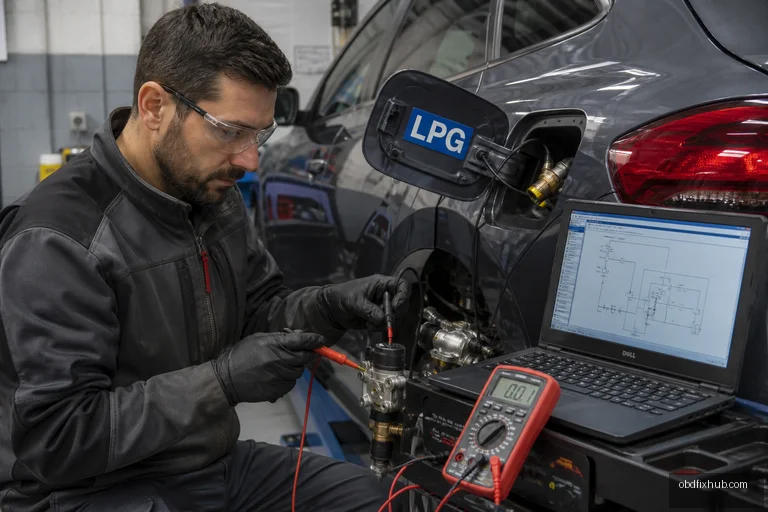
P2A9E means the engine control module has detected an electrical problem in the alternative fuel return line valve control circuit. On vehicles designed for LPG, CNG, or another gaseous fuel, this valve helps manage fuel pressure and routing back toward the tank or regulator. The code does not automatically prove that the valve itself is bad; wiring, a fuse, a connector, the driver circuit inside the control module, or an incorrect fuel-pressure signal can produce the same fault.
What Does the P2A9E Code Mean?
The diagnostic trouble code P2A9E is generally defined as Alternative Fuel Return Line Valve Control Circuit. It is a powertrain-related code associated with the electronically controlled valve used in an alternative-fuel delivery system.
The exact valve location and testing procedure vary by manufacturer. Some systems use a return valve near the fuel rail or pressure regulator, while others integrate the valve into a fuel control module. That is why a factory wiring diagram and the vehicle-specific service information are more useful than relying on the generic code description alone.
Symptoms of P2A9E
A vehicle may continue to run normally when this code first appears, particularly if the gasoline system can compensate or the alternative-fuel system switches to a backup strategy. In other cases, the fault affects fuel pressure immediately and creates noticeable drivability problems.
- Check Engine Light or an alternative-fuel system warning light
- Automatic switching from LPG or CNG to gasoline
- Hard starting, extended cranking, or an engine that starts and stalls
- Rough idle, hesitation, surging, or reduced acceleration
- Reduced fuel economy or an inaccurate range estimate
- Unstable fuel pressure or inconsistent operation under load
- Failure to enter alternative-fuel mode
- Additional fuel-pressure, injector, or mixture-related trouble codes
One useful clue is when the symptoms occur. If the engine runs well on gasoline but loses power or refuses to change over to CNG or LPG, the fault is more likely within the alternative-fuel circuit than in the basic ignition system.
Most Common Causes of the P2A9E Alternative Fuel Return Line Valve Circuit Fault
1. Damaged wiring or poor electrical connections
Wiring routed beneath the vehicle is exposed to water, road salt, vibration, and heat. A partially broken conductor may pass a quick continuity check but fail when the harness moves or the valve draws current. Corrosion inside a sealed connector can also create enough resistance to trigger P2A9E without completely opening the circuit.
2. Failed return line valve solenoid
The valve coil can develop an open circuit, an internal short, or excessive resistance. Mechanical contamination may also prevent the valve from moving even when its electrical readings appear normal. If the solenoid has been exposed to liquid fuel, oil, or debris, do not assume that replacing only the connector will solve the problem.
3. Blown fuse or defective relay
A shorted valve coil can blow its supply fuse. Replacing the fuse without finding the reason it failed may result in another failure as soon as the system is commanded on. Check the fuse under the operating conditions specified by the manufacturer, not just with the ignition switched off.
4. Powertrain control module driver fault
Most control modules operate the valve by switching the ground side or controlling current electronically. A damaged output driver can leave the valve permanently off or permanently energized. This is less common than a harness fault, so module replacement should never be the first repair based solely on the presence of P2A9E.
5. Fuel-pressure or control-system problems
A return valve circuit code may appear alongside pressure-related faults when the system cannot achieve the expected pressure. A restricted return line, failing regulator, contaminated fuel filter, or faulty pressure sensor can confuse the diagnostic process. The circuit and the hydraulic side should be tested separately.
How to Diagnose P2A9E Correctly
Alternative-fuel systems can store fuel under very high pressure, especially CNG systems. Do not disconnect fuel lines, loosen fittings, or remove a valve unless the system has been safely isolated and depressurized using the manufacturer’s procedure. Electrical testing is normally safer than opening the fuel system, but ignition sources and unapproved test equipment still present a risk.
- Scan all modules. Record P2A9E, the freeze-frame data, fuel mode, engine temperature, battery voltage, and any related codes before clearing anything. Codes for low voltage or fuel pressure can change the diagnostic direction.
- Confirm the complaint. Determine whether the fault occurs during startup, fuel changeover, acceleration, or after the vehicle has warmed up. Use the scan tool to see whether the module is commanding the valve on or off.
- Inspect the harness and connector. Look for crushed wiring, melted insulation, green corrosion, loose terminals, and evidence that the harness has rubbed against a bracket. Perform a controlled wiggle test while monitoring the valve command or circuit voltage.
- Check the power supply and ground path. A voltmeter may show battery voltage with no load while the circuit collapses when the solenoid is activated. A loaded voltage-drop test is more revealing: excessive voltage loss across the fuse, wiring, ground, or connector points to resistance in that section.
- Measure the valve coil. Compare resistance with the specification for that exact vehicle. An open reading, an extremely low reading, or a value that changes as the connector is moved indicates a likely solenoid or terminal problem. Never apply direct battery power unless the service information explicitly permits it.
- Test the control side. If power and the valve are within specification, verify that the control module is providing the expected switched ground or control signal. Use a proper back-probing method and avoid piercing insulation where moisture can later enter.
- Check fuel pressure only when appropriate. If the electrical circuit passes, compare commanded and actual pressure with approved equipment. A pressure fault may be the cause of the code, a result of the valve not operating, or a separate problem.
How Is P2A9E Fixed?
The correct repair depends on the failed part. Typical repairs include replacing a damaged section of harness, cleaning or replacing corroded terminals, repairing a poor ground, replacing the return line valve, or correcting a blown fuse caused by a shorted solenoid. If a valve is replaced, inspect the connector and the wiring at the same time; installing a new solenoid on a corroded circuit often leads to a repeat failure.
After the repair, clear the code and perform the manufacturer’s required relearn or fuel-system initialization. Then road-test the vehicle through the conditions shown in the original freeze-frame data. A successful repair should be confirmed by checking that the vehicle changes fuel modes correctly, the commanded valve state matches the actual system response, and P2A9E does not return.
Can You Drive With a P2A9E Code?
Short, careful driving may be possible if the vehicle runs smoothly on gasoline and there is no fuel odor, warning about a leak, or severe loss of power. However, avoid using the alternative-fuel system until it has been diagnosed, especially if the engine stalls during changeover or the system cannot regulate pressure.
Stop driving and arrange professional service if you smell gas, hear hissing, see visible damage around fuel components, experience repeated stalling, or notice a warning indicating a fuel-system safety shutdown. Never attempt to locate a suspected gaseous-fuel leak with a flame.
Practical Diagnostic Tips From the Workshop
- Check battery voltage first. Low system voltage can make a healthy actuator look defective during an initial scan.
- Compare the valve connector with a known-good connector in the same system where possible; terminal tension problems are easy to miss visually.
- Do not condemn the control module until the valve coil, supply voltage, ground or switched-control circuit, and harness load test have all passed.
- If P2A9E returns only after rain or washing, prioritize connector sealing, harness routing, and water intrusion.
- If the code appears immediately after a valve replacement, verify the part number and pin arrangement. Similar-looking solenoids may have different resistance or control requirements.
Frequently Asked Questions About P2A9E
Is P2A9E a serious code?
It can be. The code may only disable alternative-fuel operation, but it can also indicate a valve-control problem that affects fuel pressure and drivability. Treat fuel odor, stalling, or abnormal pressure warnings as urgent symptoms.
Can a weak battery cause P2A9E?
Yes. Low voltage during cranking or fuel-mode changeover can cause an actuator circuit to be interpreted incorrectly. Battery and charging-system tests should be completed before replacing the valve or control module.
Will clearing P2A9E fix the problem?
No. Clearing the code only removes the stored fault temporarily. If the electrical or fuel-system condition remains, the code will return, often during the next commanded valve operation.
Do I need to replace the alternative fuel valve?
Not necessarily. A corroded connector, broken wire, missing power supply, blown fuse, or control-side fault can produce the same code. Test the complete circuit before ordering a valve.
Can I diagnose P2A9E at home?
You can perform a scan, inspect accessible wiring, and check battery voltage. Work involving pressurized LPG or CNG components should be left to a technician trained and equipped for that fuel system.
Bottom Line
P2A9E identifies a problem in the alternative fuel return line valve control circuit, but the code alone does not identify the failed component. Start with the stored data, circuit inspection, loaded voltage testing, and the valve’s specification before considering module replacement. If the system contains pressurized LPG or CNG, prioritize safety and use a qualified alternative-fuel technician for any fuel-line or valve work.




