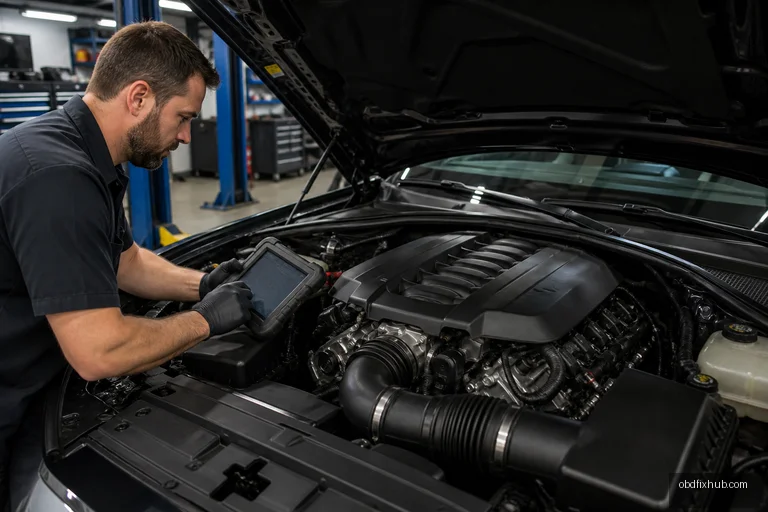
P2E68 Fuel System Too Lean During Cylinder Deactivation: Meaning, Causes, Symptoms & Fix
Search intent: Informational. Drivers searching for P2E68 usually want to understand the code before paying for parts or a diagnostic visit. P2E68 means the engine control module detected a lean fuel mixture while cylinder deactivation was active—in other words, the engine was receiving too much air, too little fuel, or an unreliable air/fuel signal during reduced-cylinder operation.
This code does not automatically mean the cylinder-deactivation system itself has failed. A vacuum leak, weak fuel delivery, inaccurate airflow measurement, exhaust leak, injector problem, or calibration issue can all produce the same result. The right diagnosis depends on fuel-trim data and what the engine is doing when the code sets.
What Does P2E68 Mean?
P2E68 is a powertrain diagnostic trouble code associated with a fuel system too lean during cylinder deactivation. During light-load cruising, some engines deactivate selected cylinders to reduce pumping losses and improve fuel economy. The powertrain control module then changes injector timing, ignition strategy, throttle control, and valve operation to keep combustion stable.
When the oxygen or air/fuel sensors report more oxygen in the exhaust than expected, the module adds fuel through positive short-term and long-term fuel trims. If the correction reaches its limit while cylinder deactivation is operating, P2E68 may be stored. Depending on the vehicle, related codes such as P0171, P0174, misfire codes, or cylinder-deactivation actuator codes may appear at the same time.
P2E68 should not be confused with BMW fault code 2E68. The missing “P” and the different code structure matter: P2E68 is an OBD powertrain code, while 2E68 is a manufacturer-specific BMW code with a different meaning.
Common Symptoms of P2E68
Some vehicles set P2E68 with very few noticeable symptoms because cylinder deactivation only occurs under steady, low-load conditions. Others show a clear drivability problem when the system transitions between active and deactivated cylinders.
- Illuminated Check Engine Light
- Roughness or hesitation during light-throttle cruising
- Engine stumble when cylinder deactivation engages or disengages
- Reduced fuel economy
- Hanging or surging idle
- Hard starting, especially after a hot soak
- Lean misfire codes or occasional flashing Check Engine Light
- Reduced engine power or disabled cylinder-deactivation operation
A flashing Check Engine Light is more urgent than a steady light. It generally indicates an active misfire that can overheat and damage the catalytic converter. Avoid heavy acceleration and have the vehicle inspected promptly.
Most Likely Causes of P2E68 Fuel System Too Lean
1. Unmetered air entering the engine
A split PCV hose, loose intake boot, leaking brake-booster hose, failed intake-manifold gasket, or cracked vacuum line allows air to bypass the mass airflow sensor. The control module calculates fuel for less air than the engine actually receives, creating a lean mixture. A leak close to the intake manifold can become especially noticeable during low-load operation.
2. Weak or restricted fuel delivery
A dirty fuel filter, failing fuel pump, restricted fuel line, poor electrical connection, or faulty fuel-pressure regulator can reduce delivered fuel. Fuel pressure may look acceptable at idle but fall during acceleration or when the pump is hot. On returnless fuel systems, compare actual pressure with the manufacturer’s specified pressure under several operating conditions rather than relying on one idle reading.
3. Dirty or inaccurate MAF sensor
A contaminated mass airflow sensor may under-report the amount of air entering the engine. The control module then commands too little fuel, and the error can become more apparent when the engine changes operating mode. Do not spray a MAF sensor with throttle-body cleaner or brake cleaner; use a sensor-safe cleaner and check for intake leaks before replacing the sensor.
4. Exhaust leaks before the oxygen sensor
A small crack in an exhaust manifold, a leaking manifold gasket, or a damaged flex pipe can draw outside air into the exhaust stream. The oxygen sensor interprets that extra oxygen as a lean mixture even when the engine is fueling correctly. Soot marks, ticking noises during cold start, or a smoke-test trace around the exhaust manifold are useful clues.
5. Dirty, restricted, or electrically weak fuel injectors
An injector that delivers less fuel than the others can cause a cylinder-specific lean misfire. This is more convincing when misfire counters identify one cylinder and the fuel trims improve after the suspect injector is moved to another cylinder. Injector balance testing is more reliable than simply adding a bottle of fuel-system cleaner.
6. Cylinder-deactivation hardware or software faults
Engines using AFM, DFM, VCM, or a similar system rely on oil pressure, solenoids, special lifters, valve control, and precise software commands. Low engine oil level, incorrect oil viscosity, a sticking deactivation solenoid, or a control-module calibration problem can disturb the transition into reduced-cylinder operation. A recent engine repair or control-module update is important diagnostic history.
How to Diagnose P2E68 Properly
- Record the freeze-frame data. Note engine speed, coolant temperature, load, vehicle speed, fuel trims, and whether the code set during deactivation. This often separates a cruising fault from an all-the-time lean condition.
- Scan for companion codes. Misfire, fuel-pressure, MAF, oxygen-sensor, and cylinder-deactivation codes can identify the affected system faster than P2E68 alone.
- Check fuel trims at idle and at 2,500 rpm. Large positive trims at idle that improve at higher speed usually suggest a vacuum leak. Positive trims that worsen under load point more strongly toward fuel-delivery restriction or inadequate pressure.
- Inspect and smoke-test the intake system. Pay close attention to PCV connections, the brake-booster hose, intake-manifold seams, throttle-body seals, and EVAP purge plumbing.
- Verify MAF readings and fuel pressure. Compare scan-tool data with service-manual specifications. A pressure test should include key-on, idle, acceleration, and hot-soak conditions when possible.
- Check for exhaust leaks before the upstream sensors. Do this before condemning an oxygen sensor. A sensor can report a real lean signal caused by outside air entering the exhaust.
- Evaluate cylinder-deactivation operation. Use bidirectional scan-tool tests where available, review commanded versus actual deactivation status, and check oil level, oil condition, solenoid operation, and relevant wiring.
One practical diagnostic clue is the fuel-trim transition. If trims are normal while all cylinders are active but rise sharply only during deactivation, focus on the deactivation event, intake manifold behavior, valve-control operation, and software updates. If trims are high in every operating mode, repair the underlying air, fuel, or exhaust problem first.
How to Fix P2E68
The repair should match the confirmed cause. Replace cracked vacuum hoses and intake gaskets, repair damaged wiring, clean or replace a contaminated MAF sensor, correct fuel pressure problems, service restricted injectors, or repair an exhaust leak ahead of the oxygen sensor. If a deactivation solenoid, lifter, oil-control passage, or actuator is involved, the engine may require mechanical testing rather than a simple sensor replacement.
After the repair, clear the code only after recording the original data. Perform a road test that reproduces the freeze-frame conditions, including steady cruising where cylinder deactivation normally operates. Confirm that fuel trims remain reasonable, no misfire counters increase, and the system transitions smoothly before returning the vehicle to the customer.
Can You Drive With P2E68?
Short trips may be possible when the Check Engine Light is steady and the engine runs smoothly, but continued driving is not ideal. A sustained lean mixture can raise combustion temperature, trigger misfires, and damage the catalytic converter. Stop driving if the light flashes, the engine shakes, power drops sharply, or there is a strong fuel smell.
Summary: The Fastest Path to a Correct Repair
P2E68 identifies a lean condition specifically observed during cylinder deactivation, not proof that the deactivation components are defective. Start with freeze-frame data, fuel trims, intake and exhaust leak checks, MAF validation, and fuel-pressure testing. Only after those basics are verified should you investigate deactivation solenoids, lifters, oil passages, or control-module calibration.
Do not replace oxygen sensors or cylinder-deactivation parts based on the code alone. A smoke test and a fuel-trim comparison often find the real fault faster and at a much lower cost.
Frequently Asked Questions
Is P2E68 the same as P0171?
No. Both can involve a lean mixture, but P2E68 identifies the condition during cylinder-deactivation operation. P0171 generally describes a lean condition on Bank 1 without specifying that operating mode.
Can low engine oil cause P2E68?
It can contribute on engines that use oil pressure to control cylinder deactivation. Low, contaminated, or incorrect-viscosity oil may prevent proper actuator operation, but vacuum leaks and fuel-delivery faults should still be ruled out.
Will replacing the oxygen sensor fix P2E68?
Usually not unless testing proves the sensor is biased or responding incorrectly. Intake leaks, exhaust leaks, low fuel pressure, and under-fueling injectors are more common causes of a genuine lean reading.
How serious is the P2E68 code?
It ranges from a minor air leak to a fuel or mechanical problem that can cause damaging misfires. A steady light with normal operation permits cautious diagnosis, while a flashing light or severe hesitation requires immediate attention.
Can a software update resolve P2E68?
Sometimes. Manufacturers may release calibration updates for cylinder-deactivation transition problems, but software should be considered only after mechanical, air, fuel, and sensor checks have been completed.




