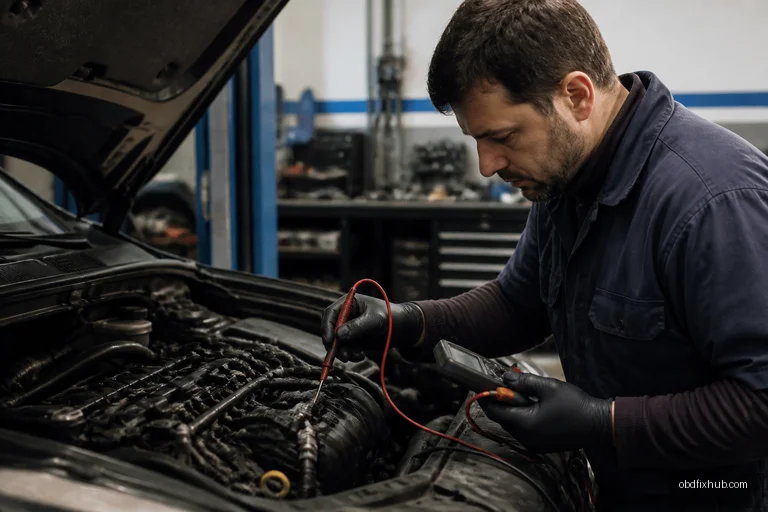
P0201 means the engine control module has detected an electrical fault in the cylinder 1 fuel injector circuit. The problem may be an open wire, damaged connector, failed injector, poor power supply, or a faulty injector driver inside the PCM. You may be able to drive a short distance if the engine is running smoothly, but a persistent misfire can damage the catalytic converter and should not be ignored.
This is an information and troubleshooting guide for P0201 cylinder 1 injector circuit faults. The exact repair depends on the vehicle’s wiring layout, engine design, and whether the code returns immediately after clearing.
What Does P0201 Cylinder 1 Injector A Circuit Mean?
Modern fuel injectors are electrically controlled solenoids. The PCM or ECM supplies injector power, then switches the control side on and off to deliver precisely timed fuel pulses. When it sees an abnormal voltage, resistance, or current pattern on cylinder 1 injector A, it stores P0201.
In most vehicles, injector A refers to the primary or designated injector for cylinder 1. On a conventional four-cylinder engine, cylinder 1 is normally at the timing-chain or timing-belt end, but this is not universal. Always confirm cylinder numbering in the manufacturer’s service information rather than relying on engine appearance.
Common P0201 Symptoms
The symptoms depend on whether the injector is stuck open, not receiving power, or being commanded incorrectly. A vehicle with a complete circuit failure will often run on three cylinders, while an intermittent connection may only act up over bumps or when the engine is hot.
- Check Engine Light, often with a flashing light during an active misfire
- Rough idle, shaking, or noticeable engine vibration
- Hard starting, hesitation, or poor throttle response
- Reduced power and lower fuel economy
- Engine misfire codes such as P0301 alongside P0201
- Fuel smell from a leaking or stuck-open injector
- Black smoke or an excessively rich exhaust condition
- Long crank time if cylinder 1 is not receiving fuel
A flashing Check Engine Light is especially important. It usually indicates a severe misfire capable of overheating the catalytic converter. Stop driving except to move the vehicle to a safe location.
What Causes an Injector Circuit Malfunction?
P0201 does not automatically mean the injector itself is bad. In real workshop diagnostics, wiring and terminal problems are common, particularly near the injector connector where engine heat, oil contamination, and vibration combine.
- Open, broken, or chafed wire between the injector and PCM
- Short to ground, short to voltage, or damaged wiring insulation
- Loose, spread, corroded, or oil-contaminated injector terminals
- Failed cylinder 1 fuel injector solenoid
- Missing injector power caused by a fuse, relay, or shared power feed
- Damaged harness after engine or cylinder-head repairs
- Incorrect injector installation or an incompatible replacement part
- Rarely, a defective PCM injector driver or software issue
Many engines use a common 12-volt supply for several injectors and separate PCM-controlled ground circuits. If multiple injector codes appear together, test the shared power feed before replacing individual injectors. A single P0201 makes a cylinder-specific connector, wire, injector, or driver more likely.
How to Diagnose P0201 Correctly
A professional diagnosis starts with circuit testing, not injector replacement. The following sequence works on many port-injected gasoline engines, but connector pin assignments and expected resistance values must come from the vehicle’s service manual.
1. Check all stored codes and freeze-frame data
Scan for related misfire, fuel-pressure, voltage, or communication codes. Note engine temperature, RPM, and load when P0201 was set. If the code appears only during vibration or acceleration, an intermittent harness fault becomes more likely.
2. Inspect the cylinder 1 connector and harness
Turn the ignition off and examine the connector for bent terminals, broken locking tabs, corrosion, oil, and pushed-back pins. Gently tug each wire near the plug. A wire can look intact externally while being broken inside its insulation, especially where the harness bends around the intake manifold.
3. Confirm injector power
With the ignition on, use a multimeter or test light to check the injector’s power terminal. Many vehicles should show close to battery voltage, although some systems switch power differently. Compare cylinder 1 with a neighboring injector rather than assuming a universal voltage reading.
4. Test injector resistance
Disconnect the injector and measure resistance across its terminals with a digital multimeter. Compare the reading with the manufacturer’s specification and with the other injectors. An infinite reading usually indicates an open solenoid, while a dramatically lower reading suggests an internal short. Resistance alone cannot prove that an injector works under heat and vibration.
5. Check the control signal
A noid light can show whether the PCM is pulsing the injector circuit during cranking. An oscilloscope is better because it reveals pulse width, voltage spikes, and intermittent dropouts. If power, wiring, and the injector test normally but the control signal is absent, PCM driver testing and PCM power or ground checks are required.
6. Perform a wiggle and voltage-drop test
With the engine running or the circuit energized, gently move the harness while watching the scan data, noid light, or meter. Voltage-drop testing under load is often more revealing than a continuity check. A wire may pass a static continuity test yet fail when current flows through a corroded terminal.
How to Fix Error Code P0201
The correct repair is the one that restores the injector circuit and verifies the fault is gone. Common fixes include:
- Repairing or replacing an open, shorted, or heat-damaged wire
- Replacing a loose injector connector or damaged terminal
- Cleaning corrosion only when the terminals are otherwise serviceable
- Replacing cylinder 1 injector after electrical testing confirms failure
- Replacing a blown fuse or failed relay after finding the reason it failed
- Repairing PCM power, ground, or connector problems
- Testing or replacing the PCM only after the complete circuit is proven good
After the repair, clear the codes and road-test the vehicle under the conditions recorded in the freeze-frame data. Confirm that cylinder 1 misfire counts remain stable, fuel trims are reasonable, and P0201 does not return. A replacement injector may also require coding or flow-rate programming on some direct-injection systems.
Can You Drive With a P0201 Code?
Short-distance driving may be possible if the Check Engine Light is steady, the engine runs smoothly, and there is no fuel leak or severe loss of power. However, driving for days with the code is not advisable. A dead injector can create a lean misfire, while a stuck-open injector can send raw fuel into the exhaust, dilute engine oil, and damage the catalytic converter.
Do not continue driving if the Check Engine Light flashes, the engine shakes heavily, fuel is leaking, the oil level rises, or the exhaust smells strongly of gasoline. Arrange diagnosis or towing instead.
How Much Does It Cost to Fix an Injector Circuit Malfunction?
Repair costs vary considerably by vehicle and by the failed component. Typical independent-shop ranges in the United States are:
- Diagnostic testing: approximately $80–$180
- Connector or terminal repair: approximately $100–$300
- Injector wiring repair: approximately $150–$500
- Single port fuel injector replacement: approximately $200–$600
- Direct-injection injector replacement: approximately $500–$1,500 or more
- PCM repair or replacement: approximately $500–$1,500 or more
Dealer pricing, access difficulty, taxes, programming, and the need for new seals can raise the final bill. The best way to avoid an unnecessary injector purchase is to authorize diagnosis first and ask the shop to document power, resistance, control signal, and wiring-test results.
A Practical Example From the Workshop
A common P0201 scenario is a vehicle that runs normally after starting but sets the code following a rough road. The injector resistance may be correct, yet moving the harness near the cylinder head causes the noid light to flicker. Repairing a two-inch section of broken wire and securing the harness can solve the problem more reliably than replacing the injector.
Another pattern is P0201 appearing with P0301 and a strong fuel smell. In that case, an injector stuck open or an injector connector shorted to power deserves immediate attention. Checking engine oil for a gasoline smell is sensible because fuel dilution can reduce lubrication and damage internal components.
Final Takeaway
P0201 identifies a cylinder 1 injector electrical-circuit problem, not a guaranteed bad injector. Start with the connector, shared power supply, wiring integrity, injector resistance, and PCM pulse signal. Drive only when symptoms are minor and the warning light is steady; a flashing light or fuel-related symptom calls for immediate repair.
Best next step: obtain the vehicle-specific wiring diagram, compare cylinder 1 with a known-good injector circuit, and test the circuit under load before buying parts.
Frequently Asked Questions
Can I drive with a P0201 code?
Only for a short distance when the engine runs smoothly and the Check Engine Light is steady. Avoid driving if the light flashes, the engine misfires badly, or you smell raw fuel, because catalytic-converter and engine damage can occur.
How do I fix injector circuit open cylinder 1?
Inspect the cylinder 1 injector connector, verify injector power, test the injector’s resistance, and check continuity and voltage drop between the injector and PCM. Repair the wiring or terminal, replace the injector if it fails testing, and verify the PCM control signal before considering PCM replacement.
Does P0201 always mean the injector is bad?
No. A broken wire, loose terminal, missing shared power, shorted harness, or PCM driver fault can all set P0201. Replacing the injector without circuit testing is a common and avoidable mistake.
How much does it cost to fix P0201?
A connector or wiring repair may cost about $100–$500, while a fuel injector can cost approximately $200–$600 for many port-injected engines. Direct-injection and PCM repairs can be substantially more expensive.




