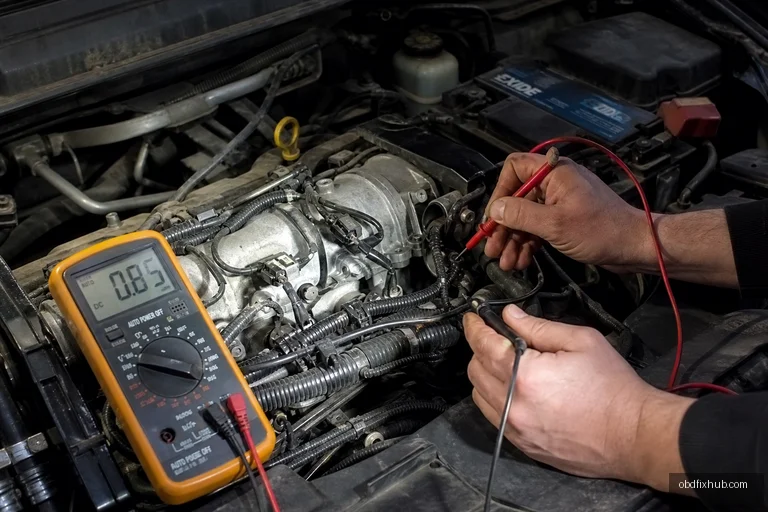
P037A Glow Plug/Heater Indicator Control Circuit Low means the engine control module has detected an abnormally low electrical signal in the circuit that controls the diesel glow plug or heater warning indicator. The fault may involve the instrument cluster, wiring, a fuse, a ground, or the control module itself; it does not automatically prove that the glow plugs are defective.
This is primarily an information and diagnostic issue, not a code that should be repaired by replacing parts at random. The fastest route to a reliable fix is to identify whether the low signal exists on the indicator-control wire, at the cluster, or inside the module driving the circuit.
What Does Code P037A Mean?
On a diesel engine, the glow plug indicator illuminates during the pre-heating stage and may also flash when the engine management system detects a fault. Depending on the vehicle design, the engine control module may control the warning lamp directly or communicate with the instrument cluster over a data network.
When P037A is stored, the detected control voltage is lower than the expected value. The exact circuit strategy varies by manufacturer, so the vehicle-specific wiring diagram and technical service information are essential. On some models, P037A is a manufacturer-specific code rather than a universally identical OBD-II definition.
Do not confuse this code with a direct glow plug performance code. A vehicle can have healthy glow plugs and still set P037A because the warning lamp circuit, connector, cluster, or control output is faulty. Conversely, worn glow plugs can exist without causing this particular code.
Common Symptoms of P037A
The symptoms depend on whether the fault affects only the indicator circuit or also the actual glow plug control system. Common observations include:
- The glow plug warning light does not illuminate during key-on.
- The indicator stays on too long, flashes, or behaves intermittently.
- A check engine light appears with P037A stored.
- Hard starting or extended cranking in cold weather.
- Rough idle, white smoke, or diesel knock immediately after a cold start.
- Several unrelated warning lights caused by a cluster power or ground problem.
- No noticeable drivability symptoms when the fault is limited to the warning indicator.
A useful practical clue is the key-on bulb check. If other warning lights illuminate normally but the glow plug lamp is completely absent, inspect the cluster, lamp circuit, and communication data before condemning the glow plugs.
Most Likely Causes
- Damaged wiring: A short to ground, rubbed-through insulation, corrosion, or an open control wire can pull the circuit voltage low.
- Loose or corroded connectors: Moisture near the engine harness, fuse box, glow plug controller, or instrument cluster can create high resistance and unstable readings.
- Blown fuse or poor power supply: A fuse may protect the indicator, cluster, or glow plug control module. A replacement fuse that blows again indicates an unresolved short.
- Faulty glow plug control module: Some diesel vehicles use a separate module or relay that manages both high-current glow plug operation and status feedback.
- Instrument cluster failure: An LED driver, circuit board fault, internal ground issue, or communication failure can prevent the indicator from responding correctly.
- Weak battery or charging voltage: Low system voltage can create misleading control-circuit codes, particularly during cold starts.
- Engine control module fault: This is possible, but it should be considered only after power, grounds, wiring, load testing, and software updates have been verified.
How to Diagnose P037A Correctly
1. Confirm the code and check related faults
Record all stored, pending, and history codes before clearing anything. Codes for low voltage, communication, glow plug control, or instrument cluster faults may identify the root problem. If several modules report low voltage, test the battery and charging system first.
2. Verify the indicator’s behavior
Turn the ignition on without starting the engine and observe the glow plug lamp. Compare its behavior with the manufacturer’s normal sequence. A missing lamp points toward the cluster or indicator circuit, while a lamp that works normally may indicate a feedback or control-signal problem.
3. Inspect power, grounds, and fuses
Use a wiring diagram rather than relying on fuse labels alone. Check voltage on both sides of the relevant fuse with the circuit under load, then perform a voltage-drop test across the ground connection. A ground can appear clean visually yet lose substantial voltage when current flows.
4. Test the control circuit
With the connector back-probed and the ignition switched on, compare the control-wire voltage with the specification. Some systems use a switched ground or pulse-width-modulated signal, so a simple assumption that the wire should always show battery voltage can lead to a false diagnosis.
Inspect the harness for contact with the cylinder head, turbocharger, exhaust components, and battery tray. These areas commonly damage insulation through heat and vibration. A continuity test alone is not enough; perform a wiggle test and, where appropriate, a current-limited load test.
5. Test the glow plug system separately
Measure glow plug resistance only according to the service procedure, because many modern ceramic glow plugs can be damaged by incorrect testing methods or excessive voltage. Check the glow plug module’s supply, ground, and output commands. Do not apply battery power directly to a control-module terminal unless the manufacturer explicitly permits it.
6. Confirm the repair
After repairing the circuit, clear the code and repeat a cold-start test. Confirm that the indicator performs its normal pre-heating sequence, then scan all modules again. A road test alone may not be sufficient because P037A can return only after a cold soak or a specific ignition cycle.
How to Fix P037A
The correct repair depends on the failed point in the circuit. Typical fixes include repairing heat-damaged wiring, replacing corroded terminals, restoring a cluster ground, replacing a blown fuse after correcting the short, updating module software, or replacing a defective glow plug control module or instrument cluster.
If the code appeared after engine or battery work, inspect disturbed connectors first. A partially locked connector, pin pushed backward inside the housing, or ground strap left loose is often more likely than a failed engine control module. Aftermarket alarms, remote starters, and poorly installed immobilizers also deserve attention because they may interrupt ignition or warning-lamp circuits.
Can You Drive With P037A?
Short trips are often possible when the engine starts normally and the code affects only the warning indicator. However, cold starting may become difficult, and repeated long cranking can overheat the starter and discharge the battery. Avoid continued driving if the glow plug light flashes, the engine runs roughly, heavy white smoke is present, or multiple electrical warnings appear.
Estimated Repair Cost
Costs vary substantially by vehicle and access. A loose terminal or damaged wire may require a short diagnostic and repair visit, while an instrument cluster or glow plug control module can be considerably more expensive. Diagnostic labor is particularly important here because replacing glow plugs without testing the indicator circuit will not resolve a true P037A fault.
Final Takeaway
P037A identifies a low signal in the glow plug or heater indicator control circuit, not an automatic glow plug failure. Start with battery voltage, fuses, grounds, connector condition, and the indicator’s key-on behavior. Then use the correct wiring diagram and a load-aware electrical test before replacing a module. If the code returns after a cold start, have a diesel technician test the complete circuit rather than guessing from the warning light alone.
Frequently Asked Questions
Can bad glow plugs cause P037A?
They can contribute to related glow plug faults, but P037A specifically concerns the indicator control circuit. The glow plugs, their power module, and the warning lamp circuit should be tested separately.
Is P037A the same as P0380?
No. P0380 commonly refers to a glow plug or heater circuit malfunction, while P037A refers to a low indicator control-circuit signal. Definitions can vary, so always verify the code using the vehicle manufacturer’s service information.
Why does the glow plug light not come on at all?
A failed cluster LED or driver, missing cluster power, a communication fault, an open wire, or a control-module problem can prevent the lamp from illuminating. Do not assume the glow plugs are at fault without testing the indicator circuit.
Can a weak battery trigger this code?
Yes. Low cranking voltage can create false or secondary electrical faults. Test the battery state of charge, cranking voltage, alternator output, and major ground connections before deeper circuit diagnosis.




