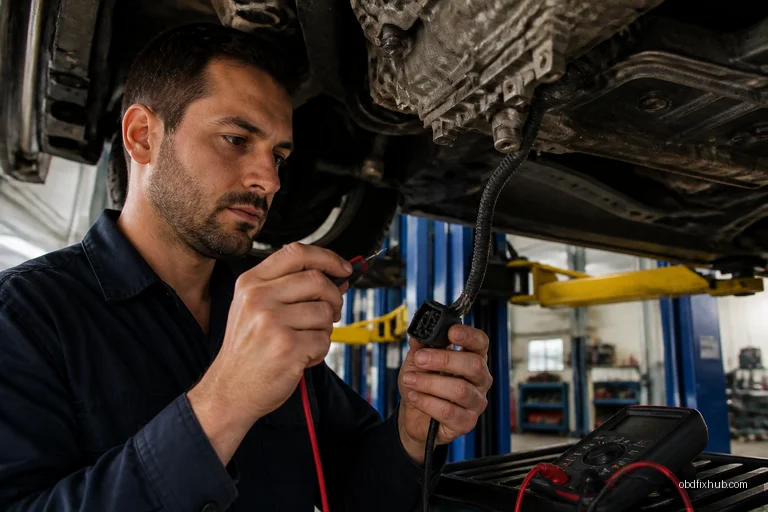
P0740 Torque Converter Clutch Circuit/Open means the transmission control system has detected an electrical problem in the torque converter clutch (TCC) circuit. The fault may be caused by a failed TCC solenoid, damaged wiring, poor grounds, contaminated transmission fluid, a connector problem, or—less commonly—a transmission control module fault. Because the torque converter may not lock correctly, the vehicle can suffer from poor fuel economy, slipping, harsh shifting, or engine stalling.
This code should not be diagnosed by replacing the torque converter immediately. In many real-world repairs, the actual cause is a broken wire near the transmission connector, corrosion inside the plug, or a solenoid that fails only when the transmission is hot.
What Does P0740 Mean?
Automatic transmissions use a torque converter to transfer engine power to the transmission. At low speeds, the converter allows controlled slip so the engine does not stall when the vehicle stops. At cruising speed, the powertrain control module (PCM or TCM) commands the torque converter clutch to apply, mechanically linking the engine and transmission for more efficient operation.
The P0740 code is set when the module detects an abnormal electrical condition in the TCC control circuit. Depending on the vehicle manufacturer, the fault may be described as a circuit malfunction, open circuit, or solenoid performance problem. The exact circuit design varies, so the factory wiring diagram and service information matter during diagnosis.
P0740 Symptoms
Some vehicles show only a check engine light, while others develop noticeable transmission behavior. Symptoms depend on whether the clutch is stuck off, stuck on, or being intermittently commanded.
- Illuminated check engine light or transmission warning light
- Automatic transmission stuck in one gear or limp mode
- Higher engine RPM at highway speeds
- Reduced fuel economy
- Transmission slipping or a flare between shifts
- Harsh engagement or shudder during lockup
- Engine stalling when coming to a stop
- Delayed forward or reverse engagement
- Transmission fluid overheating
A particularly useful clue is the driving pattern. If engine speed stays unusually high during steady highway cruising, the TCC may not be applying. If the engine nearly dies when braking to a stop, the clutch may be staying applied when it should release—similar to stopping a manual-transmission car without pressing the clutch pedal.
Common Causes of the P0740 Torque Converter Clutch Circuit
1. Failed TCC solenoid
The TCC solenoid controls hydraulic pressure or an electronic valve that applies the lockup clutch. Internal coil failure, an open winding, or a solenoid that sticks from varnish can trigger P0740. On many vehicles, the solenoid is located inside the transmission valve body or transmission pan, although some designs use an external unit.
2. Open, shorted, or damaged wiring
Transmission wiring lives in a hot, wet environment and is exposed to vibration. A harness can rub against a bracket, become brittle near the case connector, or break internally while the insulation still looks intact. Do not rely on a visual inspection alone; gently flex the harness while monitoring continuity or the scan tool data.
3. Corroded or loose transmission connector
Fluid intrusion, road salt, bent terminals, and poor terminal tension can interrupt the TCC command. A connector may look clean from the outside yet have green corrosion or pushed-back pins inside. Check for transmission fluid inside the connector and verify that each terminal grips the mating pin firmly.
4. Low, dirty, or incorrect transmission fluid
Low fluid can cause hydraulic pressure problems, while degraded fluid may make the valve body or TCC valve stick. Incorrect fluid can also affect clutch friction characteristics. Fluid condition alone usually does not explain an electrical “open” fault, but it can create related TCC codes, shudder, and shift complaints at the same time.
5. Valve body or torque converter problems
A worn TCC apply valve, damaged passage, or failed converter clutch can prevent proper lockup even when the electrical circuit is healthy. These mechanical faults are more likely when P0740 appears with codes such as P0741, P0742, P0743, or P0744, or when the transmission has persistent shudder and debris in the fluid.
6. PCM or TCM fault
Control module failure is possible but should be considered last. Before condemning a module, confirm power supplies, grounds, circuit resistance, command signals, connector condition, and related service bulletins. Replacing a TCM without proving the circuit is functional is an expensive gamble.
How to Diagnose P0740 Correctly
A professional diagnosis starts with more than clearing the code. Record all stored, pending, and history codes, along with freeze-frame data such as vehicle speed, transmission temperature, engine load, and commanded TCC state. This often reveals whether the problem occurs during cold operation, warm cruise, or a specific shift.
- Confirm the complaint and scan all modules. Transmission-related codes may be stored outside the engine computer. Check for low-voltage, speed-sensor, pressure-control, and communication faults that could create misleading symptoms.
- Inspect fluid level and condition. Follow the manufacturer’s exact checking procedure because some transmissions require a specific temperature range and engine state. A burnt smell, dark fluid, or metallic debris increases the likelihood of internal damage.
- Inspect the harness and connectors. Look closely at the transmission case connector, harness clips, areas near exhaust components, and locations where the loom can rub on the body or subframe.
- Test the TCC circuit electrically. With the battery disconnected where appropriate, measure solenoid resistance against the factory specification. An infinite reading usually indicates an open coil, while a very low reading may indicate a short.
- Check power, ground, and control-side operation. A solenoid can measure correctly yet fail under load. Use a test light or suitable load-testing method, and verify that the control module can switch the circuit as commanded.
- Use live data and a road test. Compare commanded TCC status, actual slip speed, input speed, output speed, and transmission temperature. When the clutch is commanded on, slip speed should normally drop substantially; the exact acceptable value depends on the vehicle.
- Test hydraulic and mechanical operation if needed. If the electrical circuit passes but lockup does not occur, pressure testing, valve-body inspection, or torque-converter removal may be required.
One practical diagnostic mistake is checking resistance at the transmission connector and stopping there. A circuit may pass a static ohmmeter test but fail when hot, when the harness moves, or when current demand increases. If the fault is intermittent, perform a wiggle test and monitor the TCC command and circuit feedback while the transmission reaches operating temperature.
P0740 Repair Options
The correct repair depends on the failed component. Possible repairs include repairing or replacing damaged wiring, cleaning or replacing the transmission connector, replacing the TCC solenoid, servicing the valve body, correcting the fluid level, performing a fluid service with the specified fluid, or replacing the torque converter.
On transmissions with a removable pan and accessible valve body, a TCC solenoid repair may be relatively contained. On other units, the solenoid is integrated into a solenoid pack or requires substantial disassembly. Always use the manufacturer’s torque specifications, sealing procedures, and fluid type; a small assembly error can create new shift problems.
Can You Drive With P0740?
Short, gentle driving may be possible if the vehicle shifts normally and the transmission temperature remains controlled. However, continued driving is risky when the transmission slips, the engine stalls, the vehicle enters limp mode, or the fluid smells burnt. A failed lockup clutch can increase heat and fuel consumption, while a stuck-on clutch can cause stalling at intersections.
Avoid towing, heavy loads, and long highway trips until the fault is diagnosed. If the transmission is slipping or engagement is delayed, arrange a professional inspection rather than trying to “drive through” the problem.
How Much Does a P0740 Repair Cost?
Costs vary widely because P0740 can describe anything from a damaged wire to internal transmission work. A connector repair or wiring fix is usually the least expensive outcome. A solenoid or valve-body repair costs more, while a torque converter or transmission rebuild can become a major repair.
Ask the repair shop for a written diagnosis that identifies the tested circuit, measured values, fluid condition, and reason the recommended part has failed. This protects you from paying for a torque converter when the real problem is a corroded connector.
Key Takeaway
P0740 is an electrical fault code for the torque converter clutch circuit, not automatic proof that the entire transmission has failed. Start with the wiring, connector, power supply, grounds, solenoid resistance, and live data before authorizing internal transmission repairs. If the vehicle is stalling, slipping, or overheating, stop driving it and have the transmission diagnosed promptly.
Frequently Asked Questions
Is P0740 a serious code?
It can be serious. The vehicle may continue to run, but an inoperative or stuck torque converter clutch can cause overheating, poor fuel economy, slipping, or stalling. The urgency depends on the symptoms and transmission temperature.
Can low transmission fluid cause P0740?
Low or contaminated fluid can contribute to TCC malfunction and related codes, but a genuine circuit-open fault usually requires electrical testing as well. Check the level using the vehicle manufacturer’s procedure before replacing parts.
Will changing the transmission fluid fix P0740?
Fluid service may help if a sticking valve or poor fluid condition is involved. It will not repair a broken wire, failed solenoid coil, damaged connector, or defective control module.
Can I clear P0740 and keep driving?
You can clear the code temporarily with a scan tool, but it will return if the fault remains. Clearing it does not repair the circuit and may erase useful freeze-frame information needed for diagnosis.
Does P0740 always mean the torque converter must be replaced?
No. Wiring faults, connector corrosion, a failed TCC solenoid, valve-body wear, and control-circuit problems are all possible. The torque converter should be replaced only after electrical and hydraulic tests support that conclusion.




