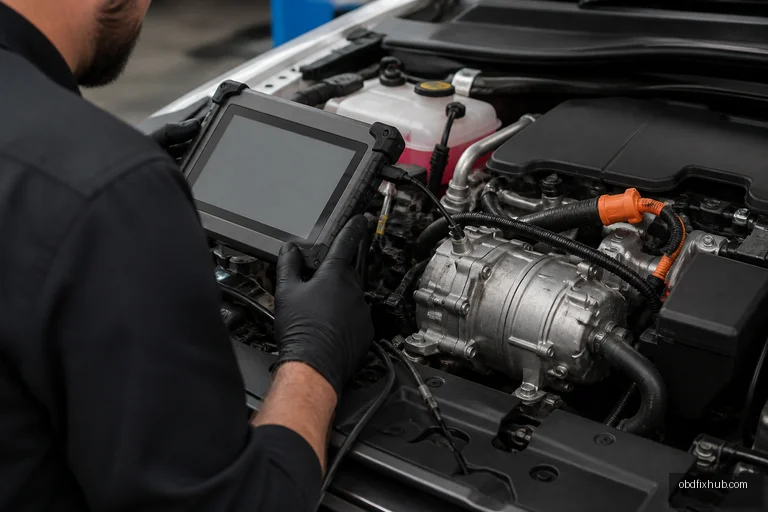
P0D68 A/C Compressor Motor Voltage Sensor Circuit: Meaning, Causes, Symptoms & Fix
P0D68 means the vehicle has detected a problem with the A/C compressor motor voltage sensor “A” circuit. In most applications, this is associated with an electrically driven air-conditioning compressor, especially on hybrid and electric vehicles. The fault may be caused by damaged high-voltage wiring, a failed compressor, an inaccurate voltage sensor, poor power supply, or a control-module communication problem—not necessarily by low refrigerant alone.
This is an information and diagnosis code, not a part-replacement command. Because electric A/C compressors can operate at dangerous high voltage, testing the orange cables or compressor terminals without the correct training and equipment can cause severe injury or death.
What Does P0D68 Mean?
The code identifies an abnormal signal in the circuit that monitors compressor motor voltage. The exact definition varies slightly by manufacturer, so the factory service information should always take priority. “Sensor A” usually refers to a designated voltage-monitoring channel inside the compressor, inverter, or A/C control system; it does not necessarily mean there is a small, externally replaceable sensor.
On a conventional gasoline vehicle, the compressor may be driven by a belt and switched by an electromagnetic clutch. On a hybrid or EV, the compressor commonly has a three-phase electric motor and an integrated inverter. It can run while the engine is stopped, which is why the system monitors its electrical feedback very closely.
P0D68 Symptoms
The most obvious symptom is an A/C system that does not cool, although some vehicles continue to provide limited climate control. A stored code may appear with no immediate symptom if the fault was intermittent, such as a loose connector or voltage drop during startup.
- Air conditioning blows warm or only slightly cool air.
- The compressor does not start, or starts and stops immediately.
- A/C, hybrid-system, or powertrain warning lights appear.
- The cooling fan runs at unusual speeds or remains on after shutdown.
- Reduced hybrid or EV performance may occur if the vehicle disables the A/C inverter for protection.
- The scan tool may show related inverter, isolation, motor-position, or high-voltage battery codes.
- The code returns quickly after clearing, often before the compressor is commanded on.
Common Causes of the P0D68 A/C Compressor Motor Voltage Sensor Circuit Code
- Damaged high-voltage wiring: Collision damage, abrasion, corrosion, heat, or rodent damage can interrupt the compressor voltage-monitoring circuit.
- Loose or contaminated connectors: Water intrusion at the compressor, inverter, or control-module connector can create an intermittent signal.
- Failed electric compressor: An internal inverter, motor winding, voltage-sensing circuit, or insulation fault can set P0D68.
- Weak 12-volt supply: A low auxiliary-battery voltage can cause incorrect initialization or communication between the A/C and hybrid control modules.
- Blown fuse, relay, or service disconnect issue: Some systems monitor compressor supply through dedicated protection components.
- Refrigerant or pressure problem: Low charge, overcharge, or a blocked system can prevent compressor operation, although these conditions commonly produce additional pressure-related codes.
- Software or control-module fault: An outdated calibration or failed inverter/A/C control unit can misinterpret a valid voltage signal.
- Incorrect previous repair: A replacement compressor with the wrong oil type, incompatible electronics, or incorrect programming may trigger a voltage-related fault.
How to Diagnose P0D68 Safely
A professional diagnosis begins with the complete scan-tool report, not with replacing the compressor. Record all current, pending, and history codes, along with freeze-frame data and live values for commanded compressor speed, actual speed, motor voltage, inverter temperature, and high-voltage system status.
1. Check the 12-volt system first
Measure the auxiliary battery with the vehicle asleep and again while the system is awake. A fully charged battery is commonly near 12.6 volts at rest, while a substantially lower reading can create misleading hybrid and HVAC faults. Check charging voltage as well, but follow the manufacturer’s procedure because many hybrids control charging electronically.
2. Inspect the wiring without disturbing high-voltage components
Look for crushed harnesses, missing protective covers, bent terminals, green corrosion, moisture, and connectors that are not fully latched. Follow the harness from the compressor toward the inverter and control modules. A visual inspection often finds the problem after body repairs or underbody impact.
Do not unplug orange high-voltage connectors merely to “see if they are bad.” The vehicle must be powered down using the exact OEM service-disconnect and wait-time procedure, and the circuit must be verified de-energized with an appropriately rated meter.
3. Compare commanded and measured voltage
Using a bidirectional scan tool, command the A/C on under the conditions allowed by the vehicle. Compare the requested compressor operation with the measured voltage-sensor value. If the module commands the compressor but voltage remains implausible, the fault is likely in the sensor circuit, wiring, inverter, or compressor. If the system refuses to command the compressor, first resolve the enabling condition or related fault.
4. Check fuses, grounds, and low-voltage reference circuits
Test fuses with a test light or meter on both sides under load; visual inspection alone can miss a poor connection. Verify module grounds by measuring voltage drop while the circuit is active. A high resistance ground can produce a believable-looking but incorrect sensor reading.
5. Test compressor insulation and winding condition
A qualified technician may use an insulation resistance tester and the manufacturer’s specified limits to check for leakage between the compressor motor and its housing. A regular ohmmeter is not a substitute for this test. The compressor may show reasonable winding resistance yet still fail an insulation test when exposed to operating voltage.
How to Check Compressor Voltage
The correct method depends on the vehicle. For a conventional belt-driven compressor, check for battery voltage at the clutch connector while the engine is running, A/C is requested, blower settings are correct, and pressure protection allows engagement. If voltage is present but the clutch does not engage, test the clutch coil and ground; if voltage is absent, trace the relay, fuse, pressure switch, control module, and wiring.
For a hybrid or EV electric compressor, never probe the high-voltage terminals with an ordinary multimeter. Use the service manual, an appropriately rated high-voltage meter, insulated PPE, and the required isolation procedure. In many cases, the safest and most accurate first check is the scan tool’s compressor-voltage data rather than direct terminal testing.
Why Is There No Voltage at the A/C Compressor?
No voltage does not automatically prove that the compressor is defective. The control module may intentionally withhold power because of low refrigerant pressure, excessive pressure, an engine or hybrid fault, low 12-volt voltage, overheating, an open fuse, or a detected insulation problem.
Other possibilities include a failed compressor relay, broken wire, poor ground, faulty pressure sensor, incorrect A/C request signal, or a system that needs compressor initialization after replacement. Check whether the compressor is actually being commanded on before diagnosing the supply circuit.
How to Tell If an A/C Compressor Is Shorted
On a conventional compressor, a shorted clutch coil often has very low resistance and may blow the A/C fuse when energized. Disconnect the clutch connector and compare the measured resistance with the manufacturer’s specification. Do not judge the result by a generic resistance number because coil designs differ.
For an electric compressor, a short can exist between motor phases or between a phase and the compressor case. The decisive tests are manufacturer-specified phase-resistance comparisons and an insulation-resistance test. A phase-to-case leakage fault is especially important because it can trip the high-voltage isolation monitor. If the compressor case or cable is damaged, stop testing and have a qualified hybrid/EV technician isolate the system.
How to Troubleshoot a Defective Compressor
- Confirm the code with a complete vehicle scan and record related codes.
- Verify the 12-volt battery, fuses, grounds, refrigerant pressure, and A/C request signal.
- Use live data to determine whether the compressor is commanded and whether voltage feedback is plausible.
- Inspect wiring and connectors from the compressor to the inverter and control modules.
- Perform winding, insulation, and communication tests using the OEM procedure.
- Replace the compressor only after the external circuit and enabling conditions test correctly.
- After installation, use the correct refrigerant oil, evacuate and charge by weight, clear codes, and complete any required programming or compressor relearn.
A common real-world mistake is installing a compressor after finding no A/C operation, only to discover that a damaged harness from a previous collision caused the original P0D68. Another is using conventional PAG oil in a hybrid compressor system that requires a specific nonconductive oil. Both errors can cause repeat failures and expensive component damage.
Repair Options and Cost Considerations
The repair may be as simple as repairing a low-voltage wire, replacing a fuse, correcting a connector, or charging the system correctly. If the electric compressor, inverter, or high-voltage harness has failed, the repair is more involved and should be performed by a technician certified to work on the vehicle’s high-voltage system.
Do not clear P0D68 repeatedly and continue driving if the vehicle displays a hybrid warning, insulation fault, burning smell, or high-voltage system message. The A/C compressor may share safety monitoring with other high-voltage components, and continued operation can turn a wiring fault into inverter or battery damage.
Key Takeaway
P0D68 points to an abnormal A/C compressor motor voltage-sensor signal, but it does not identify one guaranteed failed part. Start with the complete code set, 12-volt supply, fuses, wiring, live data, and safety checks. On hybrid and electric vehicles, avoid direct high-voltage testing unless you have the correct training and equipment; accurate diagnosis is safer and usually less expensive than replacing the compressor by guesswork.
Frequently Asked Questions
Can low refrigerant cause P0D68?
Low refrigerant can prevent the compressor from being enabled and may create related pressure or HVAC codes. However, P0D68 specifically concerns voltage-sensor feedback, so wiring, inverter, compressor, and control-module faults must also be checked.
Can I drive with P0D68?
If only the A/C is disabled and there are no hybrid or high-voltage warnings, limited driving may be possible. Stop driving and seek professional help if you see an isolation warning, burning odor, electrical warning, or reduced-power condition.
Is P0D68 always caused by a bad compressor?
No. A damaged harness, corroded connector, weak 12-volt battery, blown fuse, failed sensor circuit, software issue, or an inhibited compressor command can all produce this code.
Can a standard OBD scanner diagnose P0D68?
A basic scanner may read the code but often cannot access hybrid HVAC live data, bidirectional commands, or manufacturer-specific subcodes. A professional scan tool with the correct vehicle software is usually required.
Should I test the orange compressor wires myself?
No, not unless you are trained and equipped for high-voltage vehicle service. Follow the factory shutdown, isolation, verification, and PPE requirements, or have a qualified hybrid/EV technician perform the test.




