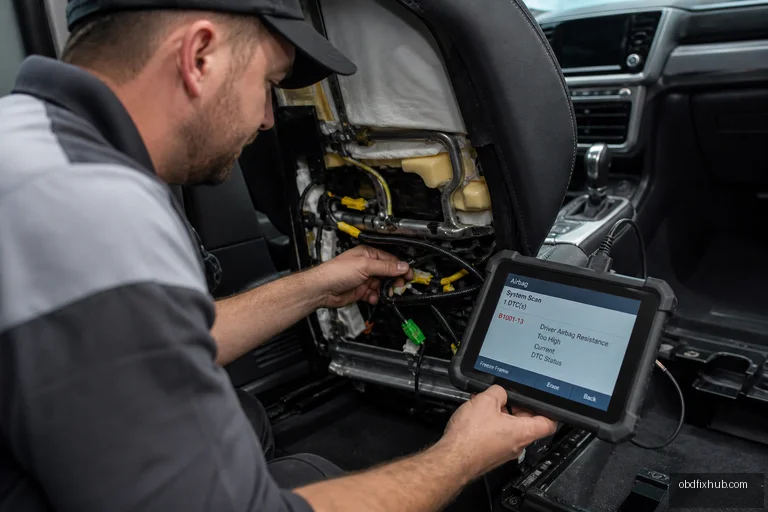
B00A0 Occupant Classification System means the vehicle has detected a fault in the system that identifies whether the front passenger seat is occupied and how much weight is on it. Because this system controls passenger-airbag deployment, the SRS or airbag warning light may stay on, and the passenger airbag may be disabled until the fault is diagnosed and repaired.
This is an informational and diagnostic search query rather than a buying query: the code alone does not identify one universally faulty part. B00A0 is a system-level code, and the final two digits or manufacturer-specific suffix are often needed to locate the actual problem.
What Does Code B00A0 Mean?
B00A0 is a standardized diagnostic trouble code associated with the Occupant Classification System (OCS), also called the passenger occupant detection system. The OCS normally uses a pressure-sensitive seat mat, weight sensors, an occupant classification module, wiring, and seat-belt information to determine whether the passenger seat is empty, occupied by a child, or occupied by an adult.
The airbag control module uses that information to decide how the passenger airbag should operate during a crash. If the OCS cannot produce a trustworthy reading, the vehicle may illuminate the airbag warning lamp and store B00A0. In many vehicles, the airbag system remains in a protective default mode rather than operating exactly as intended.
- B00A0: Occupant Classification System fault at the base-code level.
- B00A0-00 or B00A0:00: Commonly indicates that no additional symptom information is available.
- B00A0-09 or B00A0:09: Often identifies a component failure, although the exact description depends on the manufacturer.
The suffix matters. A professional scan tool should display the complete code, current or history status, freeze-frame data, and any companion SRS codes before parts are replaced.
What Does the Nissan Code B00A0 Mean?
On Nissan vehicles, B00A0 generally points to a problem with the passenger-seat occupant classification system. Nissan may refer to the system as the Occupant Classification System, OCS, or passenger seat sensor system in service information. The vehicle may show an airbag warning light, a passenger-airbag status warning, or both.
A common Nissan-specific issue is a disturbed connector or damaged wiring beneath the passenger seat. The seat is moved repeatedly, and the harness can become stretched, pinched against the seat frame, contaminated with moisture, or partially disconnected. A connector that looks connected can still have a backed-out terminal or poor pin tension.
Do not assume that replacing the seat sensor will solve every Nissan B00A0 fault. Many Nissan systems require an OCS zero-point reset, reinitialization, or calibration after a seat, seat cushion, sensor, or related control module has been replaced. That procedure normally requires a capable Nissan-compatible scan tool and must be performed with the seat empty under the specified conditions.
What Does Ford Code B00A0:09 Mean?
Ford B00A0:09 generally refers to the passenger occupant classification system with a component-failure symptom. The “:09” portion is a failure-type indicator, not a precise instruction to replace the passenger seat sensor. Ford service information and the scan tool’s full description should be used to confirm whether the fault is in the sensor, OCS module, wiring, or communication between modules.
Ford vehicles may store this code after a passenger seat has been removed, a connector has been disturbed, the seat has suffered liquid damage, or the system has lost its learned calibration. Low battery voltage during a repair can also create misleading airbag-related faults. If the code returns immediately after clearing, check the live OCS data and wiring before condemning the sensor.
Common Causes of a B00A0 Fault
The occupant classification system is built into or attached to the passenger seat, so ordinary seat use can affect it. The most frequent causes I see during diagnosis include:
- Loose or damaged under-seat wiring: Seat movement can pull on the OCS harness or damage a terminal.
- Disconnected connectors: A connector may have been left partially latched after interior work, carpet cleaning, or seat removal.
- Failed pressure or weight sensor: The sensor mat can develop an open circuit, internal resistance fault, or inconsistent output.
- Incorrect calibration: The system may need a zero-point reset after seat repairs, module replacement, or loss of stored data.
- Liquid intrusion: Spilled drinks and wet cleaning products can corrode the sensor, connector, or module.
- Low system voltage: A weak battery or voltage drop during starting can set temporary SRS codes.
- Seat-cover or cushion interference: Non-approved seat covers, aftermarket foam, thick objects, or an incorrectly installed cushion can change sensor readings.
- Damaged seat frame: A bent frame or trapped harness can place mechanical stress on the sensing components.
What Causes a Faulty Airbag Sensor?
A faulty airbag sensor is not always caused by a crash. Sensors and their wiring can fail from age, vibration, corrosion, repeated seat adjustment, moisture, or physical pressure. In an OCS system, the “sensor” may be a pressure-sensitive mat or a group of load sensors rather than the impact sensors located at the front of the vehicle.
This distinction is important. B00A0 usually concerns passenger occupancy classification, while a frontal crash sensor, side-impact sensor, seat-belt pretensioner, or airbag module may generate a different code. Replacing an impact sensor for a B00A0 fault is therefore unlikely to correct the problem.
Symptoms You May Notice
Some drivers see only an illuminated SRS light. Others notice the passenger-airbag indicator does not change correctly when someone sits in the seat. Typical symptoms include:
- Airbag or SRS warning light remains illuminated.
- Passenger airbag status shows “OFF” when an adult is seated.
- Passenger airbag status shows “ON” with an empty seat.
- B00A0 returns immediately after the code is cleared.
- Additional occupant, seat-belt, or restraint-system codes are stored.
A heavy bag, laptop, toolbox, or child seat can legitimately change the OCS reading. Remove all objects from the passenger seat and cycle the ignition before diagnosing a fault. However, an airbag light that remains on should not be dismissed as a normal response to a load.
How to Diagnose and Fix B00A0
- Read the SRS system with the correct scanner. A basic engine-code reader may not access the airbag module. Record every code and its status before clearing anything.
- Check the battery and charging voltage. Low voltage can create misleading restraint-system faults, especially after a difficult start.
- Inspect the passenger-seat harness. Look for pinched wires, damaged insulation, corrosion, loose locks, and terminals pushed backward inside the connector.
- Follow the safety procedure. Disconnect the battery and wait the manufacturer-specified time before working near SRS connectors. Never probe an airbag circuit with a test light or ordinary multimeter unless the service procedure specifically permits it.
- Check live OCS data. With the seat empty, the scan tool should show a plausible empty-seat status. Compare the reading with the manufacturer’s specified values and test conditions.
- Perform the required calibration. A zero-point reset or occupant classification initialization may solve a lost-calibration fault, but only if the sensor and wiring are healthy.
- Replace the failed component if testing confirms it. Depending on the model, this may mean a sensor mat, seat cushion, OCS module, connector, or harness. Clear the code and verify that it does not return.
Never install a resistor, bypass plug, or homemade emulator to turn off the airbag light. That may hide the warning while leaving the passenger restraint system unable to classify occupants correctly. It can also create a serious safety risk and may affect inspection, insurance, or crash investigations.
Can You Drive With B00A0?
The vehicle may still start and drive normally, but the SRS system should be treated as unavailable or unreliable until repaired. The main concern is not engine performance; it is that the passenger airbag, pretensioner logic, or related restraint functions may not respond as designed in a collision. Arrange a proper diagnosis promptly, especially if a child or passenger regularly travels in the front seat.
Bottom Line
B00A0 identifies an occupant classification system problem, not one guaranteed defective part. Start with the complete code, inspect the under-seat wiring, verify battery voltage, and use live data before replacing an expensive seat sensor. Nissan and Ford vehicles may also require manufacturer-specific OCS calibration after repairs. Because this is an SRS fault, a qualified technician with an airbag-capable scan tool is the safest route to a permanent fix.
Frequently Asked Questions
What does code B00A0 mean?
B00A0 means the vehicle has detected a fault in the passenger Occupant Classification System. The system determines whether and what type of occupant is in the front passenger seat for airbag control.
What does the Nissan code B00A0 mean?
On Nissan vehicles, it usually indicates a fault in the passenger-seat occupant classification system. Common causes include under-seat wiring damage, a failed sensor, moisture, or a calibration that must be reset after seat-related work.
What causes a faulty airbag sensor?
Common causes include age, vibration, corrosion, spilled liquid, damaged wiring, seat movement, impact damage, and low voltage. An OCS sensor can also give incorrect readings when an unapproved seat cover or cushion interferes with the seat.
What does the Ford code B00A0:09 mean?
Ford B00A0:09 generally indicates a component failure associated with the passenger occupant classification system. The suffix does not identify the exact failed part, so wiring, live data, calibration, and Ford-specific service information must be checked.




