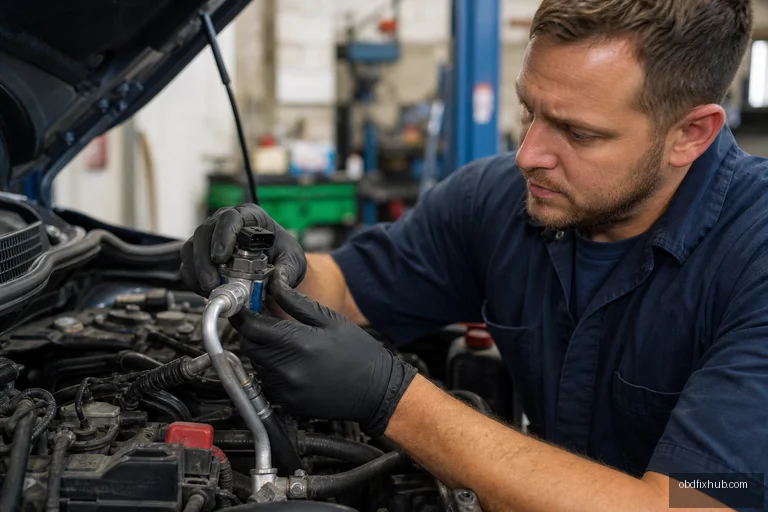
B3A00 A/C Refrigerant Distribution Valve Actuator C Stuck/Open means the climate-control system has detected that actuator C is not moving as commanded, is electrically open, or is reporting an implausible valve position. In most cases, the fault is caused by a failed actuator, damaged wiring, a poor connector, a seized refrigerant distribution valve, or a control-module problem—not simply by low refrigerant.
This is an informational diagnostic code, not a part number. The exact valve location and test procedure can vary by vehicle, especially on models using a variable-displacement electric compressor, heat-pump HVAC system, or several electronically controlled refrigerant valves. Always confirm the code definition and wiring diagram for the vehicle identification number before replacing components.
What Does B3A00 A/C Refrigerant Distribution Valve Actuator C Mean?
An A/C refrigerant distribution valve controls where refrigerant flows through the air-conditioning circuit. Depending on the design, it may direct refrigerant toward the evaporator, condenser, chiller, heat exchanger, or another branch of the system. The actuator is the electric motor, solenoid, or electronic drive mechanism that positions that valve.
The word Stuck usually indicates that the HVAC or A/C control module commanded a change but did not see the expected movement. Open may refer to an open electrical circuit, such as a broken wire or failed actuator coil. On some scan tools, the wording is a simplified description of a manufacturer-specific fault, so the freeze-frame data and OEM service information are important.
Common Symptoms of the B3A00 Code
The symptoms depend on where the valve is stuck and whether the vehicle uses a conventional belt-driven compressor or a high-voltage electric A/C system. A vehicle can still produce some cool air even when this code is present, which often leads to an incorrect diagnosis of a refrigerant leak.
- Warm or inconsistent air from the vents
- A/C cooling that improves or disappears intermittently
- Different temperatures from the left and right sides of the cabin
- Long delays before the compressor or electric compressor operates
- Reduced cooling under load or at idle
- A clicking, buzzing, or repeated actuator movement near the HVAC or refrigerant lines
- Illuminated A/C, hybrid-system, or check-engine warning light
- Additional HVAC, compressor, pressure-sensor, or communication codes
Most Likely Causes
1. Failed valve actuator
The internal motor, position sensor, gear train, or solenoid can fail. A common workshop clue is a valve that responds briefly after a battery reset but stops at the same position when the system performs its self-test. Plastic reduction gears may also strip, allowing the motor to run while the valve remains stationary.
2. Wiring or connector damage
Inspect the connector before condemning the actuator. Refrigerant valves are often installed near aluminum pipes, compressors, road spray, and heat sources. Look for green corrosion, pushed-back terminals, broken locking tabs, oil contamination, insulation rubbed through against a bracket, and wires that break internally near the connector.
3. Valve mechanically stuck
Contamination, internal wear, incorrect refrigerant oil, or a previous compressor failure can restrict valve movement. If the actuator is removed and the valve shaft cannot be moved according to the manufacturer’s instructions, installing another actuator may not solve the problem.
4. Low system voltage or poor grounds
Actuators can set position or circuit faults when battery voltage drops during startup. Check the 12-volt battery, charging voltage, HVAC grounds, and relevant fuses. On hybrid and electric vehicles, a weak 12-volt supply can create several misleading HVAC codes at once.
5. Control-module or software fault
A failed HVAC control module, compressor inverter, network communication issue, or outdated software can prevent the actuator from receiving or completing its command. This possibility should be considered after power, ground, wiring, actuator movement, and calibration have been verified.
How to Diagnose B3A00 Properly
A professional diagnosis starts with the complete vehicle scan, not with a refrigerant recharge. Record every stored, pending, and history code, along with ambient temperature, battery voltage, A/C pressure, commanded valve position, and actual valve position if the scan tool provides those data points.
- Verify the code. Clear the code only after recording freeze-frame information. Operate the A/C through several modes and check whether B3A00 returns immediately or only after a self-test.
- Check technical bulletins. Some vehicles require an actuator initialization, HVAC recalibration, or control-module software update after battery disconnection or component replacement.
- Inspect the circuit. With the ignition off, examine the actuator connector and harness. With the wiring diagram, test power, ground, signal, reference voltage, and communication lines as applicable.
- Use active tests. Command actuator C through its available positions while listening and watching live data. A command that changes but an actual position that remains fixed strongly suggests a mechanical or actuator fault.
- Test voltage under load. A circuit may show correct voltage with no load but fail when the actuator operates. Use a suitable test procedure, back-probing carefully and avoiding damage to sealed terminals.
- Confirm refrigerant-related conditions. Check system pressures, temperature readings, and leak evidence only after the electrical fault has been evaluated. Do not use pressure alone to diagnose a stuck valve.
B3A00 A/C Refrigerant Distribution Valve Actuator C Stuck/Open: Fix
If testing confirms an open circuit, repair the affected wire or terminal and secure the harness away from heat and moving components. A corroded connector should be repaired with the correct sealed terminals rather than coated with grease and reassembled. Dielectric grease may protect the seal, but it will not restore a loose electrical connection.
If the actuator has failed, replace it using the correct component for the vehicle’s HVAC configuration. Some systems require refrigerant recovery before the valve can be removed because the valve is part of the sealed refrigerant circuit. Refrigerant must be recovered with approved equipment; it should never be vented into the atmosphere.
After installation, perform the required actuator calibration or HVAC initialization. Then clear the code and verify operation with a scan tool, vent-temperature measurement, pressure readings, and a road test. If the valve is integrated into a compressor or refrigerant manifold, the repair may involve replacing a larger assembly and completing a refrigerant recharge by weight.
Can You Drive With This Code?
Short-distance driving is often possible if the vehicle has no high-voltage, compressor, or overheating warnings. However, continued operation may leave the compressor running under abnormal conditions or disable cooling and defrost performance. Stop and seek qualified service immediately if the vehicle is electric or hybrid and displays a high-voltage warning, isolation fault, or compressor shutdown message.
Practical Diagnostic Tips
- Do not replace the refrigerant valve solely because the A/C is warm.
- Do not add refrigerant until the system has been checked for leaks and the actuator fault has been addressed.
- Compare commanded and actual valve positions whenever live data is available.
- Take photos of connector pin locations before unplugging an actuator.
- After a compressor failure, inspect for debris and follow the manufacturer’s flushing, filtration, or component-replacement requirements.
Summary
B3A00 indicates a problem with the commanded operation or electrical integrity of A/C refrigerant distribution valve actuator C. The most reliable repair begins with a full scan, circuit inspection, active actuator testing, and verification of system voltage—not a blind refrigerant recharge. Because refrigerant and high-voltage A/C systems can be hazardous, use the vehicle-specific service procedure and qualified equipment before opening the sealed system.
Frequently Asked Questions
Is B3A00 caused by low refrigerant?
Usually not directly. Low refrigerant can cause poor cooling and may create related pressure or compressor codes, but B3A00 generally points to an actuator, valve, wiring, calibration, or control issue.
Can I fix B3A00 by replacing the fuse?
A blown fuse should be investigated, but replacing it alone is not a complete repair. If the new fuse opens again, there may be a shorted actuator, damaged harness, or control-module fault.
Does the actuator need calibration after replacement?
Many electronically controlled A/C systems do require initialization, relearn, or calibration. Without it, the new actuator may not know its end positions and the code can return.
Is it safe to replace the valve myself?
Only if the component is externally accessible and the manufacturer’s procedure confirms that the refrigerant circuit remains sealed. If refrigerant recovery, high voltage, or compressor disassembly is involved, use a qualified technician.




