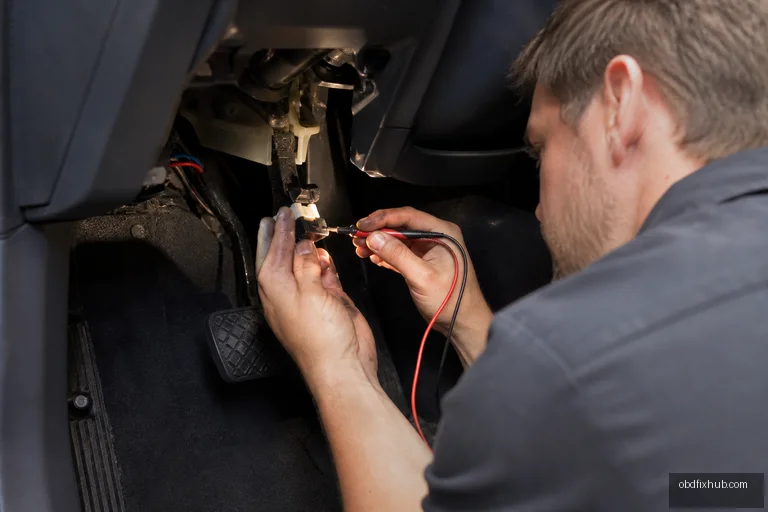
C0040 Brake Pedal Switch A means the vehicle’s control module has detected an electrical problem in the brake pedal switch circuit, although the exact definition can vary by make and model. The switch may be faulty, misadjusted, contaminated, or connected to damaged wiring. Because this circuit can control the brake lights, cruise control, transmission shift interlock, and stability systems, it should be diagnosed rather than cleared and ignored.
What Does C0040 Brake Pedal Switch A Mean?
The brake pedal switch is mounted near the upper end of the brake pedal arm. When you press the pedal, it changes the electrical state of one or more internal circuits. Modern vehicles often use a dual-contact switch: one circuit operates the brake lamps, while the other reports pedal position to the engine, transmission, ABS, or body control module.
“Switch A” identifies one circuit or signal within that assembly. It does not necessarily mean the vehicle has two separate physical switches. On some vehicles, C0040 is stored by an ABS or chassis control module; on others, a related brake pedal code such as P0571 may appear in the powertrain module. Always verify the factory definition for the specific vehicle before replacing parts.
Common Symptoms of Code C0040
Some drivers notice an obvious brake-light problem, while others only see a warning light or lose cruise-control operation. The most useful clue is whether the brake lights respond correctly every time the pedal is pressed.
- Brake lights remain on after the pedal is released.
- Brake lights do not illuminate, or work intermittently.
- Cruise control will not set or cancels unexpectedly.
- The vehicle will not shift out of Park because the shift interlock does not see the pedal input.
- ABS, traction control, stability control, or brake warning messages appear.
- Remote starting or stop-start operation may be disabled.
- The scan tool shows an implausible or constantly active brake-pedal signal.
A vehicle can still have normal braking performance with C0040. The hydraulic brake system and the electrical brake-pedal signal are related, but they are not the same system. However, missing brake lights or unpredictable shift-interlock behavior creates a genuine safety risk.
Most Likely Causes of C0040
- Failed brake pedal switch: Internal contacts can wear, stick, or develop high resistance.
- Incorrect switch adjustment: A switch installed too far from or too close to the pedal may not open and close at the correct point.
- Loose or damaged connector: The connector may be partially unplugged, corroded, or pulled by an incorrectly routed harness.
- Broken wiring: Wires near the pedal can flex repeatedly, especially where the harness is clipped to a bracket.
- Blown fuse or poor power supply: A shorted trailer-light circuit or aftermarket accessory can interrupt the brake-switch feed.
- Incorrect replacement bulb or LED conversion: On some vehicles, an incorrect lamp load or wiring modification affects the brake signal.
- Low battery voltage or module communication faults: Unstable voltage can create false or additional chassis codes.
- Control-module or software issue: This is less common and should only be considered after the switch and circuit test correctly.
How to Diagnose C0040 Step by Step
1. Confirm the code and scan every module
Use a scan tool that can access ABS, body, and chassis modules—not only the engine computer. Record all stored and pending codes, freeze-frame data, and live brake-switch states before clearing anything. If several communication or low-voltage codes are present, resolve the battery and charging issue first.
2. Check the brake lights before touching the switch
With the ignition on, have someone watch the rear lamps while you press and release the brake pedal several times. The lights should illuminate immediately and turn off completely every time. If they stay on, flicker, or require excessive pedal travel, inspect the switch position and pedal stop before condemning the module.
3. Inspect the switch mechanically
Look for a bent pedal bracket, a missing rubber pedal stopper, or a switch that is loose in its mounting. A missing stopper can leave the switch permanently released, causing the brake lights to stay on and draining the battery overnight. Do not adjust a self-adjusting switch by forcing its plunger unless the service procedure specifically permits it.
4. Test power, ground, and signal circuits
Use the wiring diagram for the exact vehicle. With a digital multimeter, check for the specified supply voltage at the switch, verify the ground or return circuit where applicable, and measure continuity while slowly pressing the pedal. A switch can pass a basic continuity test yet fail under load, so a voltage-drop test is valuable when the fault is intermittent.
Compare the physical brake-light operation with the scan-tool data. For example, if the lamps work but the module never changes from “Brake Applied: No,” the signal side of a dual-contact switch or its wiring may be faulty. If the scan data changes but the lamps do not, inspect the lamp circuit, fuse, connector, and body-control output.
5. Check manufacturer service information
Some brake switches require a precise installation sequence, pedal position, or relearn procedure. Search the vehicle’s technical service bulletins for false C0040 reports, connector repairs, and software updates. A generic code definition is useful for direction, but the manufacturer’s pinout and test values determine the correct repair.
How to Fix C0040
If testing confirms a defective switch, replace it with the correct part for the vehicle. Confirm that the new switch has the same connector, contact arrangement, and adjustment method; visually similar switches are not always electrically interchangeable. After installation, verify that the brake lights turn on with minimal pedal movement and switch off immediately when the pedal is released.
Repair damaged wiring with sealed automotive-grade connections and secure the harness away from the moving pedal arm. Clean light corrosion with an electronics-safe method, but replace terminals that have lost tension or show heat damage. Do not simply spray lubricant into the switch unless the manufacturer approves it, because some products can damage plastic housings or attract debris.
Once the repair is complete, clear the code, cycle the ignition, and perform a road test in a safe area. Confirm brake-light operation, cruise-control engagement, gear selection from Park, and the absence of returning ABS or stability-control warnings. If C0040 returns immediately with a known-good switch and verified wiring, module diagnosis may be necessary.
Can You Drive With C0040?
Only drive far enough to reach a repair facility if the brake lights are inoperative, remain on, or the vehicle displays ABS or stability-control warnings. If the brake lights work normally and no braking-system warning is present, the vehicle may be mechanically drivable, but cruise control and shift-interlock functions may be affected. Test the lights before every trip until the fault is repaired.
Key Takeaway
C0040 is usually a brake pedal switch circuit problem, not proof that the hydraulic brakes have failed. Start with brake-light operation, switch adjustment, connector condition, fuses, and live-data comparison. Replacing the switch without checking the wiring can waste time, particularly when the fault is caused by a broken wire or missing pedal stopper.
Frequently Asked Questions
Is C0040 the same as P0571?
Not always. Both codes can involve the brake pedal switch, but they may be set by different control modules and have different manufacturer-specific definitions. Check the complete code description and module that stored it.
Can a bad brake light switch cause C0040?
Yes. A worn internal contact, intermittent signal, incorrect adjustment, or open circuit inside the brake switch can trigger C0040. The switch may fail on the signal circuit even when the brake lamps still appear to work.
Will disconnecting the battery fix C0040?
Disconnecting the battery may erase temporary information, but it does not repair the underlying fault. The code will normally return when the module detects the incorrect brake-switch signal again.
How much does a C0040 repair cost?
The cost depends on the vehicle and the actual cause. A switch is often inexpensive, while diagnosing a harness fault, body-control module, or intermittent connector problem can require substantially more labor.
Do I need a scan tool to diagnose C0040?
A multimeter and brake-light inspection can identify many switch faults, but a scan tool with live data is strongly recommended. It shows whether the control module recognizes the brake-pedal signal and helps separate a lamp-circuit problem from a communication or signal-circuit fault.




