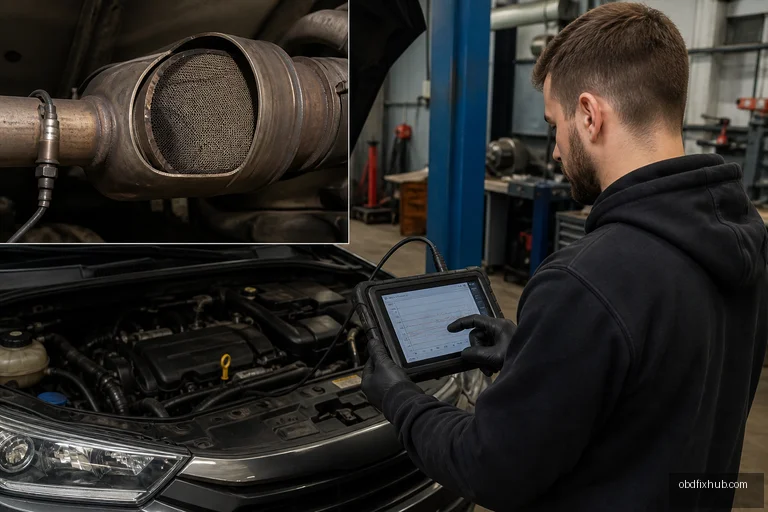
C058F Regeneration Torque Performance means the vehicle’s control system detected a mismatch between the torque expected during an emissions regeneration event and the torque actually produced. It does not automatically prove that the diesel particulate filter (DPF) is defective. In practice, the code can be caused by restricted exhaust flow, incorrect sensor data, fuel-injection problems, engine-temperature issues, or software and control faults.
This is an informational search query: the safest approach is to understand what the code is measuring before attempting a forced DPF regeneration. Clearing C058F without finding the reason for the torque mismatch can turn a manageable fault into a blocked DPF, overheating, or expensive turbocharger and exhaust damage.
What Does C058F Regeneration Torque Performance Mean?
During active DPF regeneration, the engine control module changes injection timing, fuel quantity, exhaust gas recirculation, air management, and sometimes throttle position. These changes raise exhaust temperature so accumulated soot can be burned inside the filter. Because the engine is operating outside its normal map, the control module calculates the torque it should produce and compares that value with measured or estimated torque.
C058F is set when that relationship falls outside the manufacturer’s permitted range for a specified period. The exact definition, enabling conditions, and code severity vary by vehicle manufacturer, so the factory service information for the specific engine remains authoritative. A generic OBD scan tool may show the code but not display the manufacturer-specific data needed to diagnose it properly.
Common Causes of C058F
- DPF restriction: Excessive soot or ash increases exhaust backpressure and makes the engine work harder during regeneration. Ash cannot be burned away by a normal regeneration cycle.
- Incorrect exhaust pressure or temperature readings: A biased differential-pressure sensor, blocked pressure hose, or faulty exhaust gas temperature sensor can make the control module misjudge regeneration performance.
- Fuel-injection problems: Weak injectors, poor spray patterns, low rail pressure, or incorrect fuel dosing can prevent the exhaust from reaching the required temperature and alter engine torque.
- Engine temperature faults: A thermostat stuck open, a faulty coolant-temperature sensor, or an engine that never reaches operating temperature may inhibit or interrupt regeneration.
- Air-management faults: EGR valve sticking, intake-throttle problems, boost leaks, turbocharger control faults, and contaminated intake passages can change the air-fuel balance during the event.
- Low fuel level or unsuitable operating conditions: Many vehicles will cancel regeneration when fuel is low, the engine is too cold, or repeated short trips prevent the required exhaust temperature from being maintained.
- Electrical or software issues: Low system voltage, damaged wiring, poor grounds, outdated calibration, or an interrupted control-module update can produce implausible torque data.
Symptoms You May Notice
C058F can appear with few noticeable symptoms when the vehicle has detected the problem early. Other vehicles enter a protection strategy because continued driving could overload the DPF or damage the exhaust system.
- Check engine light or a diesel emissions warning
- Reduced engine power or a limited-performance mode
- Regeneration that starts and repeatedly aborts
- Higher-than-normal idle speed, cooling-fan operation, or hot exhaust odor
- Increased fuel consumption and slower acceleration
- Additional codes for DPF soot load, exhaust temperature, EGR, boost, or fuel pressure
A regeneration in progress can temporarily produce a hot smell, elevated idle, and noisy cooling fans. Those signs alone do not confirm that regeneration is working. A scan tool should show rising exhaust temperatures, a changing soot estimate, and a normal reduction in calculated DPF load after the cycle completes.
How to Diagnose C058F Correctly
1. Scan every control module
Record all stored, pending, and history codes before clearing anything. C058F may be a secondary code caused by an exhaust temperature sensor, fuel-pressure, EGR, or boost fault. Freeze-frame data is particularly useful because it shows engine speed, coolant temperature, vehicle speed, calculated soot load, and regeneration status when the fault occurred.
2. Check the regeneration prerequisites
Confirm that the engine reaches its specified operating temperature, the fuel level is sufficient, battery voltage is stable, and there are no active faults that inhibit regeneration. Inspect the oil level as well. Repeated failed regenerations can dilute engine oil with diesel fuel, and an oil level above the maximum mark requires attention before further operation.
3. Compare live data rather than guessing
With the engine fully warm, compare commanded and measured exhaust temperature, DPF differential pressure, calculated soot mass, EGR position, turbo boost, fuel-rail pressure, and requested versus actual torque. A pressure reading that remains implausibly high at idle or does not respond to engine load deserves investigation. Likewise, an exhaust temperature that never rises during a commanded event points toward fuel dosing, sensor, or air-management problems.
4. Inspect the physical system
Check the DPF pressure hoses for cracks, melted sections, carbon blockage, and incorrect routing. Inspect exhaust joints for leaks before the pressure sensor, as outside air can distort readings. Then examine injector wiring, EGR and intake components, turbocharger plumbing, grounds, and battery connections. These basic checks often identify the problem before an expensive DPF replacement is considered.
C058F Regeneration Torque Performance Fix
The correct repair depends on the failed test, not simply on the presence of the code. Replace a faulty temperature or pressure sensor only after confirming its signal and wiring. Repair boost or exhaust leaks, clean or replace blocked pressure hoses, correct injector or fuel-pressure faults, and resolve thermostat, EGR, or throttle problems as required.
If the DPF contains excessive soot but is structurally sound, a properly monitored service regeneration may be appropriate. If ash loading is high, the filter usually requires professional removal and cleaning or replacement. Do not repeatedly force regeneration on a filter with very high backpressure; the process can create extreme temperatures and may damage the DPF, turbocharger, or engine.
After the repair, clear the code with a suitable scan tool, perform the manufacturer’s required DPF or learned-value reset only when instructed, and verify the result with live data. A successful repair should show stable torque tracking, plausible pressure and temperature readings, and a regeneration that completes without immediately returning C058F.
Can You Keep Driving With C058F?
Short, gentle driving may be possible when there is no reduced-power warning, abnormal noise, overheating, or flashing warning light. However, continued short-trip use can increase soot loading and make the eventual repair more expensive. Stop driving and arrange professional diagnosis if power drops sharply, the DPF warning is severe, exhaust temperatures become abnormal, or the engine oil level rises.
Key Takeaway
C058F is a performance and plausibility fault during DPF regeneration, not a direct instruction to replace the filter. Start with all related codes and freeze-frame data, verify the temperature, pressure, fuel, and air-management systems, and use live data to confirm whether regeneration actually completes. Only then should a forced regeneration, DPF cleaning, or component replacement be chosen.
Frequently Asked Questions
Is C058F always caused by a bad DPF?
No. Sensor errors, fuel-injection faults, low engine temperature, EGR problems, boost leaks, and software issues can all create a regeneration torque mismatch. The DPF should be tested rather than replaced automatically.
Can a forced regeneration clear C058F?
It can clear the symptom when the only issue is moderate soot accumulation and all regeneration conditions are correct. It will not repair a faulty sensor, injector, thermostat, wiring problem, or heavily ash-loaded filter.
How do I know whether regeneration is really happening?
Use live data to confirm rising exhaust temperature, active regeneration status, changing injection strategy, and a reduction in calculated soot load. A hot smell or loud cooling fan by itself is not proof.
Will disconnecting the battery fix the code?
Disconnecting the battery may erase some temporary information, but it does not repair the underlying fault and may erase useful diagnostic data. A proper scan, repair, and verification drive are more reliable.
Should I replace the DPF when C058F returns?
Not before measuring differential pressure, checking soot and ash estimates, and testing the sensors and regeneration system. Replace or professionally clean the filter only when testing confirms that it is restricted or damaged.




