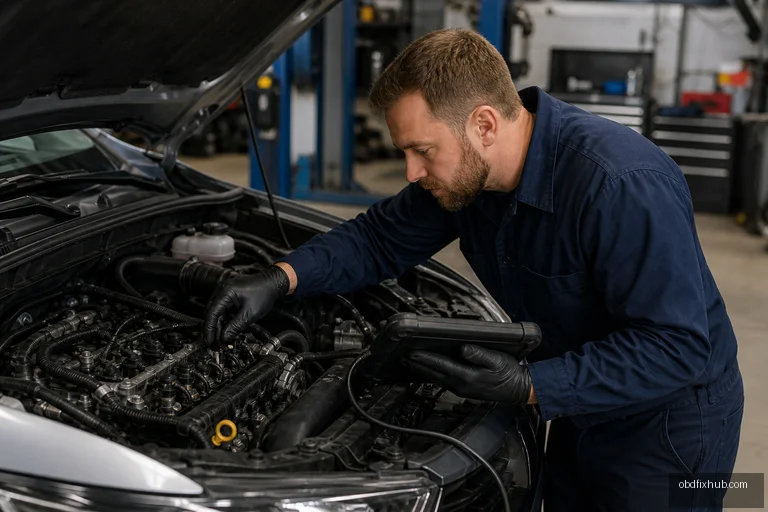
P00BB Fuel Injector Insufficient Flow – Forced Limited Power means the engine control module has detected that one or more injectors cannot deliver the expected amount of fuel, so it has reduced engine output to protect the engine and fuel system. The usual causes are restricted fuel supply, low fuel pressure, a failing high-pressure pump, injector wiring problems, contaminated fuel, or an injector with excessive internal leakage. Do not replace the injectors immediately: a proper pressure and flow test can often identify a cheaper root cause.
What Does P00BB Fuel Injector Insufficient Flow Mean?
P00BB is an OBD-II powertrain code, but its exact testing strategy can vary by manufacturer, engine, and fuel system. On many modern diesel and gasoline direct-injection vehicles, the ECU compares commanded fuel delivery with actual rail pressure, injector timing, and engine response. If the system repeatedly falls short of the required fuel flow, it stores P00BB and activates a forced limited-power or reduced-power mode.
The phrase forced limited power is important. It indicates an intentional torque reduction, not simply a dashboard warning. The vehicle may still drive, but acceleration can be severely restricted, especially under load, during towing, or when climbing a hill. Continuing to drive with fuel starvation can damage the high-pressure pump and, in some diesel systems, send metal debris through the entire fuel system.
P00BB Symptoms You May Notice
Symptoms depend on whether the fault is caused by low-pressure fuel supply, high-pressure delivery, an electrical problem, or the injector itself. A vehicle that starts normally but loses power only under acceleration often has a supply restriction or pressure problem rather than four failed injectors.
- Reduced engine power or a clear reduced-power message
- Hesitation, surging, or poor acceleration under load
- Hard starting, extended cranking, or an engine that will not start
- Rough idle, misfires, or engine vibration
- Stalling when fuel demand increases
- Black smoke on a diesel, or lean-related symptoms on a gasoline direct-injection engine
- Illuminated check engine or service engine warning light
- Additional fuel-pressure, injector-circuit, or misfire codes
Pay attention to when the problem occurs. If the engine runs well at idle but fails during a long uphill pull, record the fuel rail pressure during that event. A pressure reading taken only at idle can look normal while the system collapses when fuel demand rises.
Most Common Causes of P00BB
1. Restricted fuel supply
A clogged fuel filter, blocked pickup screen, pinched fuel line, or contaminated tank can limit the volume reaching the pump. Water or gasoline contamination in diesel fuel is particularly destructive. On some vehicles, a filter that appears only mildly dirty can still cause a large pressure drop at high load.
2. Low-pressure fuel pump failure
An electric lift pump may run and still fail to provide sufficient pressure or volume. A worn pump can pass a basic functional check but fail after heating up or when the engine demands maximum fuel. Measuring pressure and volume at the correct test point is more useful than listening for the pump.
3. High-pressure pump or fuel pressure regulator fault
Common-rail diesel and gasoline direct-injection systems depend on accurate high-pressure control. A failed pressure-control valve, faulty metering valve, damaged pump, or excessive pump wear can prevent the rail from reaching its commanded pressure. If metal particles are found in the fuel, replacing only the pump is unlikely to be a lasting repair.
4. Injector restriction or internal leakage
An injector may be blocked by debris, have a damaged nozzle, or leak internally through its return circuit. Excessive return flow is a classic diesel diagnostic finding: the injector may not deliver enough fuel to the cylinder because too much is escaping internally. On gasoline direct-injection engines, injector balance and cylinder contribution tests are often more informative than resistance readings alone.
5. Wiring, connector, or ECU control problems
Low voltage, corrosion in an injector connector, damaged harness wiring, or poor engine grounds can prevent an injector from opening correctly. Harness damage near the valve cover, fuel rail, or engine mount is easy to miss. A visual inspection should include terminal tension, not just whether the connector is plugged in.
6. Fuel contamination or incorrect fuel
Water, sediment, microbial growth, or the wrong fuel can restrict filters and damage precision components. If P00BB appeared shortly after refueling, preserve a fuel sample and avoid repeatedly cycling the ignition. Contamination-related failures may require tank cleaning, line flushing, filter replacement, and inspection of both pumps and injectors.
How to Diagnose P00BB Correctly
Begin with a complete scan, not just a code erase. Record every stored, pending, and manufacturer-specific code, along with freeze-frame data showing engine speed, load, commanded rail pressure, actual rail pressure, battery voltage, and coolant temperature.
- Check the basics: Confirm the fuel level, inspect for leaks, verify the correct filter, and look for crushed lines or damaged wiring.
- Test the low-pressure side: Measure supply pressure and fuel volume under the conditions specified by the manufacturer. Compare the result during cranking, idle, and a loaded event if possible.
- Compare commanded and actual rail pressure: A large difference under acceleration points toward a supply, pump, regulator, or excessive injector-return problem.
- Perform an injector balance or return-flow test: One injector with markedly higher return flow than the others is suspicious. Follow the vehicle-specific limits; universal flow numbers are unreliable.
- Test electrical control: Check injector power, control pulse, wiring continuity, connector fit, and voltage drop under load. Never rely on static resistance alone.
- Inspect for metal or water: Cut open the fuel filter where appropriate and inspect the fuel system using the manufacturer’s contamination procedure.
High-pressure fuel can penetrate skin and cause life-threatening injury. Do not loosen common-rail lines while the engine is running, and use the correct pressure gauge, scan tool, and service procedure. If the system has contamination or pump debris, professional diagnosis is the safest and most economical option.
How to Fix P00BB
The correct repair depends on the failed test, not the code description alone. A restricted filter may require only a filter and fuel-quality correction, while a failed high-pressure pump may require extensive system cleaning and component replacement.
- Replace a blocked fuel filter with the correct specification and prime the system properly.
- Repair crushed fuel lines, air leaks, poor grounds, corroded connectors, or damaged injector wiring.
- Replace a weak lift pump or defective fuel-pressure control valve after confirming the diagnosis.
- Replace or professionally service injectors that fail balance, leak-off, or cylinder contribution tests.
- If metal contamination is present, follow the complete manufacturer repair procedure rather than replacing one component.
- Clear the code only after repairs, then perform a road test while monitoring actual and commanded fuel pressure.
Injector coding or calibration may be required after replacement. On many diesel vehicles, the injector correction code must be entered into the ECU, followed by a relearn procedure. Skipping that step can leave the engine rough even when the mechanical repair is correct.
Can You Drive With P00BB?
Only drive far enough to reach a safe location or repair facility, and avoid towing, hard acceleration, and high engine loads. If the engine is stalling, the fuel system contains metal, the warning light is flashing, or fuel pressure is dangerously low, have the vehicle transported. A forced-power condition can become a no-start condition without much warning.
Final Takeaway
P00BB is a fuel-delivery performance code, not automatic proof that every injector has failed. Start with the filter, fuel quality, low-pressure supply, rail-pressure data, injector return flow, and electrical controls. Testing in that order prevents expensive guesswork and helps distinguish a simple restriction from a failing high-pressure fuel system.
Frequently Asked Questions
Can a bad fuel filter cause P00BB?
Yes. A restricted filter can allow normal pressure at idle but starve the pump during acceleration, triggering insufficient injector flow and reduced power. Replace it only with the correct filter and verify the system afterward.
Does P00BB always mean the injectors need replacement?
No. Low pump pressure, a blocked filter, contaminated fuel, a faulty regulator, or damaged wiring can produce the same code. Injector replacement should follow a balance, leak-off, or contribution test.
Why does my vehicle still run after setting P00BB?
The ECU may limit torque while maintaining enough fuel delivery for the engine to operate. It can feel acceptable at idle and become severely underpowered when climbing, towing, or accelerating.
Can low battery voltage cause P00BB?
It can contribute to fuel-pump and injector-control problems, especially during cranking. Check battery condition, charging voltage, grounds, and voltage drop before condemning expensive fuel-system parts.
Is P00BB the same on every vehicle?
No. The generic wording is similar, but the diagnostic thresholds and component layout vary by manufacturer. Always use the service information for the exact year, engine, and fuel system.




