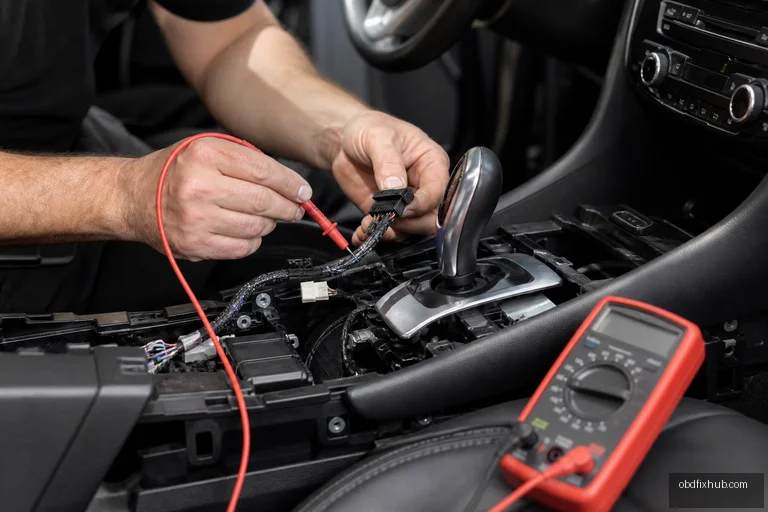
P0825 Gear Lever Push-Pull Switch: Meaning, Causes, Symptoms & Fix
P0825 is an OBD-II trouble code for a problem in the gear lever push-pull switch circuit. This switch is commonly used to request manual gear changes, such as an upshift or downshift, from an automatic or automated transmission. The fault may be caused by a worn shifter switch, damaged wiring, moisture in the console, a poor connector, or—less commonly—a problem inside the transmission control system.
Although the vehicle may still drive, the manual-shift function can stop working and the transmission may enter a protective mode. The correct repair depends on testing the switch signal and wiring rather than replacing the shifter or transmission based on the code alone.
What Does P0825 Mean?
The P0825 code translates to Gear Lever Push-Pull Switch Circuit. In practical terms, the transmission control module (TCM), powertrain control module (PCM), or a related control unit is seeing an electrical signal that is missing, implausible, stuck, or outside its expected range.
On many vehicles, the push-pull switch is integrated into the gear selector. Pulling the lever toward the driver, pushing it away, or moving it through a separate manual gate may command a downshift or upshift. The exact switch design varies considerably between manufacturers, so the factory wiring diagram and service information are important.
This code does not automatically indicate an internal transmission failure. It is an input-circuit fault first. A transmission rebuild should not be considered until the switch, connector, power supply, ground, and signal circuit have been proven good.
P0825 Symptoms to Watch For
Some drivers notice only one symptom, while others experience several at the same time. The most common signs include:
- The manual upshift or downshift function does not respond.
- The transmission remains in automatic mode even when manual mode is selected.
- A check engine light or transmission warning light appears.
- The gear indicator, manual-mode symbol, or selected-gear display behaves incorrectly.
- Delayed shifting, harsh engagement, or unusual shift timing occurs.
- The vehicle enters limp mode and stays in one gear or a limited range of gears.
- The code returns immediately after being cleared.
A useful real-world clue is whether the fault changes when the shift lever is moved or the console is pressed. If manual mode works intermittently over bumps or when the lever is held in a particular position, suspect a worn switch or a broken wire near the shifter before blaming the TCM.
Common Causes of the P0825 Code
1. Failed push-pull switch
The small switches inside a gear selector receive repeated mechanical movement. Over time, their internal contacts can wear, become contaminated, or remain electrically open. A switch may test correctly when stationary but fail when the lever is moved, which is why a live-data test is often more revealing than a simple resistance check.
2. Damaged wiring or a loose connector
Wiring under the center console can be pinched by trim, stretched during shifter repairs, or damaged by spilled drinks. Corrosion at the connector can create high resistance and an unstable signal. Inspect the harness closely where it bends around the selector assembly and where it passes into the vehicle floor.
3. Blown fuse, poor power supply, or weak ground
Some selector circuits use a shared ignition supply or ground. A blown fuse, loose ground eyelet, or low system voltage can create several misleading transmission-related codes. If P0825 appeared after a flat battery, jump start, or electrical repair, check battery voltage and charging voltage before replacing parts.
4. Contamination or mechanical damage
Liquid spilled into the shifter can leave a sticky residue that prevents the switch from operating consistently. Broken plastic guides or excessive play in the lever can also stop the switch from reaching its correct position. Do not spray general-purpose cleaner into the selector; it can damage contacts and leave additional residue.
5. Control module or software fault
A TCM or PCM problem is possible, but it is less common than a switch or circuit issue. A software update may be required on certain models, particularly if the manufacturer has issued a technical service bulletin. Module replacement should be the final step after circuit integrity and programming requirements have been confirmed.
How to Diagnose P0825 Correctly
A professional diagnosis starts with more than a basic code reader. Use a scan tool that can access transmission data and record freeze-frame information. Note the gear position, vehicle speed, battery voltage, and whether the code was stored as current or intermittent.
- Check for related codes. Codes for low voltage, the transmission range sensor, communication, or other shifter inputs may identify a shared power or ground problem.
- Verify the customer complaint. Test manual mode while stationary and during a careful road test. Do not repeatedly force the lever if the transmission is already in failsafe mode.
- Inspect the selector assembly. Look for spilled liquid, damaged trim, a loose lever, broken mounting points, and connectors that are not fully locked.
- Monitor live data. Watch the upshift and downshift switch parameters while operating the lever. The value should change cleanly and return to its normal state when released.
- Test the circuit with a wiring diagram. Check reference voltage, ground, continuity, and short-to-ground or short-to-power conditions. A wiggle test can reveal an intermittent open circuit.
- Compare the switch signal with specifications. Some systems use separate circuits; others use resistor values that the module interprets. Never apply test voltage to a circuit unless the service procedure permits it.
- Repair, clear, and retest. After the repair, clear the code, perform the required ignition cycle or adaptation procedure, and confirm that the signal works under real driving conditions.
One diagnostic mistake I see frequently is measuring resistance across the shifter and declaring it good. That test can miss a contact that opens only under vibration. If the fault is intermittent, back-probe the circuit and monitor the data while gently moving the lever and harness.
How to Fix P0825
The repair may be as simple as securing a connector or replacing a damaged section of wiring. If the switch fails the manufacturer’s continuity or live-data test, the selector switch or complete gear lever assembly may need replacement. Some vehicles sell the switch separately; others require the entire shifter module.
- Repair corroded terminals using the correct automotive terminals and sealing methods.
- Replace damaged wiring rather than twisting wires together under the console.
- Replace a contaminated or mechanically damaged switch assembly.
- Repair broken shifter mounts or guides that prevent proper switch movement.
- Perform TCM or selector relearn procedures when specified by the manufacturer.
- Check for software updates or technical bulletins before replacing a control module.
After the fix, verify both manual upshift and manual downshift commands. A vehicle can stop displaying P0825 while one direction of the switch still fails, especially when the circuit uses separate inputs.
Can You Drive With P0825?
Short-distance driving may be possible if the transmission shifts normally and only manual mode is unavailable. However, avoid towing, aggressive driving, or long trips if the transmission is stuck in one gear, shifts harshly, or shows a transmission warning. Continued operation with abnormal shifting can increase heat and mechanical stress.
If the vehicle enters limp mode, arrange diagnosis promptly. The safest approach is to treat the code as an electrical control problem, but take any harsh engagement or loss of gear selection seriously.
Repair Cost and Difficulty
There is no single price for P0825 because the repair ranges from a connector repair to a complete selector replacement. Wiring repairs are usually less expensive than replacing an integrated shifter assembly. Dealer-level diagnosis may cost more initially, but it can prevent an unnecessary transmission or TCM replacement.
DIY inspection is reasonable for an experienced technician with a wiring diagram and a suitable scan tool. Console disassembly, airbag-adjacent trim, and transmission-control wiring should be handled carefully; disconnect the battery when the manufacturer’s procedure requires it.
Final Takeaway
P0825 points to the electrical circuit for the gear lever push-pull switch, not automatically to a failed transmission. Start with scan data, the shifter connector, wiring movement points, power and ground checks, and the switch signal itself. If the code returns after a superficial inspection, have the circuit tested under movement before authorizing an expensive component replacement.
Frequently Asked Questions
Is P0825 a serious transmission code?
It can be serious if the vehicle enters limp mode or shifts harshly, but the code itself usually identifies a shifter input circuit problem. Many repairs involve the switch, connector, or wiring rather than internal transmission parts.
Can a weak battery cause P0825?
Yes. Low voltage can disrupt control-module inputs and trigger misleading codes, especially after a flat battery or jump start. Test battery and charging voltage, but do not assume voltage is the only cause if the code returns.
Will clearing P0825 fix the problem?
Clearing the code only removes the stored fault temporarily. If the switch signal remains incorrect, P0825 will return, and the manual gear-selection function may remain disabled.
Does P0825 mean I need a new gear shifter?
Not necessarily. The shifter should be replaced only after confirming that the switch or integrated selector assembly has failed. A loose connector, damaged wire, corrosion, or a software issue may produce the same code.




