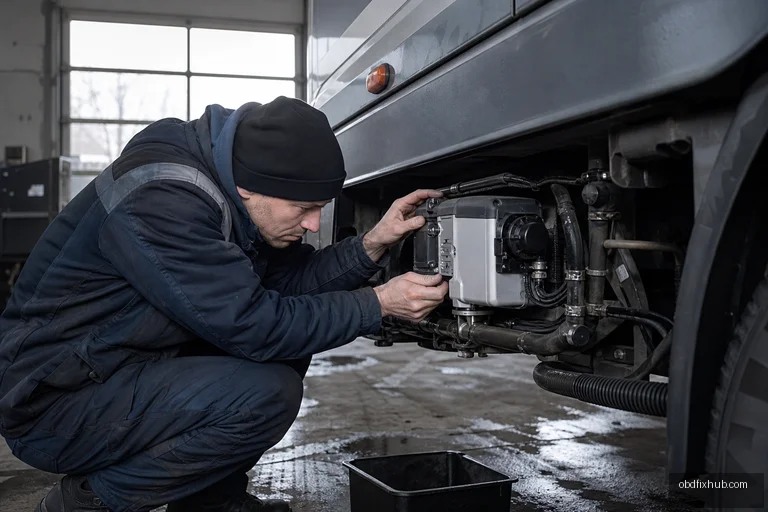
P2029 Fuel-Fired Heater Disabled means the vehicle’s powertrain or body control system has shut down an auxiliary fuel-fired heater because it detected an unsafe operating condition or a system fault. This code commonly involves diesel-powered parking heaters, auxiliary cabin heaters, or fuel-operated coolant heaters—not the conventional electric HVAC blower. The correct repair depends on why the heater was disabled, so clearing the code without testing the heater, fuel supply, wiring, and exhaust system is rarely a lasting fix.
What Does Fault Code P2029 Mean?
P2029 is a generic OBD-II powertrain code defined as Fuel-Fired Heater Disabled. A control module has commanded the heater off, or it has prevented operation after detecting a condition such as low voltage, failed ignition, overheating, inadequate fuel delivery, or an exhaust restriction.
The exact logic varies between manufacturers. On some vehicles, the code is stored by the engine control module; on others, it may be associated with an auxiliary heater controller, body control module, or climate-control system. The vehicle may still drive normally because the fault affects supplemental heating rather than engine operation.
How a Fuel-Fired Heater Works
A fuel-fired heater burns a small quantity of diesel or gasoline in a controlled combustion chamber. Depending on the design, it heats cabin air directly or warms engine coolant before it reaches the heater core. Typical components include a metering pump, glow plug or igniter, combustion fan, temperature sensors, flame sensor, control module, and dedicated exhaust piping.
Because this is a miniature combustion system, the controller performs safety checks before and during operation. If it cannot confirm ignition, detects excessive temperature, or loses stable electrical power, it shuts the heater down and may lock it out until the fault is repaired and the system is reset.
Common Symptoms of P2029
The most obvious symptom is that the auxiliary heater does not start when commanded. A vehicle may also display a warning message such as “auxiliary heater unavailable,” “parking heater fault,” or “heater disabled.”
- No warm air during pre-heating or stationary heating operation
- Long cranking or clicking sounds followed by a shutdown
- A brief fuel-pump ticking noise without heat production
- White smoke or an unusual fuel smell during a failed start
- Repeated start attempts followed by a heater lockout
- Slow engine warm-up in cold weather when the heater normally supports coolant heating
- Low battery voltage after several unsuccessful heater cycles
Do not confuse a heater fault with a failed blower motor. If the blower operates but the air remains cold, the problem may be coolant flow, a blend door, or the auxiliary heater itself. If the blower does not operate at all, inspect the HVAC power and control circuits as well.
Most Likely Causes of P2029 Fuel-Fired Heater Disabled
1. Low battery voltage or poor power supply
Fuel-fired heaters draw substantial current during glow-plug operation and shutdown. A weak battery, corroded ground, undersized connection, or voltage drop in the supply cable can make the heater abort its start sequence. This is especially common when the vehicle has been used for short trips or the heater is operated with the engine off.
2. Failed ignition or glow plug
The heater must ignite fuel quickly and prove that a stable flame exists. A worn glow plug, damaged igniter circuit, carbon buildup, or defective flame sensor can cause a start failure. The controller may then disable the heater after several unsuccessful attempts.
3. Fuel delivery problem
A blocked fuel line, empty auxiliary fuel pickup, air in the line, failed metering pump, or incorrect fuel can prevent combustion. Listen for a rhythmic ticking from the dosing pump during startup, but remember that hearing the pump does not prove that the correct fuel volume is reaching the burner.
4. Restricted combustion air or exhaust
Mud, ice, road debris, insect nests, or crushed tubing can restrict the heater’s intake or exhaust. A restricted exhaust may cause overheating, poor combustion, smoke, and an immediate safety shutdown. Never operate a fuel-fired heater indoors or in an enclosed garage; its exhaust contains carbon monoxide.
5. Overheating, coolant-flow, or temperature-sensor fault
Coolant heaters can shut down if coolant is low, air is trapped in the circuit, a circulation pump has failed, or the coolant temperature sensor reports an implausible value. An air heater can also disable itself if its internal temperature rises too quickly or exceeds its safety limit.
6. Wiring, fuse, communication, or control-module failure
Damaged wiring near the heater, blown fuses, water intrusion, poor grounds, or a CAN-bus communication fault can stop the heater from receiving permission to run. A replacement heater should not be installed before these basics are tested, because the original unit may be functional.
How to Diagnose P2029 Correctly
A professional diagnosis begins with the complete vehicle scan, not just a generic code reader. Record every stored and pending code, including low-voltage, communication, coolant-temperature, and flame-related faults. The freeze-frame data can show whether the shutdown occurred during a cold start, after ignition, or during a high-temperature event.
- Check the battery and charging system. Test battery state of charge and measure voltage at the heater connector while the heater attempts to start. A healthy battery at rest does not rule out a major voltage drop under load.
- Inspect fuses, grounds, and connectors. Look for green corrosion, overheated terminals, loose ground points, rodent damage, and water entering the heater housing or wiring loom.
- Inspect the air intake and exhaust. Confirm that both paths are open, correctly routed, and free from ice, soot, crushed sections, and foreign material.
- Verify fuel delivery. Check the tank level, fuel type, fuel line condition, metering-pump operation, and delivery quantity according to the manufacturer’s service procedure.
- Test ignition and flame detection. Use the manufacturer’s scan tool or wiring specifications to test the glow plug, igniter, flame sensor, and heater control module. Avoid applying battery voltage directly to components unless the service manual specifically allows it.
- Check coolant circulation where applicable. Inspect coolant level, pump operation, trapped air, hoses, and temperature-sensor readings before condemning the heater.
- Clear the lockout only after repairs. Many heaters require a dedicated reset or service-tool unlock after repeated failed starts. Clearing P2029 with a basic scanner may not remove the heater’s internal lockout.
Repair Options and Typical Outcomes
The repair may be as simple as restoring battery voltage, replacing a blown fuse, clearing an obstructed exhaust, or repairing a corroded ground. If the heater has accumulated heavy carbon deposits, a manufacturer-approved cleaning or burner service may restore operation. A failed glow plug, dosing pump, temperature sensor, circulation pump, or control module must be tested individually before replacement.
Repeatedly forcing the heater to run can make the problem worse. Fuel that enters the chamber without igniting can wet the burner and produce heavy smoke on the next attempt. If you smell raw fuel, see dense smoke, or hear abnormal combustion, switch the system off and have it inspected rather than continuing to cycle it.
What Does the P2030 Fault Code Mean?
P2030 generally means “Fuel-Fired Heater Performance.” In practical terms, the system commanded the heater to operate but detected that its output, temperature rise, combustion behavior, or operating parameters were outside the expected range. P2029 describes a heater that has been disabled; P2030 points more directly to inadequate or abnormal heater performance.
The two codes can appear together. For example, a restricted exhaust may first trigger P2030 because combustion performance drops, followed by P2029 when the controller disables the heater for safety. Always use the manufacturer-specific diagnostic information because the exact P2030 wording and test strategy can vary.
Can You Drive With P2029?
In most cases, the vehicle can be driven because P2029 affects an auxiliary heater rather than the main engine-management system. However, the heater may be important for windshield defrosting, cabin comfort, diesel emissions-system warm-up, or engine pre-heating. Do not drive if there is a strong fuel smell, visible smoke inside the cabin, overheating, damaged exhaust tubing, or signs that combustion gases could enter the passenger compartment.
Practical Tips to Prevent Another Heater Lockout
- Keep the vehicle battery fully charged, especially before using a parking heater overnight.
- Run the heater long enough to complete its normal cool-down cycle; switching it off repeatedly after only a few minutes encourages soot buildup.
- Keep the fuel tank above the manufacturer’s minimum level so the auxiliary pickup cannot draw air on slopes.
- Inspect heater intake and exhaust openings after driving through snow, mud, or tall grass.
- Use only the fuel specified for the heater and vehicle climate conditions.
- Service the heater according to the vehicle manufacturer’s schedule rather than replacing the complete unit after the first fault.
Final Takeaway
P2029 does not identify one failed part; it tells you that the vehicle has disabled its fuel-fired heater for a safety or operating reason. Start with battery voltage, fuses, grounds, fuel delivery, intake and exhaust restrictions, then move to ignition, sensors, coolant circulation, and module communication. If P2030 is also stored, focus on why the heater is producing insufficient or abnormal output before resetting the lockout.
Best next step: obtain a full module scan and the vehicle-specific heater test procedure. That approach is faster, safer, and usually less expensive than guessing with replacement parts.
Frequently Asked Questions
What does the P2029 fault code mean?
P2029 means the vehicle’s control system has disabled a fuel-fired auxiliary heater. Common triggers include low voltage, failed ignition, fuel-delivery problems, overheating, restricted exhaust, or an internal heater lockout.
What does the P2030 fault code mean?
P2030 generally means Fuel-Fired Heater Performance. The heater is not producing the expected temperature or combustion output. It may occur with P2029 when the control module disables the heater after detecting poor performance.
Can low battery voltage cause P2029?
Yes. The glow plug and heater fan can create a significant electrical load during startup. A battery may appear normal at rest but still cause a voltage drop that stops the heater and stores P2029.
Will disconnecting the battery fix P2029?
Disconnecting the battery may erase some temporary codes, but it usually does not repair the underlying fault or clear a heater’s internal lockout. Diagnose the cause first, then use the appropriate scan tool or reset procedure.
Is P2029 dangerous?
The code itself is not normally an immediate engine emergency, but a fuel-fired heater involves combustion and exhaust gases. Stop using it if you notice raw fuel, heavy smoke, overheating, or exhaust entering the cabin, and arrange a professional inspection.




