P2100 Electronic Throttle Actuator Motor Circuit Open means the engine computer has detected an open or interrupted electrical circuit to the electronic throttle actuator motor. The fault can be caused by a broken wire, failed throttle body motor, blown fuse, poor ground, damaged connector, or a control-module problem. Because the throttle controls engine power, many vehicles enter reduced-power or limp mode when this code appears.
This is an information and diagnosis issue rather than a code that automatically proves the throttle body is bad. A careful circuit test is important before buying an expensive replacement part.
What Does P2100 Mean?
Modern vehicles commonly use an electronic throttle control system instead of a conventional accelerator cable. When you press the accelerator pedal, the pedal position sensors send a signal to the powertrain control module (PCM). The PCM then drives a motor inside the throttle body to open or close the throttle plate.
P2100 is a generic OBD-II powertrain code associated with an open throttle actuator motor circuit. In practical terms, the PCM is not seeing the expected electrical path through the actuator motor or its wiring. The exact wording and diagnostic strategy can vary by manufacturer, so the factory service information for the specific vehicle should always take priority.
Common Symptoms of P2100
The symptoms depend on whether the fault is permanent, intermittent, or present only during startup. A vehicle with a complete actuator circuit failure may still start but respond very poorly to the accelerator.
- Check Engine Light or wrench warning light
- Reduced engine power or limp-home mode
- Little or no response from the accelerator pedal
- Rough idle, stalling, or difficulty starting
- Throttle plate stuck near the default position
- Limited maximum speed, sometimes around 20 to 40 mph
- Unexpectedly high or low idle speed
- Additional throttle position or accelerator pedal sensor codes
An intermittent open may be especially confusing. The vehicle can drive normally after a restart and then suddenly lose throttle response when vibration, engine movement, or heat changes the position of a damaged wire.
Most Likely Causes of a P2100 Code
1. Open or damaged wiring
Wiring near the throttle body is exposed to heat, vibration, oil contamination, and repeated movement. A conductor can break inside its insulation while the outside still looks intact. Pay close attention to harness sections that are stretched tightly across the intake manifold or rub against a bracket.
2. Corroded or loose throttle body connector
Water intrusion, oil vapor, and terminal tension problems can interrupt the actuator motor circuit. A connector may click into place yet fail electrically because one terminal has backed out. Inspect both the male and female terminals rather than relying only on a visual check.
3. Failed electronic throttle body motor
The motor inside the throttle body can develop an open winding, excessive brush wear, or internal mechanical binding. Some throttle assemblies contain the motor and throttle position sensors as one service unit, meaning the entire throttle body may need replacement.
4. Blown fuse or power supply problem
A blown fuse can remove power from the throttle actuator circuit. Do not simply install another fuse and return the vehicle to service. If the replacement fuse fails immediately, a shorted harness or internally damaged actuator may be pulling excessive current.
5. Weak power or ground connection
Low system voltage, a damaged engine ground strap, or a high-resistance ground can create throttle actuator codes that resemble a failed motor. Battery voltage should be checked under load, not only with the engine switched off. A loose negative terminal can cause several unrelated electronic throttle codes at once.
6. PCM, relay, or software issue
Control-module failure is possible but less common than wiring, connector, fuse, or throttle body faults. A software update may be required on certain models, especially when the manufacturer has issued a technical service bulletin. PCM replacement should be considered only after the circuit and power supply have been proven good.
How to Diagnose P2100 Correctly
The most efficient diagnosis starts with evidence from the scan tool and then moves to the electrical circuit. Avoid replacing the throttle body based on the code alone.
- Record all codes and freeze-frame data. Note battery voltage, engine temperature, vehicle speed, and whether the code is stored or pending. Related codes such as P2118, P2119, P0121, or accelerator pedal sensor faults can change the diagnostic direction.
- Check technical service bulletins. Manufacturer-specific wiring repairs, throttle body updates, and relearn procedures are common on some vehicles.
- Inspect the fuse and relay circuit. Test for power on both sides of the fuse with the circuit loaded. A fuse that looks good but has no voltage on one side is not supplying the actuator.
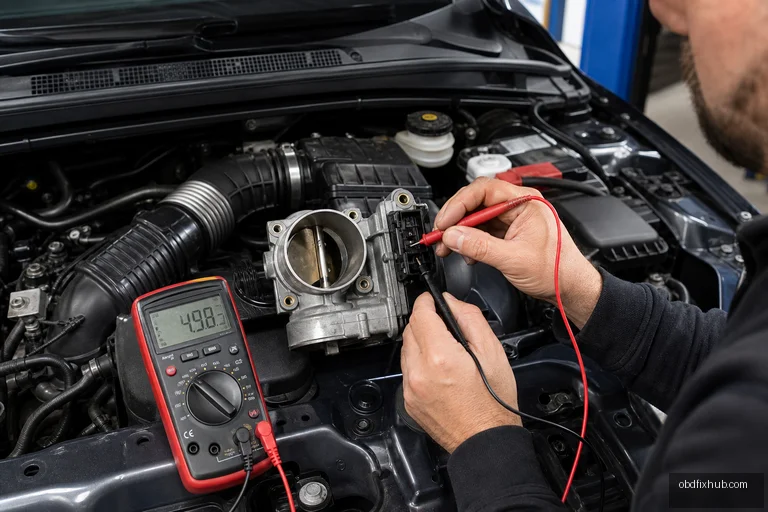
- Examine the connector and harness. Look for pushed-back pins, green corrosion, moisture, melted plastic, stretched wires, and previous repairs. Gently flex the harness while monitoring scan-tool data if the fault is intermittent.
- Perform voltage-drop tests. With the actuator commanded on, measure voltage loss across power and ground paths. A resistance check with the circuit disconnected can miss a fault that appears only under load.
- Test the actuator motor according to service data. Do not apply random battery power to a throttle body. Some units use a dual-motor design or integrated electronics and can be damaged by an incorrect test.
- Verify throttle position feedback. The throttle plate should move smoothly, and the reported sensor values should change consistently. A motor circuit fault combined with erratic position data often points to a defective assembly.
A useful workshop technique is to compare the circuit voltage at the throttle connector with the voltage measured directly at the battery while the actuator is being commanded. A significant difference indicates wiring or ground resistance. This test is often more revealing than simply measuring resistance with the ignition off.
P2100 Electronic Throttle Actuator Motor Circuit Open: Fixes
The correct repair depends on the failed point in the circuit. Typical fixes include:
- Repairing a broken or chafed wire with the correct automotive-grade splice
- Replacing a corroded connector terminal or damaged pigtail
- Replacing a blown fuse after locating and repairing the underlying cause
- Cleaning and tightening battery, chassis, and engine ground connections
- Replacing the electronic throttle body when the internal motor or electronics fail
- Updating or replacing a relay when testing proves it is defective
- Performing the manufacturer-specified throttle or idle relearn procedure
Throttle body replacement is not always plug-and-play. Many vehicles require an electronic throttle initialization, idle relearn, or scan-tool calibration after installation. If the relearn is skipped, the engine may crank without starting, idle poorly, or immediately set another throttle code.
Can You Drive With P2100?
Driving is not recommended when the vehicle has reduced throttle response, stalling, or unpredictable acceleration. Loss of power while merging or crossing traffic creates a genuine safety risk. If the vehicle still runs normally and the code is only pending, drive only far enough for diagnosis, avoid heavy traffic, and be prepared for limp mode.
Never force the throttle plate open by hand unless the service procedure specifically allows it. Electronic throttle gears and position sensors can be damaged, and a contaminated throttle plate may need cleaning with an approved procedure rather than aggressive scraping.
How Much Does P2100 Repair Cost?
Cost varies widely because a repaired wire or connector may be inexpensive, while a complete throttle body can be several hundred dollars or more. Diagnostic labor is often the best investment because it prevents replacing a good throttle body when the real problem is a fuse, ground, or harness fault.
Before authorizing parts, ask the technician for the test result that identifies the failure: missing power, missing ground, an open actuator winding, excessive voltage drop, or a failed control signal. That evidence makes the repair more predictable.
Summary: The Right Next Step
P2100 identifies an open electronic throttle actuator motor circuit, not an automatic requirement to replace the throttle body. Start with the complete code list, fuse and voltage checks, connector inspection, wiring tests, and manufacturer-specific service information. Once the failed component is confirmed, complete any required throttle relearn before returning the vehicle to normal driving.
Frequently Asked Questions
Can a weak battery cause P2100?
Yes. Low battery voltage or a poor ground can disrupt electronic throttle operation and trigger P2100, especially during starting. Test battery voltage and charging performance before condemning the throttle actuator.
Does P2100 always mean I need a new throttle body?
No. Damaged wiring, a loose connector, blown fuse, or bad ground can produce the same code. The throttle body should be replaced only after the actuator circuit has been tested properly.
Will clearing P2100 fix the problem?
Clearing the code only removes the stored fault temporarily. If the circuit remains open, the code and reduced-power mode will return, often as soon as the PCM runs its actuator test again.
Can I clean the throttle body to fix P2100?
Cleaning may help with a sticking or carbon-coated throttle plate, but it will not repair an open motor winding or broken wire. Follow the vehicle-specific cleaning and relearn procedure to avoid damaging the assembly.
Why does my car drive normally after restarting?
An intermittent connector, broken conductor, heat-sensitive motor, or temporary low-voltage event may allow normal operation after a restart. Inspect the harness while monitoring live data instead of assuming the issue has disappeared.




