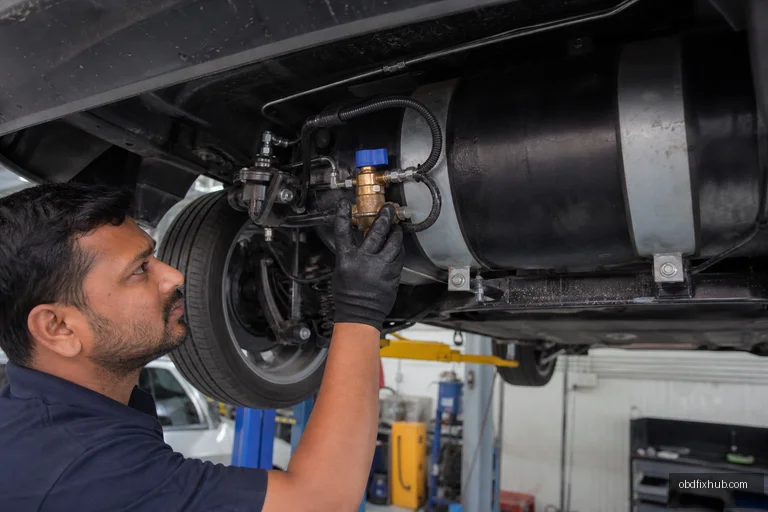
P224D Alternative Fuel Tank Shutoff Valve Performance means the vehicle computer has detected that the fuel tank shutoff valve is not responding or operating within the expected range. This valve controls the flow or isolation of CNG, LPG, hydrogen, or another alternative fuel, so the fault can cause a warning light, poor fuel switching, reduced power, or a no-start condition. The code should be diagnosed before replacing the valve, because wiring, pressure feedback, contamination, and control-module faults can produce the same result.
What Does P224D Mean?
P224D is a generic powertrain diagnostic trouble code related to the performance of an alternative-fuel tank shutoff valve. The exact valve design and testing strategy vary between manufacturers, so one vehicle may use an electrically operated isolation valve while another may monitor a valve integrated with the fuel tank, regulator, or fuel delivery module.
During a self-test, the engine or alternative-fuel control module compares the commanded valve position with pressure changes, electrical feedback, fuel flow, or system pressure decay. P224D is stored when that response does not match the expected behavior. In practical terms, the module may be saying, “I commanded the valve to open or close, but the fuel system did not react correctly.”
Common Symptoms of P224D
Symptoms depend on the fuel type, the valve position when it failed, and whether the vehicle can continue using another fuel source. A valve stuck closed is usually more disruptive than a valve that responds slowly or fails to seal completely.
- Check Engine Light or alternative-fuel system warning
- Difficulty starting, especially when starting directly on CNG or LPG
- Failure to switch from gasoline to the alternative fuel
- Engine hesitation, reduced power, or limited-performance mode
- Unexpected fuel-pressure readings or unstable fuel delivery
- Inability to refuel or abnormal behavior during the refueling procedure
- Repeated clicking from the valve area, depending on the valve design
- Fuel-system shutdown after a collision or detected pressure fault
A vehicle may still drive normally on gasoline while P224D is active. That does not make the problem harmless; it may indicate that the control module has disabled the alternative-fuel system as a safety measure.
Most Likely Causes of P224D
1. Failed shutoff valve or solenoid
The valve can develop an open coil, an internal short, mechanical sticking, or a weakened return spring. On high-mileage CNG and LPG systems, repeated thermal cycling and vibration can make the valve sluggish before it fails completely.
2. Damaged wiring or poor electrical connections
Broken wires near the fuel tank, corrosion in a connector, loose terminals, and poor grounds are frequent causes. Harnesses routed beneath the vehicle are especially vulnerable to water, road salt, stone impact, and previous repair damage.
3. Fuel pressure or position feedback problem
The valve may operate correctly while a pressure sensor reports an implausible result. A biased pressure sensor, blocked sensing line, damaged connector, or incorrect reference voltage can therefore set P224D even when the valve itself is not defective.
4. Contamination, freezing, or mechanical restriction
Debris, oil carryover, moisture, or deposits inside the fuel system can restrict valve movement. In LPG systems, unusual temperature conditions or regulator problems may also affect pressure behavior and make the control module interpret the valve response as a performance failure.
5. Low system voltage or control-module problems
A weak battery, voltage drop under load, blown fuse, or defective driver circuit can prevent the valve from receiving adequate power. Software updates and manufacturer-specific technical service bulletins should also be checked before condemning an expensive fuel-tank assembly.
How to Diagnose P224D Correctly
Alternative-fuel systems can contain extremely high pressure, and some fuels are flammable or chemically hazardous. Do not loosen fuel lines, remove a tank valve, or test for leaks with an open flame. If the vehicle uses high-pressure CNG or hydrogen, diagnosis beyond basic electrical checks should be performed by a technician trained for that fuel system.
- Record all codes and freeze-frame data. Look for companion codes involving fuel pressure, tank isolation, solenoids, communication, or voltage. A related pressure code may identify the real starting point.
- Check the vehicle history. Ask whether the tank was recently filled, serviced, exposed to flooding, involved in a collision, or operated after a battery replacement. These details often explain a sudden P224D event.
- Inspect the valve connector and harness. Look for bent terminals, moisture, green corrosion, rubbed insulation, and wires stretched tight against the tank or frame. Do not rely on a visual inspection alone; lightly tug each wire near the connector.
- Verify power, ground, and fuse condition. Measure voltage at the valve connector while the system is commanded on, not only with the connector unplugged. A circuit can show battery voltage with no load but collapse when the solenoid is energized.
- Use a bidirectional scan tool. If supported, command the tank shutoff valve open and closed while monitoring pressure or position data. Listen for a click, but do not treat a click as proof that the valve is flowing or sealing correctly.
- Compare pressure before and after the command. A correct electrical response with no expected pressure change points toward a stuck valve, blocked passage, inaccurate sensor, or a separate regulator issue.
- Follow the manufacturer’s resistance and leak-test procedure. Solenoid resistance specifications differ considerably. Never apply direct battery power to an unknown valve unless the service information explicitly permits it.
P224D Repair: What Usually Fixes It?
The repair depends on the failed part. A corroded connector may require terminal repair and weatherproofing, while a damaged harness may need replacement rather than a temporary twist-and-tape repair. If the valve coil is open, shorted, or mechanically stuck, the valve or the complete tank-mounted module may need replacement according to the manufacturer’s procedure.
If testing identifies a pressure sensor, regulator, fuse, or ground fault, repair that issue instead of replacing the shutoff valve. After the repair, clear the code, run the required valve or tank-isolation relearn, and complete a road test that includes the fuel-switching conditions shown in the freeze-frame data.
Do not bypass the valve to keep the vehicle running. The shutoff system is designed to isolate fuel during key-off, collision detection, pressure abnormalities, and certain service conditions. Bypassing it can create a serious fire or explosion hazard and may leave the vehicle noncompliant with safety regulations.
Can You Drive With P224D?
If the vehicle runs normally on gasoline and there is no fuel odor, leak indication, or severe drivability problem, a short trip to a qualified repair facility may be possible. Avoid using the alternative-fuel system until it has been checked, particularly if the warning appeared after an impact or refueling event.
Stop driving and arrange professional assistance if you smell fuel, hear hissing, see frost or abnormal icing near a component, cannot shut the system down, or experience stalling. Those signs require safety checks before further operation.
Key Takeaway
P224D does not automatically mean the alternative fuel tank shutoff valve itself is bad. Confirm the code, inspect the wiring and power supply, verify pressure feedback, and use a scan-tool actuator test before replacing parts. Because CNG, LPG, and hydrogen systems can store fuel at dangerous pressure, the safest and most accurate repair is one performed with the vehicle manufacturer’s service data and the correct fuel-system safety equipment.
Frequently Asked Questions
Is P224D the same on every vehicle?
No. The code description is broadly related to alternative-fuel tank shutoff valve performance, but the valve location, sensor strategy, pressure specifications, and repair procedure vary by manufacturer and fuel type.
Can a bad battery cause P224D?
Yes. Low system voltage or a voltage drop while the valve is energized can prevent normal operation. Battery and charging-system tests should be completed before replacing the valve.
Will clearing P224D fix the problem?
Clearing the code only removes the stored fault temporarily. If the valve does not respond correctly or the underlying wiring or pressure issue remains, P224D will return during the next self-test.
Is it safe to replace the valve at home?
Usually not. Tank-mounted valves on CNG, hydrogen, and some LPG systems can expose you to stored pressure and flammable fuel. Basic connector inspection may be suitable for a vehicle owner, but valve removal should follow an approved depressurization procedure and be handled by a qualified technician.




