P2440 means the engine computer has detected that the secondary air injection switching valve is stuck open. The fault is usually caused by a carbon-fouled valve, failed vacuum control, damaged wiring, or water entering the secondary air injection system. You may still be able to drive, but continued driving is not a good idea if the engine runs poorly, the check engine light is flashing, or the system is making unusual noises.
What Does P2440 Mean?
The secondary air injection system briefly sends fresh air into the exhaust during a cold start. This extra oxygen helps the catalytic converter heat up faster and reduces cold-start emissions. Once the warm-up phase ends, the switching valve should close and isolate the exhaust from the air pump.
With a P2440 secondary air injection switching valve stuck open code, the powertrain control module believes the valve has remained open when it should be closed. Depending on the vehicle, the valve may be operated by engine vacuum, an electric solenoid, or an electronically controlled air valve. The exact diagnostic wording can vary between Toyota, Lexus, Nissan, Subaru, and other manufacturers.
Common Causes of a Secondary Air Injection Valve Stuck Open
- Carbon or exhaust contamination: Exhaust gas can travel backward through a failed check valve and deposit soot inside the switching valve.
- Failed one-way check valve: A bad check valve allows hot exhaust condensation and carbon to reach the air injection valve or pump.
- Vacuum hose problems: A split, disconnected, incorrectly routed, or blocked vacuum hose can prevent the valve from closing correctly.
- Defective control solenoid: The vacuum switching valve may be electrically open, internally stuck, or unable to hold vacuum.
- Wiring or connector damage: Corrosion, rodent damage, water intrusion, and loose terminals are common in the low-mounted components of this system.
- Water-damaged air pump: Condensation can enter through the air passages and damage the pump, valve, relay, or nearby connectors.
- Faulty relay or fuse: A relay that sticks can keep the pump or valve energized beyond the commanded operating period.
- Control module or software issue: This is possible, but it should be considered only after the valve, hoses, wiring, and feedback signals have been tested.
What Does “Bank 1” Mean?
If the scan tool reports that the valve is stuck open on bank 1, bank 1 is the side of the engine containing cylinder number one. On a V6 or V8, the engine may have separate air injection valves for each bank. On many inline four-cylinder engines, there is only one cylinder bank, so the bank designation may be part of the manufacturer’s diagnostic strategy rather than evidence of two separate valves.
P2440 Symptoms You May Notice
The check engine light is the most consistent symptom. Because secondary air injection operates mainly during cold starts, the vehicle may drive almost normally once the engine is warm. However, a stuck-open valve can produce several clues:
- Check engine light, often with additional secondary air injection codes
- Rough running or hesitation for the first few seconds after starting
- A loud air-pump noise that continues too long
- Rattling, hissing, or exhaust noise near the air injection valve
- Reduced fuel economy or increased emissions
- Failure of an emissions or inspection test
- Repeated failure of the air pump because hot exhaust reaches it
A useful practical clue is the timing of the symptom. If the pump sounds like a vacuum cleaner for several minutes after every cold start, do not assume the pump itself is the only problem. A failed check valve or stuck switching valve may be allowing the system to operate incorrectly and can destroy a replacement pump.
How to Diagnose P2440 Correctly
Replacing the valve immediately is tempting, but it often leads to repeat repairs. A proper diagnosis should identify whether the valve is mechanically stuck, incorrectly controlled, or falsely reporting its position.
- Confirm the code and freeze-frame data. Record engine temperature, vehicle speed, battery voltage, and any related codes. P0410, P0412, P0418, P2431, or manufacturer-specific air injection codes can point to the real source.
- Inspect the air injection plumbing. Look for cracked hoses, melted plastic, loose clamps, blocked passages, and signs of water or soot. Heavy black deposits are strong evidence of exhaust backflow.
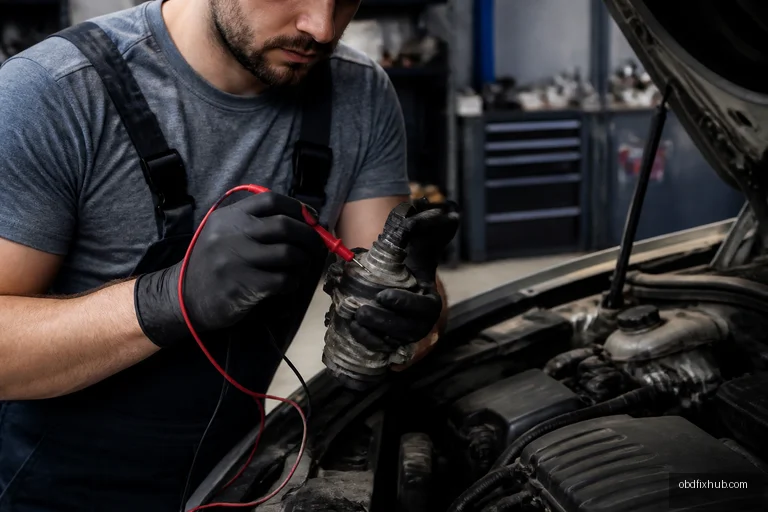
- Check the electrical circuit. Test power, ground, connector fit, and command signals at the valve or control solenoid. Do not rely on a visual inspection alone; a corroded terminal can look acceptable but fail under load.
- Test vacuum-controlled valves with a hand pump. The valve should hold vacuum when commanded closed or open according to the service manual. If it will not hold vacuum, replace the leaking component rather than only the hose.
- Use bidirectional scan-tool controls. Command the pump and switching valve on and off while watching current draw and pressure or airflow feedback. A valve that clicks but does not change airflow may be mechanically seized.
- Inspect the check valve before installing parts. If exhaust gas has reached the pump, the upstream check valve must be tested. Otherwise, a new switching valve may fail again within weeks.
Never apply battery power directly to a valve unless the manufacturer provides that test procedure. Some valves contain electronics or require a specific polarity and pulse pattern. An incorrect test can damage a good component.
How Is P2440 Fixed?
The repair depends on the failed part. A lightly restricted valve may sometimes be cleaned if the service information permits it, but a valve contaminated with baked-on carbon, damaged internally, or corroded by water is normally replaced. Vacuum hoses, electrical connectors, relays, and check valves should be repaired at the same time when testing proves they are faulty.
After the repair, clear the code and perform the manufacturer’s cold-start secondary air injection test. A short warm restart is not enough because the system may only run below a specific coolant temperature. The vehicle usually needs to sit until completely cold before the repair can be verified.
How Much Does It Cost to Replace a Secondary Air Injection Valve?
A typical secondary air injection switching valve replacement costs approximately $250 to $900, including parts and labor. The range is wide because valve prices vary greatly between models, and access can be difficult on some V6 and V8 engines.
- Aftermarket valve: roughly $100–$350
- Original-equipment valve: roughly $250–$700
- Labor: commonly $100–$400, depending on access and diagnosis time
- Additional check valve, hose, relay, or air-pump repairs: potentially $100–$1,500 more
Luxury Toyota and Lexus models, for example, can cost considerably more if the pump and multiple air valves have been damaged by moisture. Ask the repair shop whether the check valve and pump were tested, not merely whether the code was cleared.
Can You Drive With a P2440 Code?
Usually, short-distance driving is possible if the check engine light is steady and the engine runs normally. P2440 generally affects emissions during cold start rather than basic engine operation. Nevertheless, driving for months with the fault can expose the air pump and related components to hot exhaust, turning a valve repair into a much more expensive system repair.
Stop driving and arrange a prompt inspection if the light flashes, the engine misfires, the vehicle loses power, the pump stays on continuously, or you smell hot plastic or exhaust. A flashing check engine light can indicate a catalyst-damaging misfire, which is more urgent than the P2440 code itself.
Can You Drive With a Bad Secondary Air Injection System?
In many cases, yes, but it is not risk-free. A bad secondary air injection system will usually not cause an immediate breakdown, yet it can prevent emissions readiness monitors from completing and may cause an inspection failure. More importantly, a stuck valve or failed check valve can allow exhaust heat and moisture to damage expensive components.
Final Recommendation
Treat P2440 as a system diagnosis, not a simple parts-swapping code. Start with the valve position, vacuum or electrical control, air hoses, and one-way check valve. Repair the root cause, verify the system during a true cold start, and avoid replacing only the air pump when exhaust contamination is present.
Frequently Asked Questions
What can cause a secondary air injection system switching valve stuck open on bank 1?
The most common causes are carbon buildup, exhaust backflow through a failed check valve, a leaking or incorrectly routed vacuum hose, a failed vacuum solenoid, wiring damage, water intrusion, or a valve that is mechanically seized.
Can I drive with a P2440 code?
Short trips are generally acceptable when the check engine light is steady and the vehicle runs normally. Schedule a diagnosis soon, because continued operation can damage the air pump or catalytic-converter-related components. Do not drive normally with a flashing warning light or severe misfire.
How much does it cost to replace a secondary air injection valve?
Most replacements cost about $250 to $900 with parts and labor. Difficult access, original-equipment parts, and damage to the pump or check valve can raise the total substantially.
Can a bad secondary air injection system damage the engine?
It usually does not cause immediate internal engine damage, but a stuck valve can allow hot exhaust and condensation into the pump and air passages. Ignoring the fault can therefore create expensive secondary failures and emissions problems.




