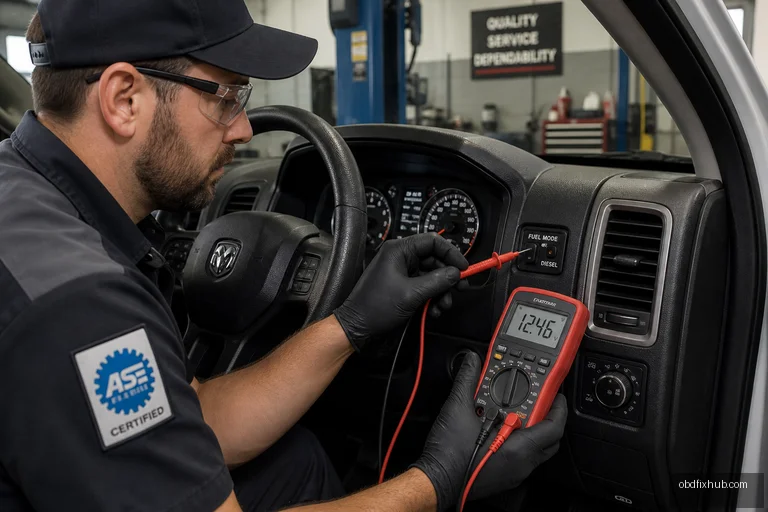
P25A4 Fuel Mode Selection Switch Circuit: Meaning, Causes, Symptoms & Fix
P25A4 Fuel Mode Selection Switch Circuit means the vehicle’s control module has detected an electrical problem in the circuit used to select or report a fuel mode. Depending on the make and model, this may involve a fuel-type selector, an alternative-fuel control switch, or a manufacturer-specific input monitored by the PCM. The code does not automatically mean the fuel pump or fuel injectors have failed.
This is an information-first diagnostic issue: the correct repair depends on the vehicle’s wiring diagram, the switch design, and live data from a scan tool. A careful circuit test is far more reliable than replacing parts based only on the code description.
What Does P25A4 Mean?
OBD-II code P25A4 is generally defined as Fuel Mode Selection Switch Circuit. The powertrain control module (PCM), engine control module (ECM), or a related controller is checking an input circuit that indicates which fuel mode the driver or vehicle system has selected. When the voltage is missing, implausible, stuck, or outside the expected range, the module stores P25A4.
Not every vehicle uses this circuit in exactly the same way. On one model, it may be a physical dashboard switch. On another, it may be part of an alternative-fuel system, a fuel-mode control module, or a resistor-based selector with several voltage positions. Always confirm the definition and test values in the service information for the specific vehicle.
Common Causes of P25A4
- Failed fuel mode selection switch or selector assembly
- Open, shorted, or high-resistance wiring in the switch circuit
- Loose, bent, corroded, or moisture-damaged connector terminals
- Blown fuse or loss of the switch’s reference voltage or ground
- Incorrect switch installation after dashboard or fuel-system work
- Damaged harness rubbing against a bracket, engine component, or body panel
- Faulty fuel-mode control module or communication problem between modules
- Rarely, a PCM or ECM fault after the power, ground, and signal circuits have been proven good
A common mistake is assuming that a recently replaced battery caused the code directly. Battery replacement can expose a weak connector, disturb a harness, or create low-voltage history codes, but P25A4 still requires a circuit-based diagnosis.
Symptoms You May Notice
The symptoms depend on how the manufacturer uses the fuel-mode input. Some vehicles drive normally with only the malfunction indicator lamp illuminated, while others enter a default or restricted fuel strategy.
- Check Engine Light or service warning message
- Difficulty selecting gasoline, alternative fuel, or another available fuel mode
- Reduced engine performance or limited power
- Hard starting, extended cranking, or poor fuel selection during startup
- Rough running, hesitation, or an incorrect fuel mixture
- Inaccurate fuel-mode information on the instrument cluster
- Additional communication, voltage, or fuel-system codes
If the engine is misfiring badly, stalls in traffic, smells strongly of fuel, or will not start, treat the drivability problem as urgent. P25A4 may be part of the fault, but another stored code could identify the immediate cause.
How to Diagnose P25A4 Correctly
1. Verify the code and record freeze-frame data
Use a quality scan tool to read all modules, not just the engine computer. Record the freeze-frame information, battery voltage, engine temperature, selected fuel mode, and any related codes. Clear the code only after recording this information; otherwise, useful evidence may be lost.
2. Check the vehicle-specific wiring diagram
Identify the switch power feed, reference-voltage circuit, signal wire, and ground. Do not assume that every selector uses a simple 12-volt input. Many switches use a 5-volt reference and return different voltage values for each position, so applying battery voltage to the signal wire can damage a control module.
3. Inspect the connector and harness before testing modules
Look for green corrosion, pushed-back terminals, water tracks, broken locking tabs, and wires stretched tightly near the connector. Gently move the harness while monitoring the scan tool’s switch status or meter reading. A fault that appears only when the harness is moved often points to a broken conductor inside the insulation.
4. Test voltage, ground, and signal under load
A visual inspection is not enough. Check the reference voltage with the circuit connected, perform a voltage-drop test on the ground, and compare each switch position with the manufacturer’s specified range. A circuit can show continuity with an ohmmeter yet fail under load because of corrosion or a partially broken wire.
5. Compare the physical switch with scan-tool data
Change the selector through every available position and observe the corresponding data parameter. If the switch position changes mechanically but the scan tool shows no change, test the signal circuit between the switch and the control module. If the scan data changes incorrectly, the switch, its calibration, or the reference circuit may be at fault.
6. Check for software and module-related issues
Only after wiring and switch tests pass should you investigate module software updates, configuration errors, or a failed control module. Manufacturer technical service bulletins may describe known harness routing problems or calibration updates for a particular model.
Repair Options for P25A4
The repair should match the failed part rather than the code itself. Typical fixes include replacing the selection switch, repairing a broken signal wire, tightening a loose terminal, cleaning and sealing a corroded connector, or replacing a blown fuse after finding the reason it failed.
If a harness has rubbed through near the steering column, transmission tunnel, or fuel-system components, repair it with the correct automotive wire, sealed splices, and proper loom protection. Twisting wires together and covering them with ordinary household tape may create a temporary connection but often allows moisture and vibration to bring the fault back.
When the selector is part of an alternative-fuel system, use components approved for that system. Fuel-mode controls can affect injector strategy, fuel composition calculations, and safety logic. After repair, clear all codes, cycle through each fuel mode, road-test the vehicle, and rescan for returning faults.
Can You Drive With P25A4?
If the vehicle starts, runs smoothly, and has no fuel smell or severe loss of power, a short drive to a repair facility is often possible. However, the selected fuel mode may be incorrect, and continued driving can produce poor running or additional emissions-related problems.
Stop driving and arrange professional diagnosis if the vehicle stalls, misfires, runs extremely rich or lean, shows a flashing Check Engine Light, or has a fuel leak. The code itself is an electrical fault, but the system it controls can influence engine operation.
Practical Diagnostic Tips From the Workshop
- Do not replace the fuel pump simply because the word “fuel” appears in the code.
- Check related codes first; a low-voltage or module-communication fault may be the primary problem.
- Use a wiring diagram and pin numbers, not connector color alone.
- Measure voltage with the connector plugged in when possible; unloaded readings can be misleading.
- After connector repair, confirm terminal tension with the correct test probe rather than forcing a large meter lead into the terminal.
Summary: The Best Next Step
P25A4 identifies a problem in the fuel mode selection switch circuit, but the exact failed component varies by vehicle. Start with a full module scan, inspect the connector and harness, verify reference voltage and ground, then compare switch positions with live data. This sequence prevents unnecessary parts replacement and usually separates a simple wiring repair from a genuine switch or module fault.
If you have the code, vehicle year, make, model, engine, and any additional codes, use those details when consulting a repair manual or technician. They determine the correct circuit pinout, voltage range, and repair procedure.
Frequently Asked Questions
Is P25A4 a serious code?
It can be minor when the vehicle drives normally, but it may affect fuel-mode selection and engine operation. A flashing warning light, stalling, severe misfire, or fuel smell makes the problem urgent.
Can a bad battery cause P25A4?
Low system voltage can trigger inaccurate switch readings or related communication faults. Test battery and charging voltage, but do not assume the battery is the only cause without checking the switch circuit.
Will replacing the fuel mode switch fix P25A4?
Only if the switch has failed. Corroded connectors, damaged wiring, poor ground, and missing reference voltage are also common possibilities, so the circuit should be tested before replacement.
Can I clear P25A4 without repairing it?
You can erase the code with a scan tool, but it will return if the fault remains. Clearing it also removes useful diagnostic data and does not repair the underlying circuit.
Does P25A4 mean the fuel pump is bad?
No. P25A4 refers to the fuel mode selection switch circuit, not directly to fuel-pump pressure or pump operation. A separate fuel-pressure test and related codes are needed to diagnose the pump.




