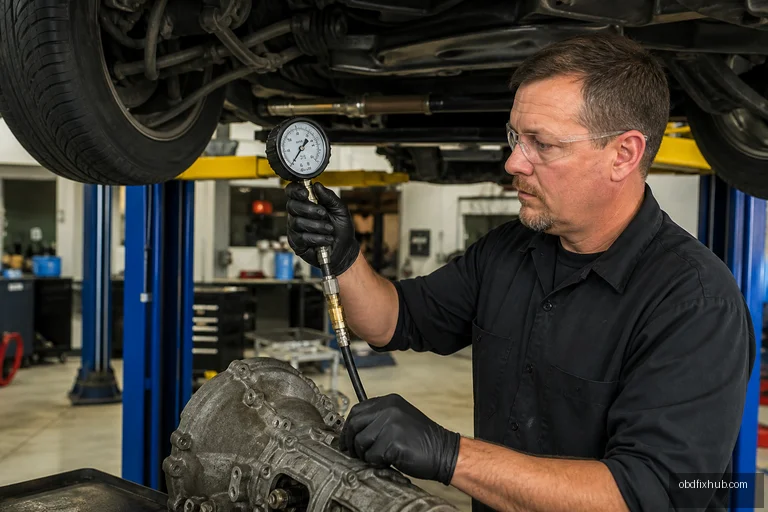
P2855 Clutch Pressure Charge Performance means the transmission control module has detected that a clutch hydraulic circuit is not building, holding, or releasing pressure as expected. The fault may be caused by low or contaminated transmission fluid, a failing pressure-control solenoid, wiring damage, valve-body wear, or internal clutch damage. Because the exact clutch designation and test values vary by vehicle, P2855 should be diagnosed with manufacturer-specific service data rather than by replacing parts at random.
What Does P2855 Clutch Pressure Charge Performance Mean?
Automatic transmissions use pressurized transmission fluid to apply clutch packs and select gears. During a clutch “charge” event, the transmission fills a hydraulic circuit before applying the clutch fully. The TCM monitors pressure response through calculated values, pressure sensors, solenoid feedback, engine speed changes, and transmission input or output speed.
When the module commands pressure but the circuit fills too slowly, leaks internally, fails to reach the expected pressure, or reacts inconsistently, it can store P2855. Some manufacturers describe this as Clutch A Pressure Charge Performance, while others use slightly different wording. Always confirm the official definition for the vehicle identification number, transmission model, and software calibration.
Common Symptoms of P2855
The symptoms depend on which clutch is involved and whether the problem is electrical, hydraulic, or mechanical. A vehicle may still drive normally at first, especially when the fault occurs only after the transmission warms up.
- Illuminated Check Engine or transmission warning light
- Harsh, delayed, or slipping gear changes
- A flare in engine RPM during an upshift
- Delayed engagement when selecting Drive or Reverse
- Reduced-power or limp-home mode
- Transmission stuck in one gear
- Burning fluid odor or dark transmission fluid
- Additional pressure-control or gear-ratio fault codes
A useful practical clue is temperature dependence. If the transmission shifts acceptably when cold but begins slipping after 20–30 minutes, fluid viscosity, a worn valve body, or an internal seal leak becomes more likely. A purely electrical solenoid or wiring fault can occur at any temperature, although heat-related resistance changes can also expose an intermittent circuit.
What Causes P2855?
1. Low, incorrect, or degraded transmission fluid
Low fluid can allow the pump to draw air, reducing clutch charge pressure. Old fluid may contain clutch material that restricts small solenoid screens or valve-body passages. Using the wrong fluid is equally serious; friction characteristics and viscosity directly affect clutch fill time and apply pressure.
2. Faulty pressure-control solenoid
The solenoid may be electrically open, shorted, mechanically stuck, or slow to respond. A solenoid can pass a basic resistance test and still fail hydraulically because of contamination or an internally worn spool. This is why scan-tool command testing and actual pressure testing are more reliable than resistance alone.
3. Valve-body wear or hydraulic leakage
Wear in a valve bore can let pressurized fluid escape instead of reaching the clutch piston. The result is often a delayed clutch application, pressure instability, or a code that returns only under specific load conditions. A valve body that looks clean externally may still have precision wear inside its control bores.
4. Damaged wiring, connectors, or grounds
Transmission connectors are exposed to heat, fluid, vibration, and road contamination. Check for pushed-back terminals, green corrosion, fluid inside the connector, damaged insulation, and poor power or ground supply. Harness movement during a wiggle test can reveal an intermittent fault that a stationary inspection misses.
5. Internal clutch or seal damage
Worn friction plates, a damaged clutch piston seal, a cracked drum, or a failed snap ring can prevent the clutch from applying correctly even when commanded pressure is present. Metal or excessive friction material in the pan raises the likelihood of internal transmission damage rather than a simple solenoid repair.
How to Diagnose P2855 Correctly
- Record all codes and freeze-frame data. Note vehicle speed, commanded gear, transmission temperature, pressure command, and whether the code is current or pending.
- Verify the fluid level and specification. Follow the exact temperature and leveling procedure. Many units must be checked at a specified fluid temperature, not with a cold dipstick reading.
- Inspect the electrical circuit. Test solenoid power, ground, control wiring, connector fit, and continuity while flexing the harness. Compare measurements with the factory service manual.
- Use a capable scan tool. Review commanded and actual pressure, clutch slip speed, solenoid current, adaptation values, and transmission temperature. A generic code reader usually cannot display enough data.
- Perform a hydraulic pressure test. Connect the correct gauge to the specified test port and compare readings during clutch apply, gear changes, and stall or load conditions approved by the manufacturer.
- Check for mechanical evidence. Inspect the pan and magnet for debris. Burnt fluid, heavy clutch material, or metal particles may justify internal inspection before installing a valve body or solenoid.
Do not clear the code and assume the repair worked. After the cause is corrected, many transmissions require an adaptive relearn or clutch-volume-index reset. The relearn must be performed using the manufacturer’s procedure, with fluid temperature and driving conditions controlled. A transmission that has learned incorrect pressure values may continue to shift poorly even after a good repair.
P2855 Fixes and Repair Options
The correct repair depends on the test results. A low-fluid condition may require leak repair and a fluid service, but simply topping off fluid will not fix a damaged seal or leaking cooler line. If the solenoid is faulty, replacing the individual solenoid or the valve-body assembly may be appropriate, depending on the transmission design and available parts.
- Repair fluid leaks and refill with the exact approved fluid.
- Repair damaged wiring, terminals, grounds, or connectors.
- Replace a failed pressure-control solenoid or solenoid pack.
- Recondition or replace a worn valve body.
- Rebuild or replace the transmission when clutch packs, drums, pistons, or seals are damaged.
- Complete software updates and adaptive relearn procedures when specified.
Transmission additives are not a dependable fix for P2855. They may temporarily alter fluid viscosity, but they cannot restore a worn valve bore, repair a leaking piston seal, or replace burned clutch material. Continuing to drive while the clutch is slipping can turn a manageable hydraulic repair into a complete transmission rebuild.
Can You Drive With P2855?
Short-distance driving may be possible if the vehicle shifts normally and the fluid level is correct, but it is not risk-free. Avoid towing, steep hills, hard acceleration, and long trips until the fault is diagnosed. Stop driving if the transmission slips badly, refuses to engage, produces a burning smell, or enters limp mode in traffic.
Key Takeaway
P2855 is a performance fault, not a diagnosis of one specific failed component. Start with fluid condition, scan data, wiring, and commanded-versus-actual pressure before deciding between a solenoid, valve-body, or transmission repair. A transmission specialist with a bidirectional scan tool and hydraulic pressure gauge can usually separate an electrical problem from an internal failure far more accurately than code clearing or parts swapping.
Frequently Asked Questions
Is P2855 a serious transmission code?
It can be serious because continued clutch slip creates heat and friction debris. The urgency depends on the symptoms, fluid condition, and whether the code is active or intermittent, but it should not be ignored.
Can low transmission fluid cause P2855?
Yes. Low fluid can reduce pump supply and prevent the clutch circuit from charging correctly. Check for leaks and use the vehicle’s specified temperature-based level procedure before adding fluid.
Does P2855 always mean the transmission must be rebuilt?
No. Wiring faults, a contaminated solenoid, incorrect fluid level, or valve-body problems can cause the code without requiring a complete rebuild. Pressure testing and inspection of the pan help determine the repair scope.
Will clearing P2855 fix the problem?
No. Clearing the code only resets the warning temporarily. If the hydraulic or electrical fault remains, the code will return, often with worsening shift quality or clutch damage.
How much does it cost to repair P2855?
Cost varies widely by vehicle and transmission. A wiring repair or fluid service is usually far less expensive than a valve-body replacement or transmission rebuild, so accurate diagnosis is the most important first step.




