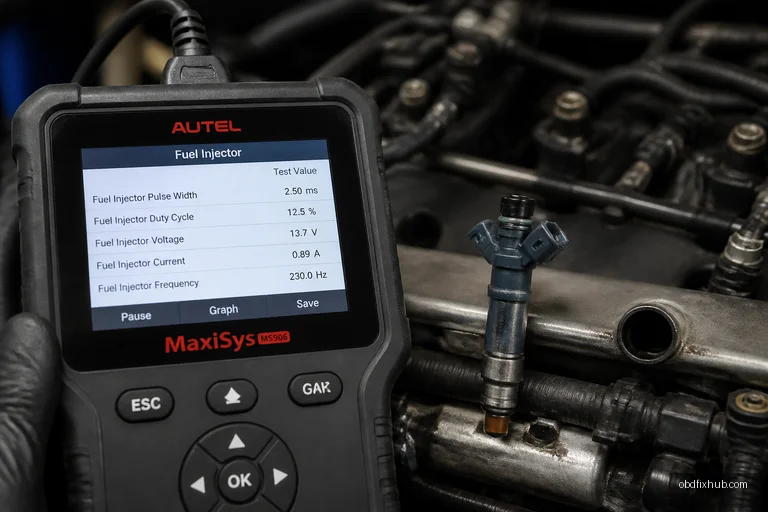
P2B00 Cylinder Injection Pulse Performance means the engine control module has detected that the fuel-injection pulse for cylinder 1 is not performing as expected. In practice, the injector may not be receiving the correct electrical command, may be sticking, or may be delivering an amount of fuel that does not match the ECU’s strategy. The fault is usually diagnosed through injector wiring, fuel pressure, injector operation, and cylinder contribution tests rather than by replacing parts immediately.
What Does P2B00 Cylinder Injection Pulse Performance Mean?
The P2B00 code is associated with the injector pulse performance of cylinder 1. An injector pulse is the electrical command that tells an injector when to open and how long to remain open. The engine computer constantly adjusts this command using crankshaft speed, oxygen sensor feedback, fuel pressure data, temperature, and load.
When the expected response does not match the measured or calculated result, the ECU stores P2B00. The exact wording and monitoring strategy can vary between manufacturers, so the vehicle’s factory service information remains important. On some applications, the code is triggered by an electrical pulse problem; on others, it may reflect an abnormal cylinder contribution caused by poor fuel delivery.
Common Symptoms of P2B00
Some vehicles will still start and drive with this code, while others may run severely rough. The symptoms depend on whether the injector is under-fueling, over-fueling, or failing intermittently.
- Rough idle or noticeable engine vibration
- Engine misfire, hesitation, or poor acceleration
- Hard starting or extended cranking
- Reduced fuel economy
- Loss of power under load
- Black smoke from an over-fueling condition
- White smoke, especially on a diesel engine with unburned fuel
- Illuminated Check Engine light
- Additional misfire, fuel-pressure, or injector circuit codes
A flashing Check Engine light indicates a potentially damaging active misfire. Avoid driving the vehicle hard in that condition because raw fuel can overheat and damage the catalytic converter.
Most Likely Causes of P2B00
1. A defective or sticking fuel injector
The injector on cylinder 1 may be clogged, leaking, electrically open, or mechanically stuck. Deposits can restrict the nozzle, while an internal coil failure can prevent the injector from opening correctly. A leaking injector may create a rich condition, dilute the engine oil, and make the spark plug wet on a gasoline engine.
2. Damaged injector wiring or connectors
Heat, vibration, oil contamination, and previous repairs can damage the injector harness. Look closely for broken wires near the connector, terminals pushed backward inside the plug, green corrosion, or insulation rubbed through against a bracket. An intermittent open circuit may only appear when the engine moves under acceleration.
3. Low system voltage or poor grounds
Injector control depends on stable battery and charging voltage. A weak battery, failing alternator, loose engine ground, or corroded power connection can distort injector operation and create misleading pulse-performance faults. Check voltage during cranking, not only with the engine switched off.
4. Incorrect fuel pressure
A restricted fuel filter, weak pump, faulty pressure regulator, or excessive return flow can make one injector appear to be the problem. On common-rail diesel systems, high-pressure fuel can be dangerous and must be tested with the specified equipment. Never loosen a high-pressure injector line on a running diesel engine.
5. ECU driver or software problem
The injector driver inside the engine control module may be damaged, particularly after a shorted injector or incorrect jump-start. A software calibration issue is less common but possible, especially when the code appears after a control-module replacement or programming event.
6. A mechanical problem in cylinder 1
Low compression, a leaking valve, incorrect valve timing, or a damaged rocker arm can cause a cylinder contribution problem even when the injector is functioning. This is why a good injector waveform does not automatically rule out an engine problem.
How to Diagnose P2B00 Correctly
- Record all codes and freeze-frame data. Note engine temperature, RPM, load, fuel trims, and system voltage when P2B00 was set. Related misfire or fuel-pressure codes can point to the primary fault.
- Confirm the cylinder location. Cylinder 1 is not positioned identically on every engine. Use the manufacturer’s cylinder numbering diagram rather than assuming it is always nearest the timing belt or front of the engine.
- Inspect the injector connector and harness. Perform a gentle wiggle test while monitoring the scan tool or scope. Do not stretch the wiring or probe sealed connectors in a way that spreads the terminals.
- Check power, ground, and control pulses. A multimeter can identify an open circuit, but an oscilloscope or suitable current probe provides much better information about injector pulse width, peak current, and coil operation. A basic noid light may confirm switching on some port-injection systems, but it cannot prove correct fuel delivery.
- Compare cylinder 1 with a known-good cylinder. Comparing injector resistance, voltage drop, current ramp, and waveform shape is often more useful than relying on a generic resistance specification. The exact resistance varies by injector design and temperature.
- Test fuel pressure and injector balance. A balance test can reveal whether cylinder 1 delivers noticeably more or less fuel than the others. On some vehicles, an injector cutout or contribution test can be performed with a professional scan tool.
- Check mechanical condition if the injector passes. Perform compression, leak-down, valve-train, and timing checks when the electrical and fuel tests do not explain the fault.
How to Fix P2B00
The correct repair depends on the failed test. If the injector is clogged but electrically sound, professional ultrasonic cleaning or replacement may solve the problem. If it leaks, has an incorrect flow rate, or fails an electrical test, replacement is normally the reliable option.
- Repair damaged wiring using the correct automotive-grade wire and sealed connections.
- Replace corroded or loose injector terminals instead of merely spraying contact cleaner.
- Correct low charging voltage, poor grounds, or fuel-pressure problems first.
- Install the correct injector for the engine, including the required flow rating or calibration code.
- On many diesel engines, enter the injector correction code into the ECU after replacement.
- Replace engine oil if fuel dilution is suspected from a leaking injector.
- Repair compression, valve, or timing faults before condemning the ECU.
After the repair, clear the code and complete the manufacturer’s specified drive cycle. Recheck misfire counters, fuel trims, rail pressure, and cylinder contribution data. A code that returns immediately during a stationary test suggests an electrical or control problem; a code that returns only under load may point more strongly toward fuel supply, injector flow, or compression.
Can You Drive With P2B00?
Short-distance driving may be possible if the engine runs smoothly and the Check Engine light is steady, but continued operation is not advisable until the cause is known. A rich injector can damage the catalytic converter and contaminate the oil, while a lean or dead cylinder can raise combustion temperatures and increase engine stress. Stop driving and arrange diagnosis if the light flashes, the engine shakes badly, or oil level rises unexpectedly.
A Practical Diagnostic Tip
Do not move the cylinder 1 injector to another cylinder as your first step unless the service procedure allows it and you can safely reseal the system. On many modern engines, injector coding, high-pressure sealing, or access procedures make this test unsuitable. A waveform comparison and cylinder contribution test often delivers the same evidence without creating a second leak or installation problem.
Summary
P2B00 points to abnormal injector pulse performance on cylinder 1, but it does not prove that the injector itself is bad. Start with the complete code set, cylinder identification, wiring, voltage, and fuel-pressure checks. Then compare injector operation with a known-good cylinder and test compression if the fuel and electrical systems pass. This method avoids unnecessary injector or ECU replacement and leads to a dependable repair.
Frequently Asked Questions
Is P2B00 the same as a cylinder 1 misfire code?
No. A misfire code such as P0301 identifies combustion irregularity, while P2B00 focuses on injector pulse performance. They can appear together, but a mechanical or ignition fault may also cause the misfire.
Can bad fuel cause P2B00?
Contaminated fuel, water, or severe deposits can restrict injector flow and contribute to the code. However, bad fuel should be confirmed through fuel sampling and injector testing rather than assumed from the code alone.
Does replacing the injector always fix P2B00?
No. Damaged wiring, incorrect fuel pressure, low system voltage, compression loss, or an ECU driver fault can produce the same code. Test the circuit and compare injector operation before installing a replacement.
What should I do if P2B00 returns after an injector replacement?
Verify the injector part number, coding procedure, connector fit, fuel pressure, and control waveform. If those are correct, perform a compression or leak-down test and check the ECU driver under the conditions that set the code.




