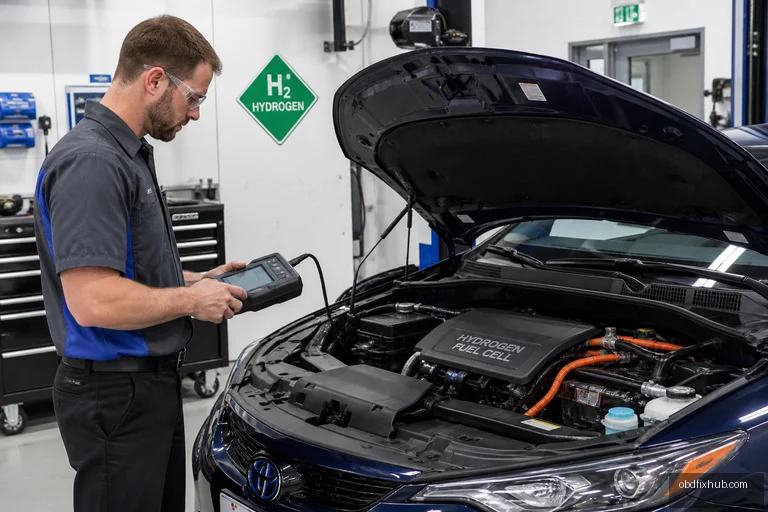
P2BB0 Alternative Fuel Consumption Too Low means the vehicle’s powertrain control system has detected that the engine or hybrid system is using less alternative fuel than expected. The code is usually related to a vehicle designed to run on a non-traditional fuel, such as CNG, LPG, ethanol, or another manufacturer-specific alternative-fuel system. It does not automatically mean the fuel pump is defective; the control module must compare commanded fuel use with measured pressure, injector activity, sensor data, and operating conditions.
This is primarily an information and diagnosis issue rather than a code that identifies one guaranteed failed part. Because P2BB0 is manufacturer-dependent, the exact definition, enabling criteria, and repair procedure should always be confirmed with the vehicle’s factory service information.
What Does P2BB0 Mean?
P2BB0 is a powertrain diagnostic trouble code. The “P2” prefix generally places it in the manufacturer-controlled portion of the OBD-II code system, so the meaning can vary between makes, models, fuel systems, and model years. In applications that use an alternative fuel circuit, the engine computer expects a certain amount of fuel consumption under specific load and temperature conditions.
If the measured consumption remains below that expected level, the module stores P2BB0 and may illuminate the check engine light. A low-consumption reading can mean that alternative fuel is not reaching the engine, that the vehicle has switched to gasoline or another backup fuel, or that a sensor is reporting incorrect information.
Common Symptoms of P2BB0
Some vehicles will drive normally when this code is stored, especially if the system automatically changes to a conventional fuel mode. Other vehicles may show clear performance problems because the engine is receiving less fuel than the control module requested.
- Check engine light or hybrid/alternative-fuel warning message
- Reduced power, hesitation, or poor acceleration
- Long cranking or difficult starting
- Automatic switching from alternative fuel to gasoline
- Irregular idle or engine stalling
- Lower-than-expected fuel-system pressure
- Reduced fuel economy or an unusually full alternative-fuel gauge
- Additional fuel-pressure, injector, mixture, or sensor codes
A useful field clue is the relationship between the warning and fuel mode. If the vehicle runs normally on gasoline but immediately loses power or refuses to operate on CNG or LPG, the problem is more likely in the alternative-fuel delivery system than in the basic engine.
P2BB0 Alternative Fuel Consumption Too Low: Most Likely Causes
1. Low fuel pressure or restricted fuel flow
A nearly empty tank, closed service valve, restricted filter, damaged line, frozen regulator, or failing pressure regulator can prevent the required fuel volume from reaching the injectors. On gaseous-fuel vehicles, pressure should be checked at the correct test points and under operating load, not only with the engine idling.
2. Alternative-fuel injector problems
An injector may be clogged, electrically open, mechanically stuck, or receiving an incorrect pulse command. A useful diagnostic comparison is injector balance or cylinder contribution testing. If one cylinder contributes substantially less when the system is operating on alternative fuel, do not assume the entire fuel rail is faulty.
3. Incorrect pressure, temperature, or fuel-composition data
The control module calculates fuel quantity from sensor inputs. A biased rail-pressure sensor, inaccurate gas-temperature sensor, faulty tank-pressure sensor, or incorrect fuel-composition signal can make actual consumption appear too low. A scan tool should be used to compare live data with a mechanical pressure gauge and, where appropriate, an independent temperature measurement.
4. Fuel-system leakage or a safety shutoff issue
A leak, shutoff solenoid that does not open fully, wiring problem, or crash-safety isolation event can interrupt alternative-fuel delivery. Never inspect suspected CNG or LPG leaks with a flame. Use approved leak-detection methods and follow the manufacturer’s ventilation and depressurization procedures.
5. Software, calibration, or fuel-mode problems
Some systems record P2BB0 after a failed fuel-mode transition, interrupted adaptation, low battery voltage, or outdated control-module calibration. A vehicle may appear to have low alternative-fuel consumption simply because it is spending most of its time in gasoline mode. Check fuel-mode status, software updates, and related codes before replacing hardware.
How to Diagnose P2BB0 Properly
- Record all codes and freeze-frame data. Note engine speed, load, coolant temperature, fuel mode, rail pressure, and battery voltage when P2BB0 was set. Related codes often identify the real starting point.
- Confirm the complaint. Verify that the tank contains the correct fuel and that the system is actually requesting alternative-fuel operation. A vehicle locked in gasoline mode can set a misleading consumption-related code.
- Inspect the system safely. Look for damaged wiring, loose connectors, corrosion, restricted filters, regulator damage, and signs of leakage. High-pressure gaseous-fuel systems require trained handling.
- Compare commanded and measured pressure. Use scan-tool data alongside the manufacturer-approved pressure test. A pressure reading that drops only during acceleration often points to a restriction or weak regulator rather than a static sensor fault.
- Test injector operation. Check injector resistance, power supply, control pulses, and balance. Do not condemn an injector solely because its resistance is within specification; mechanical flow still needs verification.
- Validate sensor readings. With the vehicle cold and the system at rest, pressure and temperature values should be plausible and consistent with ambient conditions. Implausible readings can expose a sensor or reference-voltage fault.
- Clear the code and perform the correct drive cycle. After repair, confirm alternative-fuel operation under the conditions that originally triggered the fault. A short idle test may not be enough to complete the monitor.
How Is P2BB0 Fixed?
The repair depends on the failed test. A restricted filter may need replacement, while a pressure problem may require a regulator, solenoid, or wiring repair. If an injector or sensor fails testing, replace it with the correct component and perform any required calibration, relearn, or fuel-system adaptation procedure.
On a real-world diagnosis, replacing the fuel pump first is often a mistake. For example, if live data shows that the control module is not commanding alternative-fuel mode, the pump may be perfectly healthy. Finding the mode-transition cause can prevent an expensive and unnecessary fuel-system replacement.
Can You Drive With P2BB0?
Short-distance driving may be possible if the engine runs smoothly and the vehicle has safely switched to its backup fuel. However, avoid continued use if there is a fuel smell, hissing sound, visible damage, severe hesitation, stalling, or a flashing check engine light. CNG and LPG systems operate at high pressure, so suspected leaks require immediate professional inspection rather than repeated starting attempts.
Frequently Asked Questions
Is P2BB0 a serious code?
It can be serious when it involves low fuel pressure, a fuel leak, or an unsafe alternative-fuel system. If the vehicle simply changes to gasoline and runs normally, it may be less urgent, but the underlying fault should still be diagnosed.
Can a low fuel level cause P2BB0?
Yes. If the alternative-fuel tank is nearly empty, the system may not maintain the pressure or flow required by the control module. Confirm the fuel level and tank-pressure data before testing expensive components.
Will clearing P2BB0 fix the problem?
No. Clearing the code only erases the stored fault information. If the pressure, injector, sensor, or fuel-mode problem remains, P2BB0 will return after the monitor runs again.
Can a weak battery trigger P2BB0?
Low system voltage can interrupt solenoid operation, fuel-mode switching, or control-module calculations. Test battery condition and charging voltage, particularly if P2BB0 appeared after a discharged battery or jump-start.
Should I replace the fuel pump immediately?
No. First compare commanded and actual pressure, verify fuel-mode operation, and test the electrical supply. A faulty sensor, restricted filter, regulator, or control signal can produce similar symptoms without a failed pump.
Bottom line: P2BB0 means the vehicle has detected lower-than-expected alternative-fuel consumption, but the code alone does not identify the failed component. Confirm the exact manufacturer definition, check fuel mode and pressure, validate sensor data, and treat any CNG or LPG leak as a safety issue. A measured diagnosis is faster and safer than replacing parts based on the code name alone.




