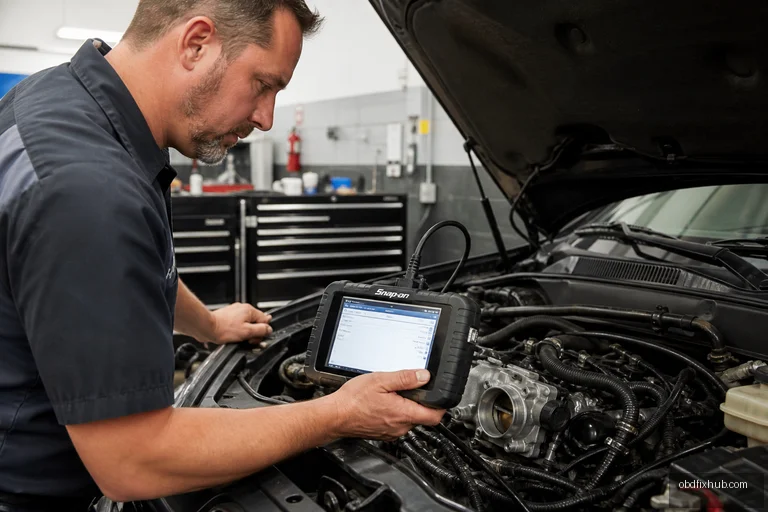
P2C9A throttle actuator learning limit exceeded means the engine computer could not successfully learn or confirm the expected position of an electronic throttle actuator. The problem may be caused by carbon buildup, a sticking throttle plate, low voltage, wiring faults, a failed actuator motor, or a throttle body that was replaced without completing the required relearn procedure. Do not replace the throttle body automatically; a structured diagnosis usually identifies the real cause.
What Does P2C9A Mean?
Modern vehicles use an electronic throttle control system instead of a traditional accelerator cable. The accelerator pedal position sensors send a request to the powertrain control module, or PCM, and the PCM commands a motor inside the throttle body to open or close the throttle plate.
During key-on checks, idle operation, and certain driving conditions, the PCM compares the commanded throttle position with feedback from one or more throttle position sensors. P2C9A is set when the actuator cannot complete its learning process within the permitted range. In some vehicles, the code refers specifically to throttle actuator B, while the exact description and test procedure vary by manufacturer.
This distinction matters. A code reader may display a general P2C9A description, but the manufacturer service manual may identify a particular bank, actuator channel, connector, or software update. Always confirm the vehicle make, model, engine, and factory code definition before ordering parts.
Common Symptoms of P2C9A
Because the throttle controls engine airflow, the PCM may limit engine power when it cannot trust the actuator position. The vehicle can still start in some cases, but it may not respond normally to the accelerator.
- Check Engine Light or electronic throttle warning light
- Reduced-power or limp-home mode
- Delayed, weak, or inconsistent acceleration
- Rough, low, or unstable idle
- Engine stalling when coming to a stop
- Hard starting or a no-start condition
- Throttle response that changes after cycling the ignition
- Additional codes for throttle position, pedal position, airflow, or system voltage
A useful real-world clue is an intermittent fault that appears after a cold start or after the vehicle has been washed. Moisture in the throttle connector, a weak battery during cranking, or a marginal ground can cause a learning failure even when the actuator works normally on a later test.
Most Likely Causes
1. Carbon or varnish around the throttle plate
Deposits around the closed-throttle edge change the amount of air that passes the plate. The actuator may reach its mechanical stop before the PCM sees the expected sensor value, causing the learned limit to be rejected. Heavy buildup is especially common on vehicles with high mileage, oil vapor from the crankcase ventilation system, or frequent short trips.
2. Binding or damaged throttle actuator
The throttle plate should move smoothly without a gritty sensation or a hard spot. A worn gear set, weak motor, bent shaft, or damaged return mechanism can prevent the actuator from reaching its commanded position. Do not force an electronically controlled throttle plate aggressively by hand; some assemblies can be damaged by excessive pressure.
3. Low voltage or poor power and ground connections
Throttle actuators draw significant current during initialization. A weak battery, corroded ground strap, loose battery terminal, or charging problem can interrupt the learning cycle. Check battery voltage during cranking and inspect the engine-to-body ground before condemning an expensive throttle assembly.
4. Wiring, connector, or sensor faults
Water intrusion, pushed-back terminals, oil contamination, and broken wires near the throttle body can produce an unstable position signal. Because many throttle bodies contain dual position sensors, a fault in only one signal circuit can trigger a performance or learning code.
5. Incorrect or incomplete throttle relearn
Some vehicles require an idle learn, throttle valve closed-position learn, accelerator-pedal learn, or scan-tool initialization after battery disconnection or throttle body replacement. The procedure is not universal. A method that works on one vehicle may fail on another, so use the factory procedure rather than relying on a generic internet sequence.
What Happens When the Throttle Body Actuator Is Stuck Closed?
If the throttle actuator is stuck closed, the engine receives very little air. The result can be a crank-no-start condition, a start-and-stall symptom, extremely low idle, or severe hesitation when the accelerator is pressed. The PCM may open the electronic throttle slightly, but it cannot compensate if the plate is physically jammed.
On some vehicles, a small mechanical bypass or idle air strategy allows the engine to run at a low speed. In that situation, the driver may see a warning message and have just enough power to move the vehicle slowly. Avoid driving in traffic if throttle control is unreliable; loss of acceleration can be dangerous.
What Does Sudden High Air Flow Detected Mean?
The message Throttle Actuator Control System – Sudden High Air Flow Detected means the PCM has detected more engine airflow than expected for the commanded throttle position. It does not automatically prove that the throttle actuator itself is defective.
Possible causes include a throttle plate that is stuck open, a vacuum leak, an intake boot that has separated, incorrect throttle relearn values, a malfunctioning mass airflow sensor, or an air leak downstream of the MAF sensor. A contaminated MAF sensor can report airflow incorrectly, while an intake leak can allow unmetered air into the engine and create a similar complaint.
Inspect the intake duct from the air filter housing to the throttle body, including small breather hoses and clamps. A smoke test is often more reliable than visual inspection because small cracks may open only when the engine moves under load.
How to Diagnose and Fix P2C9A
- Record all stored and pending codes. Do not clear the codes before saving freeze-frame data. Battery voltage, engine temperature, and throttle position at the moment of failure can reveal whether the event occurred during startup or driving.
- Test the battery and charging system. Repair low voltage, poor terminals, and bad grounds first. A throttle relearn performed with unstable voltage may fail again.
- Inspect the throttle body and intake system. Look for carbon deposits, a damaged air tube, disconnected hoses, and signs of water or oil in the connector.
- Check throttle movement carefully. With the ignition off and following manufacturer precautions, verify that the plate is not mechanically binding. If cleaning is permitted, use throttle-body cleaner on a suitable cloth and prevent solvent from entering the electronics.
- Test the wiring and sensor signals. Use a wiring diagram and back-probe the circuits. Check for stable reference voltage, sensor ground, actuator power, and continuity while gently moving the harness.
- Perform the correct relearn procedure. Use a capable scan tool when required. Clear the code only after the learned values are successfully completed and confirmed by live data.
- Replace the throttle assembly only when testing supports it. A replacement unit may require programming, an idle learn, or a PCM update. Verify that the part number and calibration match the vehicle.
How Can You Fix P0638?
P0638, commonly described as Throttle Actuator Control Range/Performance Bank 1, indicates that the commanded throttle position and the actual position do not agree within the expected range. On an inline engine, Bank 1 is the only cylinder bank; on a V-type engine, it usually identifies the bank containing cylinder number one.
Start by checking for related codes such as P0121, P0221, P2101, P2119, or low-voltage codes. Repairing a damaged intake hose, cleaning a restricted throttle plate, restoring battery voltage, or repairing a connector may resolve P0638 without replacing the throttle body. If the actuator motor, internal gears, or dual position sensors fail the manufacturer tests, replacement and a required relearn are normally necessary.
Can You Keep Driving With P2C9A?
Only drive far enough to reach a safe location or repair facility if the vehicle has reduced power, unstable idle, or unpredictable throttle response. A vehicle that appears normal after an ignition restart can still lose power again without warning. If the engine stalls, the throttle warning is flashing, or acceleration is severely limited, arrange transport rather than risking a roadside failure.
Final Takeaway
P2C9A is a learning and position-control fault, not a diagnosis that automatically means the throttle body must be replaced. Begin with voltage, grounds, intake leaks, connector condition, carbon buildup, and the correct relearn procedure. If the code returns after those checks, use manufacturer-specific live-data and actuator tests to determine whether the throttle assembly or its wiring has genuinely failed.
Frequently Asked Questions
What are the symptoms of a bad throttle actuator control module?
Typical symptoms include reduced engine power, limp mode, unstable idle, stalling, delayed acceleration, throttle warning lights, and codes related to actuator performance or throttle position. These symptoms can also come from wiring, voltage, or carbon buildup, so testing is essential.
Is P2C9A always caused by a bad throttle body?
No. Low battery voltage, a poor ground, a sticking throttle plate, connector damage, an intake leak, or an incomplete relearn can all set P2C9A. The throttle body should be replaced only after these possibilities have been checked.
Can cleaning the throttle body fix P2C9A?
It can if deposits prevent the plate from reaching its learned closed position. Use the vehicle manufacturer’s cleaning precautions, avoid flooding the electronic section with solvent, and perform the required relearn afterward.
How do I fix P0638 Bank 1?
Inspect the intake and throttle body, test battery voltage and grounds, check actuator wiring and sensor signals, and complete the factory relearn. Replace the throttle assembly only if it fails the specified electrical or mechanical tests.




