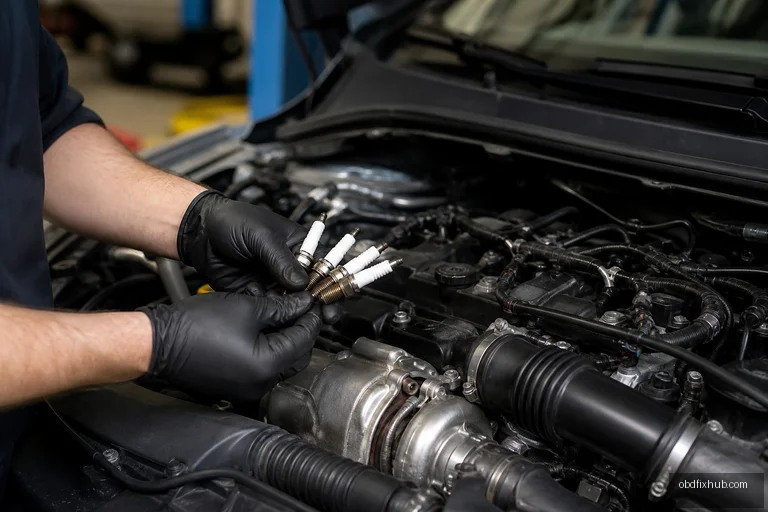
P2D0F Engine Pre-Ignition Above Threshold means the engine computer has detected combustion starting too early or occurring abnormally often enough to exceed its protection limit. This is most common on modern turbocharged gasoline engines operating under high load, and it should not be dismissed as an ordinary check-engine light. Continued severe pre-ignition can damage pistons, spark plugs, connecting rods, and cylinder walls.
What Does P2D0F Mean?
Pre-ignition occurs when the air-fuel mixture begins burning before the spark plug fires. The ignition may be triggered by an overheated spark plug tip, glowing carbon deposits, a hot exhaust valve, or another excessively hot area inside the combustion chamber. The result is uncontrolled cylinder pressure that rises earlier than the engine was designed to handle.
P2D0F is different from a conventional knock code. Knock usually describes abnormal combustion after the spark event, while pre-ignition begins before the scheduled spark. The two can occur together, but the diagnostic strategy is not identical. The exact wording and detection method can vary by manufacturer, so the vehicle’s factory service information should be used alongside a generic scan-tool description.
How Serious Is P2D0F?
The seriousness depends on how often the event occurred and whether the vehicle has related misfire, fuel-pressure, temperature, or turbocharger codes. A single event stored during a poor-quality fuel episode may not have caused permanent damage. Repeated events under boost, however, can break the porcelain on a spark plug, erode a piston crown, or create a hole in the piston.
If the check-engine light is flashing, the engine is knocking loudly, power has dropped sharply, or the oil-pressure warning is also illuminated, stop driving and arrange a proper diagnosis. Do not repeatedly reproduce the fault with hard acceleration just to see whether the code returns.
Common Causes of P2D0F Engine Pre-Ignition Above Threshold
- Low-octane or contaminated fuel: Fuel below the required octane rating increases the risk of abnormal combustion, particularly in a turbocharged engine under boost.
- Excessive combustion-chamber deposits: Carbon can raise the effective compression ratio and create hot spots that ignite the mixture prematurely.
- Incorrect or worn spark plugs: The wrong heat range, excessive gap, damaged insulator, or an over-tightened plug can create a local hot spot.
- Lean air-fuel mixture: A vacuum leak, weak fuel pump, restricted filter, failing injector, or unmetered air can raise combustion temperature.
- Injector problems: A leaking injector can wash down a cylinder and dilute the oil, while a restricted injector can create a dangerously lean cylinder.
- Engine overheating: Low coolant, a thermostat problem, poor radiator airflow, or a cooling-fan fault can increase combustion-chamber temperature.
- Oil entering the combustion chamber: Worn piston rings, a faulty PCV system, turbocharger seal wear, or excessive oil level can promote deposits and pre-ignition.
- Heavy load at low rpm: High gear, low engine speed, and wide throttle create the classic conditions for low-speed pre-ignition, often called LSPI.
- Calibration or software issues: Some vehicles require an engine-control-module update to improve ignition, fueling, or pre-ignition detection logic.
P2D0F Symptoms to Watch For
Pre-ignition is not always audible. In fact, severe cylinder pressure can develop before the driver hears a clear pinging sound. The vehicle may store P2D0F with few noticeable symptoms, especially when the event occurs during a short high-load acceleration.
- Check-engine light, sometimes with reduced-power mode
- Rough running or a brief stumble under acceleration
- Misfire codes such as P0300 or a cylinder-specific P030X code
- Loss of boost or reduced engine performance
- Hard starting, poor fuel economy, or increased oil consumption
- Pinging, rattling, or metallic knocking under load
- Damaged spark-plug electrodes or unusual deposits on one plug
How to Diagnose P2D0F Correctly
Replacing the knock sensor immediately is a common mistake. A sensor may report the event correctly; it does not necessarily cause the pre-ignition. Start with the conditions under which the code was set, then verify the mechanical and fuel systems before condemning an electronic component.
- Read all stored and pending codes. Record freeze-frame data, including engine speed, load, coolant temperature, fuel trims, throttle position, boost pressure, and vehicle speed. Companion codes often identify the real starting point.
- Check the fuel and oil. Confirm the required octane rating, ask whether the vehicle was recently refueled, and inspect the oil level and smell. Oil that smells strongly of gasoline may indicate injector leakage or fuel dilution.
- Inspect the spark plugs. Look for the correct part number, heat range, gap, cracked porcelain, melted electrodes, or one plug that looks different from the others. A single abnormal plug can point to a cylinder-specific fueling or cooling problem.
- Verify fuel delivery. Test low-side and high-side fuel pressure where applicable, check injector balance, and compare short- and long-term fuel trims. A normal average fuel trim does not rule out one lean cylinder.
- Check air, boost, and temperature control. Perform a smoke test for intake leaks, inspect the PCV system, verify intercooler plumbing, and confirm that coolant temperature remains stable under load.
- Assess engine condition. If the code returns, perform compression and leak-down tests. A borescope can reveal piston damage, heavy deposits, or an unusually clean cylinder caused by coolant or fuel entry.
- Check technical service information. Look for software updates, revised spark plugs, updated injectors, or manufacturer-specific procedures for pre-ignition monitoring.
How to Fix P2D0F
The repair must address the cause rather than simply clearing the code. If poor fuel is suspected and no damage is present, refill with the manufacturer-recommended premium fuel and avoid high-load, low-rpm driving until the tank is diluted or consumed. Do not rely on octane booster as a permanent repair.
Replace spark plugs only with the specified type and gap. Repair vacuum or boost leaks, correct cooling-system faults, restore proper fuel pressure, and replace an injector that fails a leak or balance test. If deposits are severe, the appropriate intake-valve or combustion-chamber cleaning method depends on the engine design; indiscriminate chemical treatments can loosen debris or damage emissions components.
When a piston, valve, or cylinder wall is damaged, no sensor replacement or fuel additive will solve the problem. The cylinder head may need to be removed, and the engine may require piston or short-block repair. After the repair, clear the codes only after recording the diagnostic data, then complete a controlled road test while monitoring misfire counters, ignition timing, fuel pressure, coolant temperature, and commanded boost.
Can You Still Drive With P2D0F?
Short, gentle driving to a repair facility may be reasonable when the engine runs smoothly, the light is steady, temperatures are normal, and there are no severe companion codes. Avoid towing, wide-open throttle, high boost, steep hills, and lugging the engine in a high gear. Stop immediately if the light flashes, the engine knocks, or the vehicle develops major power loss or smoke.
Key Takeaway
P2D0F is a warning that abnormal combustion has crossed the engine manufacturer’s acceptable threshold. Begin with fuel quality, operating conditions, spark plugs, deposits, fueling, cooling, and boost-system checks; then confirm engine health before replacing sensors. Prompt diagnosis is far less expensive than repairing a piston damaged by repeated pre-ignition.
Frequently Asked Questions
Is P2D0F the same as an engine knock code?
No. P2D0F refers to pre-ignition, which starts before the normal spark event. Knock generally describes abnormal combustion after ignition, although both conditions can produce similar symptoms and may occur together.
Can bad gasoline cause P2D0F?
Yes. Low-octane, contaminated, or incorrect fuel can increase combustion instability and trigger the code, particularly under turbo boost. Fuel quality should be considered, but recurring P2D0F still requires checks for mechanical and fueling faults.
Will changing the spark plugs fix P2D0F?
It can fix the problem when the plugs are incorrect, overheated, worn, or damaged. However, new plugs will not correct a lean injector, overheating engine, excessive deposits, fuel dilution, or piston damage.
Is it safe to clear P2D0F and keep driving?
Clearing the code without diagnosing the cause is risky. If pre-ignition returns under load, engine damage may occur quickly. Drive gently only when the engine is stable and arrange testing as soon as possible.




