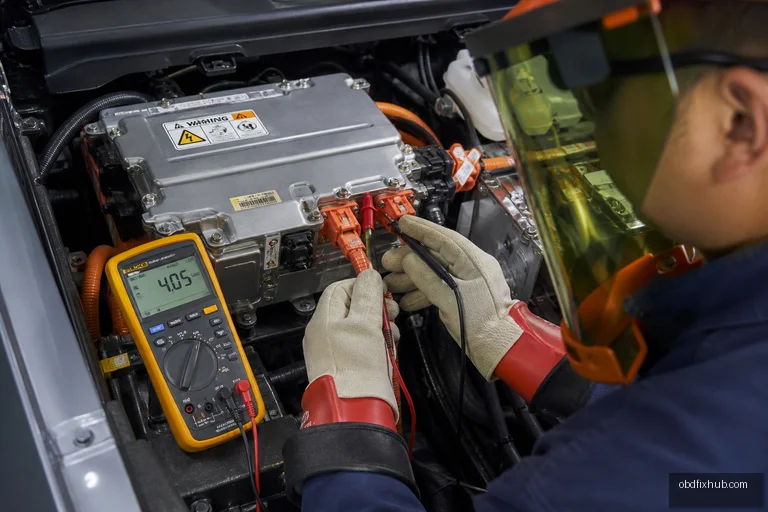
P2EA7 means the vehicle has detected insufficient input voltage at DC/AC Converter A, commonly called the inverter. On a hybrid or electric vehicle, this can prevent the traction motor, electric A/C compressor, or other high-voltage loads from operating correctly. The fault may be caused by a weak high-voltage battery, a wiring or connector problem, a failed contactor, excessive voltage drop, or an internal inverter fault—not necessarily a bad inverter.
This is primarily an informational troubleshooting search: the correct first step is to identify where the voltage is being lost before purchasing expensive parts. Because the circuit can carry lethal high voltage, measurements inside the traction-battery or inverter circuit should be performed only with the manufacturer’s procedures and properly rated equipment.
What Does P2EA7 Mean?
P2EA7 is generally defined as “DC/AC Converter A Input Voltage Too Low.” The exact wording and test conditions vary by manufacturer, so the vehicle make, model, model year, and supporting codes matter. A scan tool may display the code in a hybrid control module, power inverter module, battery-energy-control module, or another manufacturer-specific controller.
The DC/AC converter changes direct current from the high-voltage battery into alternating current for the traction motor. In many vehicles, the inverter also contains power electronics for regenerative braking and may be closely integrated with the electric motor control system. “Converter A” identifies a particular monitored converter or channel; it does not automatically mean there are multiple replaceable inverter units.
Common Symptoms of P2EA7
The vehicle may still start and drive when the code first appears, but reduced-power operation is common. Some vehicles will disable the READY mode or shut down high-voltage accessories to protect the battery and inverter.
- Check Hybrid System, EV System, or Powertrain warning message
- Reduced acceleration or a “limp-home” driving mode
- Vehicle will not enter READY mode
- Electric A/C or heat stops working
- Intermittent loss of propulsion after heavy acceleration
- Unusual inverter cooling-fan operation or overheating warnings
- Multiple low-voltage, communication, or high-voltage isolation codes
- 12-volt battery going flat because the high-voltage system will not maintain it
A useful diagnostic clue is timing. If P2EA7 appears after a discharged 12-volt battery, jump-start, collision repair, water intrusion, or recent inverter work, inspect power supply and connectors before condemning the traction battery.
Most Likely Causes of P2EA7
1. Weak or discharged high-voltage battery
A high-voltage battery with low state of charge, damaged cells, or excessive internal resistance may sag below the inverter’s permitted input range under load. A battery can show an acceptable resting voltage yet fail when the vehicle requests substantial current. Battery imbalance codes or block-voltage deviation codes often support this diagnosis.
2. High-resistance connection or damaged cable
Loose high-voltage terminals, corroded busbar connections, damaged orange cables, poor grounds, or a partially seated service disconnect can create voltage drop. The inverter may receive significantly less voltage than the battery produces, especially during acceleration. Heat discoloration near a terminal is an important warning sign.
3. Contactors not closing correctly
The battery contactors connect the high-voltage battery to the vehicle. If a contactor fails to close, opens under load, or its precharge circuit does not operate correctly, the inverter input voltage may remain too low. Related codes may reference precharge failure, high-voltage interlock, or contactor performance.
4. High-voltage interlock or service-plug problem
The high-voltage interlock loop confirms that covers, connectors, and service plugs are secured. An open interlock can stop the system from applying full battery voltage even when the battery itself is healthy. Recent battery, cooling-system, or collision repairs make this possibility more likely.
5. Low 12-volt system voltage
The 12-volt battery does not normally power the traction motor, but it controls relays, computers, contactors, and communication networks. If its voltage drops during startup, the contactors may fail to close or modules may report misleading inverter faults. Test the 12-volt battery under load and check charging voltage rather than relying on an open-circuit reading alone.
6. Inverter or power-control-module failure
An internal failure in the inverter’s input stage, bus capacitors, sensors, or control electronics can produce P2EA7. This becomes more credible when battery voltage is correct, cable voltage drop is within specification, contactor operation is confirmed, and manufacturer-specific inverter codes are present.
How to Diagnose P2EA7 Safely
Do not probe orange high-voltage cables with an ordinary multimeter. The battery and inverter may remain energized after the ignition is switched off. Follow the factory shutdown and wait-time procedure, use insulated high-voltage gloves and a CAT-rated meter where required, and leave internal high-voltage testing to a qualified hybrid/EV technician.
- Record every code and freeze-frame detail. Note battery state of charge, vehicle speed, inverter temperature, and whether the code is current or history. Do not erase codes before saving this information.
- Check the 12-volt battery first. Confirm resting voltage, loaded voltage, terminal condition, and DC-DC charging output. A weak auxiliary battery can create several secondary faults.
- Inspect visible wiring and connectors. Look for crushed orange cables, water entry, corrosion, loose covers, damaged shielding, and signs of overheating. Never reconnect a damaged high-voltage connector casually.
- Check related manufacturer data. Compare commanded and actual battery voltage, contactor status, precharge voltage, inverter input voltage, and high-voltage interlock status using a capable scan tool.
- Perform a voltage-drop test under the specified load. A static voltage check may miss a connection that fails only during motor demand. Use the manufacturer’s test points and limits.
- Test the battery and inverter only after upstream checks pass. If the battery delivers correct voltage to the inverter and the inverter reports low input internally, the power-control unit may require professional repair or replacement.
How to Fix P2EA7
The repair depends on the failed section. A discharged 12-volt battery may need replacement and a system initialization procedure. A loose connector, damaged interlock, or corroded terminal may require repair using the manufacturer’s specified parts and torque values. If the high-voltage battery has weak cells, module repair or complete battery replacement may be necessary.
When a contactor or precharge circuit fails, replacing the inverter alone will not solve the problem. Likewise, installing a used inverter without checking software compatibility, coolant flow, isolation resistance, and calibration can leave the vehicle inoperative. Some vehicles require inverter programming, resolver calibration, coolant bleeding, or a battery-management reset after repair.
Can You Drive With P2EA7?
Do not assume it is safe simply because the vehicle still moves. If the warning light is flashing, propulsion is reduced, the vehicle will not enter READY, the inverter is overheating, or high-voltage battery warnings are present, stop driving and arrange transport. Continued operation under low-voltage or unstable-voltage conditions can damage power electronics and leave the vehicle without propulsion.
If the code appeared once after a weak 12-volt battery and the vehicle operates normally, a technician can test the system and monitor whether the code returns. Clearing P2EA7 without identifying the cause is not a repair; it can also erase useful diagnostic evidence.
Key Takeaway
P2EA7 indicates that DC/AC Converter A is seeing less input voltage than expected. Start with the 12-volt supply, scan data, contactor and interlock status, battery condition, and voltage-drop testing. Because this fault involves a high-voltage propulsion system, use a qualified hybrid/EV technician for orange-cable and inverter testing, and do not replace the inverter until the power source and wiring have been proven reliable.
Frequently Asked Questions
Is P2EA7 always caused by a bad inverter?
No. A weak high-voltage battery, failed contactor, open interlock, poor connector, damaged cable, or low 12-volt battery can all produce the same code. The inverter should be condemned only after supply voltage and voltage drop are verified.
Can a weak 12-volt battery cause P2EA7?
Yes. The 12-volt system controls the computers and high-voltage contactors. Low voltage during startup can prevent the contactors from closing correctly and trigger an inverter input-voltage fault.
Will disconnecting the battery clear P2EA7?
It may erase temporary fault information or reset some modules, but it does not correct the underlying problem. The code will normally return if the voltage condition remains.
Is it safe to test the inverter at home?
Basic visual inspection and 12-volt battery testing may be reasonable for a competent owner. Testing orange high-voltage circuits requires EV-rated tools, protective equipment, and manufacturer-specific procedures; otherwise, have the vehicle inspected professionally.
What other codes may appear with P2EA7?
Depending on the vehicle, related codes may involve battery voltage imbalance, contactors, precharge, high-voltage interlock, isolation resistance, DC-DC charging, communication, or inverter temperature. Their presence can identify whether the source is the battery, wiring, control system, or converter.




