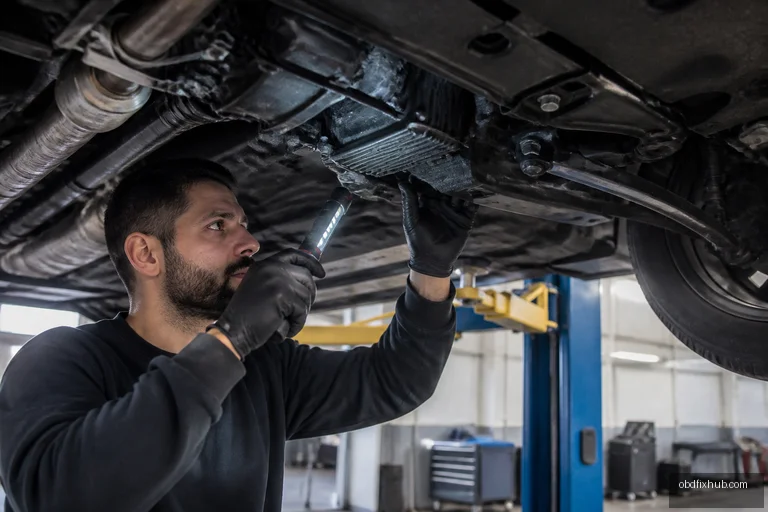
U0134 Lost Communication With Rear Power Steering Module means another control module cannot exchange data with the rear power steering control module over the vehicle’s CAN network. The fault may be caused by a blown fuse, poor power or ground, damaged wiring, water intrusion, low battery voltage, a CAN-bus problem, or a failed steering module. Because the exact design varies by vehicle, the code should be diagnosed with a full-system scan and the manufacturer’s wiring diagram—not by replacing the module immediately.
What Does the U0134 Code Mean?
U0134 is a network communication trouble code. More specifically, it indicates that the vehicle has stopped receiving expected messages from the rear power steering control module. On vehicles equipped with rear-wheel steering, this module controls or coordinates the electric actuator that changes the angle of the rear wheels.
This is not the same as a basic front electric power steering fault. Some vehicles use rear steering to improve low-speed maneuverability and high-speed stability, while others integrate it with active chassis control. The module may be installed near the rear axle, inside the trunk, or beneath the vehicle, so its exposure to road spray and corrosion is an important diagnostic clue.
Common Symptoms of U0134
The symptoms depend on whether the vehicle can safely operate with the rear steering system disabled. A communication failure may produce a warning even when the steering hardware itself is mechanically sound.
- “Rear steering unavailable,” “Check steering,” or chassis-control warning messages
- An illuminated ABS, ESC, traction control, or power steering warning lamp
- Reduced or disabled rear-wheel steering assistance
- Heavier steering or a noticeably different turning radius at low speed
- Less stable lane changes or unusual handling at highway speed
- Several related communication codes stored in other modules
- A steering module that will not respond to a scan tool
One useful distinction is whether the code is current or stored. If U0134 appears only as a history code after a weak battery or jump-start, the system may be operating normally now. If it returns immediately as a current code and the rear steering module cannot be identified by the scanner, the fault is active.
Most Likely Causes of U0134
- Low system voltage: A weak battery, poor battery terminal, or charging problem can cause a module to shut down or reset.
- Blown fuse or relay: The rear steering module may have a separate ignition and battery feed. One missing power supply is enough to create a no-communication condition.
- Bad ground: Corrosion at a chassis ground can allow a module to power up intermittently but prevent reliable CAN communication.
- Damaged CAN wiring: Open circuits, shorted CAN-H/CAN-L wires, crushed harnesses, or incorrect resistance can interrupt network traffic.
- Corroded or loose connectors: Rear-mounted connectors commonly suffer from water, salt, mud, and impact damage.
- Failed rear power steering control module: Internal electronics can fail after water intrusion, overheating, an overvoltage event, or actuator damage.
- Software or configuration issue: A replacement module may need programming, calibration, or vehicle configuration before it can communicate correctly.
How to Diagnose U0134 Correctly
A professional diagnosis starts by identifying the vehicle’s exact equipment. Not every vehicle uses a rear power steering module, and some manufacturers use different terminology for the same system. Record the vehicle identification number, scan all modules, and check technical service bulletins before testing individual components.
1. Check the battery and charging system
Measure battery voltage before chasing network faults. A healthy, fully charged battery is normally close to 12.6 volts with the engine off, while the charging voltage is commonly around 13.5 to 14.8 volts, depending on the vehicle. Do not rely solely on a voltage reading; a battery can show acceptable voltage and still collapse under load.
2. Scan every control module
Use a capable scan tool rather than a basic code reader. Note whether the rear steering module is missing from the network, whether U0134 is current, and which module reported it. If multiple modules show communication errors, the underlying problem may be a shared power supply, gateway, or CAN-bus fault rather than the rear steering module itself.
3. Test power, ground, and fuses under load
Check every fuse listed for the rear steering system, including fuses that supply the module through an ignition circuit. A test light or voltage-drop test under load is more useful than simply looking at a fuse. With the connector attached, voltage drop between the module ground and battery negative should remain very low; significant drop indicates resistance in the ground path.
4. Inspect the rear harness and connectors
Look for green corrosion, pushed-back terminals, broken locking tabs, water inside the connector, and wiring rubbed against suspension or exhaust components. Pay special attention to areas where the harness bends near the rear axle. Do not apply grease or straighten terminals before documenting the original condition, because that can hide the cause of an intermittent fault.
5. Check CAN-bus integrity
With the vehicle powered down and the battery isolated according to the service procedure, many high-speed CAN networks measure approximately 60 ohms across CAN-H and CAN-L because two 120-ohm terminating resistors are in parallel. An open circuit, a short, or a reading near 120 ohms can point toward a missing termination or wiring problem. Always follow the manufacturer’s test procedure, because some architectures and gateway systems differ.
How Do You Fix an EPS Problem Causing U0134?
The repair depends on the failed part. A corroded connector may require terminal repair and sealing, while a damaged harness needs proper solderless automotive repair or a replacement section secured away from moving parts. If a fuse repeatedly blows, find the short or overloaded component before installing another fuse.
If the module has correct power, ground, and CAN signals but remains offline, it may need replacement. A new or used module often requires software programming, configuration, zero-point calibration, or rear-wheel-steering alignment. Skipping these procedures can leave warning lights active or cause incorrect rear-wheel steering behavior.
After the repair, clear codes from all relevant modules, perform the specified calibration, and road-test the vehicle in a controlled area. Re-scan after the drive. A successful repair should restore module communication and eliminate related ABS, stability-control, and steering faults—not merely turn off the warning light.
Can You Still Drive With a Power Steering Malfunction?
Sometimes the vehicle will still move normally because the rear wheels remain mechanically centered when the system fails. That does not automatically make it safe to continue driving. Rear steering can affect turning response, stability, and the vehicle’s behavior during emergency maneuvers, especially at highway speed.
- Stop driving and arrange recovery if steering feels unpredictable, the vehicle pulls, or multiple stability warnings are active.
- Avoid high speeds, sharp lane changes, and towing until the system has been diagnosed.
- If the vehicle drives normally and the warning appeared after a low-voltage event, drive only a short distance to a repair facility after checking the owner’s manual.
The owner’s manual and manufacturer service information take priority because some vehicles lock the rear steering in a safe position, while others disable related chassis functions entirely.
U0134 Repair Cost and Practical Advice
The cost can range from a simple battery, fuse, ground, or connector repair to a much more expensive module replacement and programming procedure. Diagnostic labor is often the best investment: replacing an expensive steering module without verifying power and CAN communication is a common and avoidable mistake.
When requesting a repair estimate, ask whether the technician has confirmed module power, ground, network integrity, and calibration requirements. Also ask whether the proposed module is new, remanufactured, or used, and whether programming is included in the quoted price.
Summary: The Right Next Step for U0134
U0134 does not prove that the rear power steering module itself is bad. It proves that communication has been lost, so the correct sequence is to verify battery voltage, scan the entire network, test module power and ground, inspect rear wiring and connectors, and then evaluate CAN-bus signals. Do not clear the code and hope for the best, particularly when steering or stability warnings remain active. If the vehicle’s handling has changed, have it transported to a qualified repair facility.
Frequently Asked Questions
What are the symptoms of a bad power steering control module?
Common symptoms include a steering warning light, reduced steering assistance, an inoperative rear-steering function, unusual handling, and communication codes. However, identical symptoms can result from low voltage, a blown fuse, or damaged wiring.
What does “Power Steering Control Module No Communication” mean?
It means another vehicle module is not receiving expected messages from the power steering controller. The cause may be loss of power or ground, a CAN-bus problem, connector damage, software configuration, or internal module failure.
Can a weak battery cause U0134?
Yes. Low voltage during starting, a failed alternator, or a poor battery connection can make steering and chassis modules reset or drop offline. Confirm battery and charging-system condition before replacing electronic parts.
How do you fix an EPS problem?
Diagnose the electrical supply and communication network first, then repair the wiring, ground, connector, fuse, or module that failed. A replacement steering module may require programming and steering-system calibration before the repair is complete.




