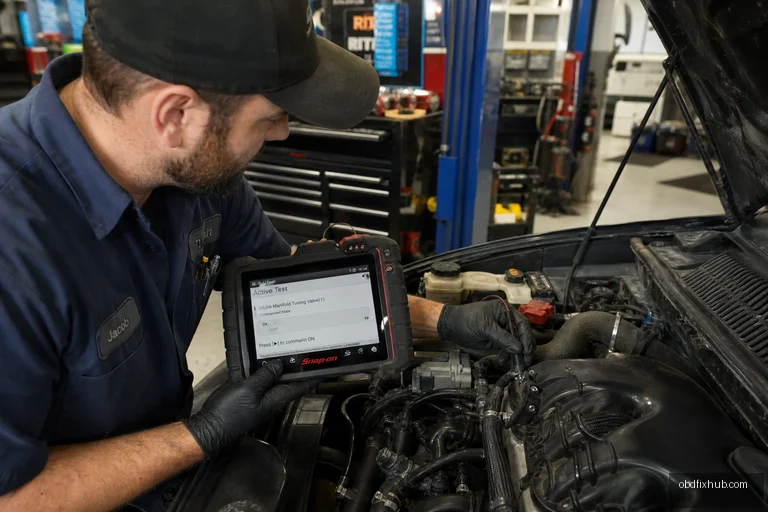
P065E Intake Manifold Tuning Valve Performance means the engine computer has detected that the intake manifold tuning valve is not responding or operating within the expected range. The usual causes are a sticking runner flap, a failed electric or vacuum actuator, damaged wiring, carbon buildup, or an intake leak. You can often drive a short distance if the engine runs normally, but ignoring the fault can cause poor acceleration, reduced fuel economy, and additional intake-system damage.
What Does an Intake Manifold Tuning Valve Do?
An intake manifold tuning valve controls the length or airflow path inside the intake manifold. Many engines use runner flaps, also called intake manifold runner control valves or IMRC valves, to improve air velocity at low engine speed and increase airflow at higher speed. The powertrain control module changes the valve position according to engine speed, load, throttle angle, and temperature.
At low rpm, the valve may narrow or lengthen the airflow path to improve torque and combustion stability. At higher rpm, it may open a larger path so the engine can breathe more freely. The valve itself may be moved by an electric motor, a vacuum diaphragm, or a combination of an actuator and linkage. That design difference matters because a P065E diagnosis on one vehicle may require an electrical test, while another requires vacuum testing and a mechanical inspection.
P065E Symptoms
A vehicle with this code may still start and idle normally, especially if the valve is stuck in a position that the engine can tolerate. Symptoms become more noticeable when the engine needs a change in intake airflow, such as during acceleration or climbing a hill.
- Check Engine Light or Service Engine Soon warning
- Flat or weak acceleration, particularly at low or mid-range rpm
- Reduced fuel economy
- Uneven torque delivery or hesitation when the throttle is opened
- Rough idle or occasional stalling in severe cases
- Reduced engine power or limp-home operation
- Rattling or clicking from the intake manifold actuator area
- Additional codes related to airflow, throttle control, or fuel mixture
A useful real-world clue is a vehicle that feels strong below 2,500 rpm but becomes unusually flat above that point, or the opposite. That pattern can indicate that the runner system is stuck in the wrong position rather than that the engine has a general fuel or ignition problem.
Common Causes of P065E
1. Sticking intake runner or tuning flap
Oil vapor from the crankcase ventilation system mixes with exhaust recirculation deposits and can form carbon around the runner shaft. The actuator may move, but the flap can bind before reaching its commanded position. In some manifolds, the internal shaft or bushings wear and allow excessive movement.
2. Failed actuator or position sensor
An electric actuator can develop an open circuit, worn gears, or an internal position-sensor fault. A vacuum-operated system may have a split diaphragm, brittle hose, leaking check valve, or failed vacuum solenoid. Do not assume the valve itself is defective simply because the scan tool reports a performance fault.
3. Wiring, connector, or power-supply problems
Heat near the cylinder head can harden insulation and loosen terminals. Oil or water inside the connector can create high resistance that appears only when the engine is hot. Check power, ground, signal wiring, and connector tension before ordering an intake manifold assembly.
4. Intake leaks and incorrect assembly
A leaking manifold gasket, disconnected vacuum hose, or incorrectly installed linkage can prevent the system from achieving the expected airflow. On some vehicles, a previous intake repair leaves the actuator arm one tooth out of position, producing a repeatable P065E after a drive cycle.
5. Software or adaptation issues
Some manufacturers have updated PCM software or require an actuator relearn after replacing the valve or intake manifold. Always check technical service bulletins for the exact year, engine, and calibration before replacing expensive components.
How to Diagnose P065E Correctly
A professional diagnosis starts with the vehicle-specific service information, not with parts replacement. The commanded position, connector pinout, voltage values, and actuator resistance vary widely between manufacturers.
- Record all codes and freeze-frame data. Note engine speed, load, coolant temperature, and vehicle speed when P065E set. Related codes can identify whether the problem is electrical, mechanical, or airflow-related.
- Inspect the actuator and linkage. Look for a disconnected rod, cracked bracket, loose fasteners, oil contamination, or a flap that does not move smoothly by the permitted manual method. Never force a plastic linkage beyond its normal travel.
- Test the power and ground. Use a wiring diagram and a multimeter or test light. A good actuator cannot work with a missing reference voltage, poor ground, or corroded terminal.
- Command the valve with a bidirectional scan tool. Watch the actuator position and listen for abnormal clicking. If the PCM commands movement but the position feedback does not change, compare the electrical signal with the mechanical movement.
- Test vacuum systems with a hand vacuum pump. The actuator should hold vacuum for the period specified by the manufacturer. If vacuum drops quickly, inspect the diaphragm, hose, solenoid, and check valve.
- Check for carbon and intake leaks. A smoke test can find leaks that are invisible during a visual inspection. If deposits are severe, cleaning may help, but only when the flap shaft, manifold, and actuator are mechanically sound.
- Clear the code and verify the repair. Perform any required relearn, then road-test the vehicle through the conditions shown in the freeze-frame data. A code that returns immediately points toward an active electrical or mechanical fault.
One practical diagnostic mistake is measuring actuator resistance and declaring it good because the number looks reasonable. Resistance alone does not prove that the actuator can produce enough torque, that its position sensor is accurate, or that the runner moves freely under engine vibration and temperature.
How Much Does It Cost to Replace the Intake Manifold Runner Control Valve?
The average replacement cost is commonly about $150 to $800, depending on the vehicle and the failed component. An external electric actuator may cost $80 to $300 in parts and require roughly 0.5 to 2 hours of labor. A vacuum solenoid or hose repair can be less expensive, sometimes under $200 total.
If the runner mechanism is built into the intake manifold, the repair may require a complete manifold assembly. Parts can cost $300 to $1,000 or more, with total labor and installation bringing the bill to approximately $600 to $1,500+ on some vehicles. Dealer pricing, access difficulty, emissions equipment, and regional labor rates can move the estimate significantly.
Before approving a manifold replacement, ask the shop whether it verified actuator power, feedback, linkage travel, and vacuum integrity. A $20 split vacuum hose can produce the same warning code as a costly manifold assembly.
Can You Drive With the Intake Manifold Runner Control Valve Stuck Open?
Usually, you can drive a short distance if the Check Engine Light is steady, the engine is not misfiring, and there is no severe loss of power. A valve stuck open often causes a noticeable torque loss at low rpm rather than immediate engine damage. However, the engine may run with poor air velocity, leading to hesitation, increased emissions, and reduced fuel economy.
Stop driving and arrange a diagnosis if the light is flashing, the engine is misfiring, the vehicle enters limp mode, it stalls in traffic, or you hear loose parts inside the intake. A broken runner component can sometimes be drawn into the engine, although the risk depends on the manifold design and the nature of the failure. Avoid towing, hard acceleration, and high-load driving until the fault is repaired.
What Is the Best Fix for P065E?
The correct fix depends on the failed part. Repair may involve replacing a vacuum hose, cleaning a carbon-contaminated runner, repairing a connector, replacing an actuator, or installing an intake manifold assembly. Afterward, the system may need a position relearn and a complete drive-cycle verification.
Do not confuse P065E with every intake-air code. Codes such as P2004, P2006, or P2015 may describe runner position or control faults, while P0101 may point toward mass-airflow performance. The codes can overlap, but their diagnostic paths are not identical. Use the exact vehicle service procedure instead of applying a generic voltage value from another model.
Key Takeaway
P065E identifies a performance problem in the intake manifold tuning or runner-control system, not automatically a failed valve. Start with the linkage, vacuum supply, wiring, actuator command, and intake leaks; then confirm mechanical movement before buying parts. If the car is still drivable, schedule a diagnosis soon, and treat flashing warning lights, misfires, or severe power loss as reasons to stop driving.
Frequently Asked Questions
What are the symptoms of a bad intake manifold tuning valve?
Common symptoms include a Check Engine Light, hesitation, weak acceleration, poor fuel economy, rough idle, and a rattling actuator. Some vehicles show symptoms only at low rpm or during high-load acceleration.
How much does it cost to replace the intake manifold runner control valve?
A simple actuator or vacuum repair may cost $150 to $400. If the runner mechanism is integrated into the intake manifold, the total repair can range from $600 to more than $1,500, depending on the vehicle and labor rate.
Can you drive with the intake manifold runner control valve stuck open?
Short, gentle driving is often possible when the warning light is steady and the engine runs smoothly. Avoid continued driving if there is a flashing light, misfire, stalling, severe power loss, or evidence that internal intake parts are loose.
What does an intake manifold tuning valve do?
It changes the intake airflow path to balance low-speed torque, high-rpm breathing, combustion stability, and emissions. The PCM controls its position according to engine speed, load, throttle input, and other operating conditions.
Should I replace the intake manifold immediately after seeing P065E?
No. Inspect the actuator, linkage, vacuum hoses, wiring, connector, and intake for leaks first. A failed solenoid, damaged wire, or carbon-bound runner can set P065E even when the manifold itself is serviceable.




